Chris Skinner's blog

Shaping the future of finance

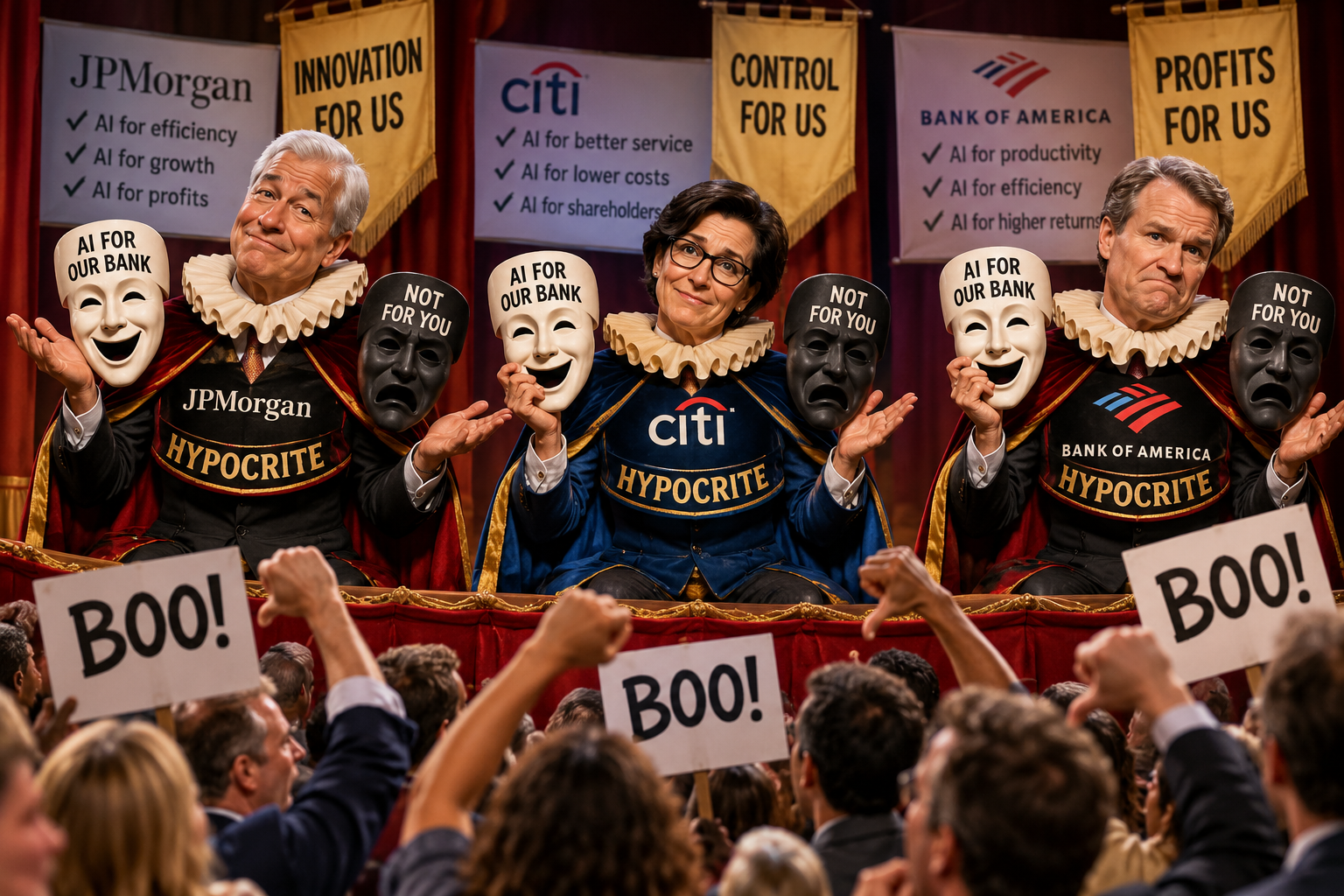
Jamie Dimon’s shareholder letter: times are tough for all of us

I read Jamie Dimon’s latest annual letter released yesterday. It has become, for many, one of the best benchmark letters to read about the state of banking each year and, as always, it’s less a report card on JPMorgan Chase and more a reflection on the state of the world. What struck me most is…

The state of fintech in Germany

I just found an interesting report on fintech in Germany, a place I’ve spent a lot of time with the likes of N26, Trade Republic, Mambu, Raisin and Solaris. That is just to name a few! The reality is that there are hundreds of fintechs in Germany – “more than 700” according to the German…

The Finanser’s Week: 30th March – 5th April 2026

This week’s main discussions include … Money only works in a trusted, shared system … which is why blockchains don’t work There’s a fundamental truth about money that we often forget: money only works because we all agree to use the same system. Whether it’s Visa, SWIFT or central bank money, the power of finance…

Crypto future is fragile says Google

Google’s latest research delivers a clear warning: the cryptography securing today’s cryptocurrencies is not future-proof. Advances in quantum computing are accelerating, and the resources needed to break core encryption (elliptic curve cryptography) are far lower than previously thought. This isn’t a distant, theoretical risk anymore. It’s a strategic, time-bound challenge. What’s changed? 20x efficiency gain: Google…

Revolut in talks to acquire major Asian bank

I was talking to an insider friend in the Revolut empire yesterday and he implied that Revolut is in talks to acquire a major Asian bank in its expansion across the region. I asked him which bank? but he kept schtum. So, I was thinking about it and wondered if it could be DBS? DBS operates…

What happens to my crypto when I die?

I recently tried to cash in a bitcoin. It’s a physical bitcoin that is active, and I have the bitcoin address. Then I realised I had lost the private keys to use it and, well, you can guess. It made me realise that, if I wasn’t around, what would happen to my crypto investments? How would…

Tokenization is nothing new

Short summary: Tokenization is not new, but dates back 10,000 years when early societies used clay tokens to record ownership of goods. These were not money, but data tools to track value. Modern digital tokens and blockchain systems are simply the latest evolution, but can now do more than just record transactions. We can now…

The Finanser’s Week: 23rd March – 29th March 2026

This week’s main discussions include … Programmable liquidity: five foundations reshaping modern treasury I had a great chat the other day – the first in a series of three – with Quant’s Chief Product Officer Martin Hargreaves about programmable liquidity. What’s that? Read on … Programmable liquidity: five foundations reshaping modern treasury How is programmable…

Where did money come from?

It’s quite strange when you think about money as a lot of money has disappeared or been recreated over the years. 250 years ago, there was no US dollar as such; the Chinese currency called the renminbi (RMB) was introduced on December 1, 1948, by the newly founded People’s Bank of China; and the euro…