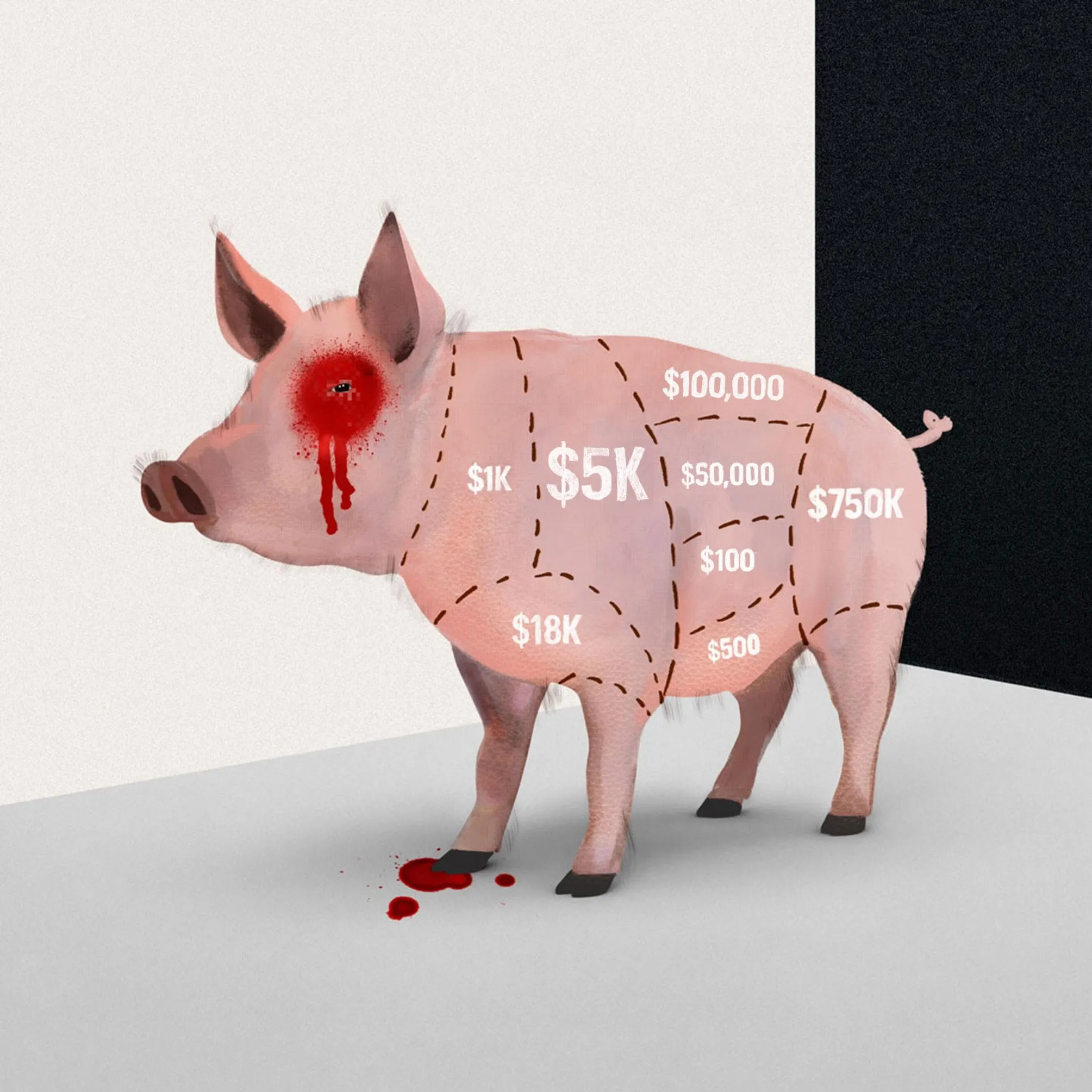









Money.co.uk just sent me this lovely graphic that puts the banker bonuses in context quite well ...
Posted at 01:54 PM in Barclays Bank, Credit Crisis, General, HSBC, Lloyds, Numbers, RBS | Permalink | Comments (0) | TrackBack (0)
OK, I made that up. Mind you, I made it up in 2006 when I presented at the BAI Retail Delivery Show. My logic was based upon the inevitable march of Asia's tigers, and the fact that ICBC had just listed and suddenly became one of the top 10 banks in the world.
October 26th 2006: The largest IPO the world has ever seen took place when Industrial & Commercial Bank of China (ICBC) sold shares. The $19 billion sale dwarfed the $12 billion raised from 53 IPOs in the second half of 2006 on Wall Street. After the first day of trading, the Chinese lender had a market value of about $157 billion which made it worth more than Goldman Sachs Group and Lehman Brothers Holdings put together, and within striking distance of JPMorgan Chase.Based upon such trends, my prediction was that four of the top ten banks of the world would be Chinese before the end of the decade and that, at some point soon, they would expand beyond Asia into global banks with global presence, for example by buying a big US Bank.
All of this went down real bad with the US audience, who haven't invited me back since.
Shame, particularly as many of those wild ideas have come or are coming true.
So now I ask: “Will there come a day when the largest, strongest banks are all Asian?”
To answer that question, my good fried Emmanuel Daniel, founder of the Asian Banker, will speak at the FSClub on 23rd March on this very subject.
Emmanuel will profile the following:Emmanuel Daniel is the founder of The Asian Banker.
The Asian Banker is the foremost provider of strategic business intelligence on the financial services industry in the Asia Pacific and Middle East region with offices in Singapore, Kuala Lumpur, Beijing and Dubai, as well as representatives in Shanghai, London and New York.
This meeting will take place at 6.30pm on 23 March 2010, Institute of Directors, 35 New Broad Street, EC2. If you would like to attend, just register.
Posted at 09:19 AM in FSClub | Permalink | Comments (0) | TrackBack (0)
Things we're reading today include ...
Lehman bosses severely criticised - BBCPosted at 07:26 AM in Reading | Permalink | Comments (0) | TrackBack (0)
We have an FSClub Meeting on 16th March 2010 in London with the theme:
This house believes that the Basel Committee on Banking Supervision's new liquidity risk monitoring standards are built on sand ... a debate on the BCBS liquidity risk monitoring consultation due 16 April 2010.
Just before Christmas, the BCBS opened a consultation on radical new risk management measures for financial institutions. JP Morgan's research has shown the demands on banks to hold more capital could cost the industry $220 billion – of which $91 billion would be incurred by British banks. New liquidity cover ratios, net stable funding ratios and market monitoring tools will certainly reshape today's business practices. However, we ask "will they be 'good enough'?" There is no common reference data set for much of what is required. This means that each firm is flying solo and the regulator left to wonder what good ratio systems and controls should look like. Will one firm's calculations, based on market, counterparty, and instrument data, allow their ratios to be compared to another's? Judgements based on years of disparate legacy systems could have significant financial consequences if not appropriate:Posted at 10:19 AM in Capital Markets, FSClub | Permalink | Comments (0) | TrackBack (0)
Meeting with a mate last night, who happens to be on the inside track of EU regulatory matters as they relate to Capital Markets, he turned to me and said: "have you seen CESR's latest?"
Of course I hadn't, as I've been payments oriented all week and CESR is the European Regulatory body that created MiFID, the Markets in Financial Instruments Directive. This is the regulation for managing equities trading across Europe.
"What are they saying?" I asked.
"Only that everyone now has to use EBBO!" he chortled.
EBBO is the European Best Bid-Offer pricing system.
What does EBBO mean?
It's basically a price that is dynamically updated with each change in the best price in any of the relevant markets where the instrument is traded.
Therefore, if you're trading in HSBC or Vodafone, EBBO will look across all of the execution venues where those stocks are traded and will tell you the best bid and offer for those stocks in real-time.
So what are CESR saying?
Looking at their website, they've updated MiFID with a new ruling on price waivers for execution venues as from Tuesday of this week (did anyone notice?).
Here's the exact text:
Waivers from Pre-trade Transparency Obligations under the Markets in Financial Instruments Directive (MiFID) - Updated 9th March 2010
...
All orders will be submitted to the system for execution/crossing at the midpoint of the European Best Bid and Offer (EBBO). The European Best Bid price is the highest binding bid (or buy) price available in the central limit order books of the regulated markets and MTFs contributing to the determination of the EBBO. The European Best Offer price is the respective binding lowest offer (or sell) price. Thus the EBBO will always deliver the tightest spread available in the contributing trading platforms.
...
The document says a lot more, but the heart of it seems to be getting at the opaqueness of pricing and lack of a single price feed.
Hence, by enforcing a new rule whereby every participant has to guarantee Best Bid-Offer or - if crossing - the mid-point, they have wiped out much of the motivation for dark pool trading overnight.
Why?
Because dark pools work at giving you a better spread than on the open market based upon a volume order, as well as allowing block trading unseen.
You want a 1,000 HSBC or Vodafone stocks?
Old days: you look at the markets and make a Visible Bid for them. If someone can trade at that price then they make a Visible Offer.
New days: you place your order into a dark pool and it sits waiting to be filled at the price you specify, a Dark Bid. This bid is often a price that is better than on the open markets, e.g. not the European Best Bid-Offer but your, discounted Best Bid-Offer which can only be met by other 'dark' players who make a Dark Offer that is also unseen by the markets.
If you want to know more about how dark pools work, the flash illustration on Turquoise's website shows this well.
CESR's new ruling wipes out the new days overnight, as you are now only going to get that order filled by placing visible pricing levels.
Or that's how my friend reads it.
Download the full documentation here (19 page pdf).
Meanwhile the question that arises is that Nomura and UBS have just launched into dark pool territories in the recent weeks ... has this just screwed their efforts big time?
UPDATE #1 13:45 11th March
Ben in France points me to references that the CESR rules allow Primary BBO (PBBO), and is not restricted to EBBO therefore. PBBO is explained well on Chi-X's website.
Ben says he's asked CESR and they've confirmed that PBBO is OK. Might have been worth them putting that in the document more clearly in my view, e.g. PBBO isn't mentioned once but EBBO is everywhere.
And it still doesn't answer the basic question: by forcing dark pools to use mid point pricing for all trades undertaken removes the raison d'etre as this gives bank owned dark pools a significant reduction in spread, and therefore P&L, due to the price being a mid price set from an external source.
On the other hand, people like Nomura were fully aware of this. In fact, it's part of the reason for bringing NX to market (see page 5):
'NX Mid Match (NXMM) operates as a dark mid point crossing venue, with executions made with
reference to the mid point of the Primary Market where the Security is listed. NXMM operates under a MiFID pre trade transparency waiver with mid-point crossing only as per Example 3 of “Acceptable crossing logics” in the CESR document “Waivers from Pre-trade Transparency obligations under the Markets in Financial Instruments Directive (MiFID)”.
'The NXMM matching logic has been designed to achieve the following characteristics:
So why would Nomura, Barclays and UBS make announcements and investments in dark pools if it gives them no major P&L advantage?
According to Ben, it's motivated by the need to access the LSE's Turquoise strategic steering committee ... and so the game rolls on.
My City friend agrees that Nomura understand what they need to do in their MTF (Multilateral Trading Facility), but that the real issue is whether banks can still put their trading desk up as a counterparty to a customer order at anything other than a mid price?
This cuts to the heart of being a Systematic Internaliser, which none of them want to be and is the reason for the rush to be a dark MTF. However, if the rules are interpreted as above and all customer orders go into a dark pool, then the issue of where they are crossed with the prop book arises.
Does the FSA allow the prop book to cross a customer order outside the MTF or is it more likely that crossing with the prop book will need to be done within the MTF at the midpoint, which then cuts the P&L and internaliser gains?
Posted at 09:05 AM in Capital Markets, MiFID | Permalink | Comments (0) | TrackBack (0)
Things we're reading today include ...
Today's must watch:
Joe Garner of HSBC speaks about Trust in Banks at the launch of the Edelman Trust Barometer last year.
Download this year's report ...
Regulators
Turner orders tougher bank stress tests - Financial TimesCompanies
Former Cazenove banker found guilty of insider dealing - The IndependentQuote of the Day:
"The Prince Charles Cinema in Leicester Square is showing Michael Moore's documentary Capitalism: A Love Story next week and is so concerned about the plight of our poor City folk that the first 50 bankers at each screening can get it in for free."
Business Diary: Free cinema tickets for suffering bankers - The Independent
Posted at 07:29 AM in Reading | Permalink | Comments (0) | TrackBack (0)
There was a great panel session at the IPS payments show this week on the future of regulation. Here are a few choice quotes:
“This is the G20-isation of regulations.”Posted at 03:30 PM in Globalisation, Regulation | Permalink | Comments (0) | TrackBack (0)
More voting at IPS2010, with some interesting views expressed.
The session opened with three short questions which were quite telling.Question 1Most of the audience are from banks, so that’s quite telling ... and who exactly were the 1 in 20 who voted ‘no’? Oh yes, about 5% of the audience were from regulators (lol).
Question 2I was surprised by the bonus scheme limits being bottom of the list ... or, bearing in mind it’s mainly bankers in the room, was I?
Question 3Bit of a silly question really, as when did a regulator ever draft a regulation that was consistently implemented (see PSD, MiFID, Faster Payments ...).
Anyways, we then had lots of dialogue about regulations and rules with the FSA Japan, Banque de France, Sir John Gieve (formerly of the Bank of England), Clifford Chance (lawyers) ... all good stuff and source of commentary and blogging later.
After coffee, we then went into a corporate treasury focused stream with seven more questions for the crowd.
Bearing in mind that almost 60% of the audience came from a bank (Question 1), this answer may be somewhat skewed!
Posted at 06:45 AM | Permalink | Comments (0) | TrackBack (0)
Things we're reading today include ...
Today's must read
What’s next for global banks - McKinsey
In 2008, as the credit crisis broke, banks underwent near-death experiences on a massive scale. Last year, many enjoyed a recovery that was nearly as abrupt. In the intense uncertainty that ensued, bankers around the world have rightly shifted their focus away from growth and toward survival as they confront ambiguity about markets, risk, regulation, and demand.
Amid such extreme mood swings, long-term structural changes now under way will fundamentally affect banking in the years to come. To understand these changes, we undertook research that combined a historical view of the industry with an analysis of 25 global banks to see how various portfolios of banking businesses and geographic distributions would fare under different macro and regulatory scenarios. Among our findings:
Other news ...
Top 15 core banking system vendor iRanking table - inntronPosted at 06:14 AM in Reading | Permalink | Comments (0) | TrackBack (0)
According to yesterday's Evening Standard, Rory Bremner compered the Private Asset Managers' Awards at the Dorchester over the weekend and cracked a number of edgy jokes.
Asked Bremner: “Anyone here Dutch? Great salesmen, the Dutch. Anyone that can sell ABN Amro...”
He still got a laugh for that, unlike the crack that he “once had dinner with Sir Fred Goodwin. Halfway through, he said, Shall we go Dutch?'”
But the biggest laugh came with his jibe about Tory tax dodger Lord Ashcroft.
This is the discovery that Ashcroft has claimed a non-domicile status in the UK to avoid tax payments for many years.
“What is the difference between a condom and a non-dom?
“If you make a mistake with a condom, it takes nine months to find out. If you make a mistake with a non-dom, it takes nine years.
“But either way, when you find out, you're completely f**ked.”
Posted at 11:18 AM | Permalink | Comments (0) | TrackBack (0)
I’m here at one of the largest jamborees of the payments year behind SIBOS, IPS2010.
The conference opened with a lengthy interactive voting session with the 400-strong audience.
Here are the results:
What will have the biggest impact on transaction banking in 2010?
46.5% New regulationsQuestion 2
What are the main constraints within your transaction banking business?
45.7% RegulationsQuestion 3
Are you increasing or decreasing your investments in transaction banking?
84.6% IncreasingQuestion 4
Are you investing for:45.0% Lower operational costsQuestion 5
Where will growth come from this year?
45.3% Existing clientsQuestion 6
What is your strategy for emerging markets?
30.8% Grow organicallyWill there be more banking M&A this year?
83.7% YesQuestion 8
Which business area makes your CEO smile the most?
36.5% Commercial BankingIs lending a:
45.8% Part of a suite of banking productsWhere will interest rates in the Eurozone be, by the end of this year?
9.3% LowerQuestion 9 intrigued me the most. One out of ten bankers think that lending is a 'necessary evil' ... no wonder access to loans is so hard right now!
Posted at 06:39 AM | Permalink | Comments (0) | TrackBack (0)
Things we're reading today include ...
Today's must read:
No encore for Elgar as £20 image disappears - The Times
Markets
UK promises flexibility after Iceland shouts 'no' - The IndependentRegulations
Britain in final push to tone down EU hedge fund rules - The IndependentBonuses
US senators try to impose a one-off 50pc bonus tax - The TelegraphTechnology
Internet access 'a human right' - BBCPosted at 06:17 AM in Reading | Permalink | Comments (0) | TrackBack (0)
I've been studying developments in the Middle East lately, and particularly the countries of the Gulf Cooperation Council (GCC). The GCC has been running since 1981 and comprises six core states of the Persia Gulf Region: the UAE, Saudi Arabia, Kuwait, Bahrain, Oman and Qatar.
The GCC is a bit like the EU, which formally established in 1957, in that its aims are to:I did discover some currency designs:
But these are fake as none of the bankers I met had seen these designs, and the fact its called dinar gets thrown out of court straight away ... as does the fact that half is in English rather than Arabic.
In fact, the only thing folks liked about these notes is the six flag logo, so that might stay.
Even if the region gets a currency name that all nations can agree upon, where will they headquarter the Gulf Central Bank?
As soon as it was chosen to be in Riyadh, the UAE walked out. Meanwhile, Oman had said it wouldn’t join the currency and Kuwait has issues due to being linked to a basket of currencies, rather than just the dollar.
Nevertheless, five nations have agreed to create a Gulf Monetary Council and move towards union by 2015 rather than 2010. GCC Secretary-General Abdulrahman Al-Attiyah has stated that the first meeting of the joint monetary council will take place at the end of this month, and that is considered to be an important milestone towards the monetary union.
Some say 2010 was just the start date towards union anyway.All in all, like the EU efforts, the GCC has a long road ahead. At least they have the oil resources to motor along it.
Posted at 08:18 AM in Economics, Globalisation, Payments, Regulation, SEPA and the PSD | Permalink | Comments (2) | TrackBack (0)
Things we're reading today include ...
RBS branch sell-off hits the buffers - The TimesPosted at 06:51 AM | Permalink | Comments (0) | TrackBack (0)
The biggest news stories of the week include ...
And our biggest stories of the week are ...
When should banks move to dump branches, rearchitect for electronic connections and move away from old style paper processes? When do we see the tipping point and how do you deal with it?How to deal with too much data
One of my banking colleagues provided me with a major revelation yesterday. He said: “if you want to spot the next country to be in distress, look for a skyscraper.”
Adventures in identity: are you paranoid or schizophrenic?For a while now, the industry has struggled with secure identities. Now SWIFT has created a new approach, the Personal Digital Identity (PDI) token. Is this a good thing or creating even more confusion?
This month had a real crop of great items in Fortune, Bloomberg and the Economist: from Alan Greenspan's fightback to the future of reading; from a deluge of data and how to cope with it to living through the meltdown of AIG; from why Canada is best for banking to the Absolute Banking Nightmare that RBS discovered at ABN. Here's a summary of these key stories.
Monthly MiFID MTF Monitor: February 2010
In our second month of monitoring the MTF performances in European Equities trading in partnership with Thomson Reuters Equity Market Share Reporter(EMSR) - for last month's figures and charts, click here - we find that Chi-X continues its success, whilst LSE win this month's battle with Xetra for second place.
As folks who read this blog regularly know, I often return to the theme of latency and high frequency trading (HFT). So a friend tipped me to look at the SEC's latest consultation document released in January on trading in American equities markets. Interesting section at the bottom of page 62 ...
If the Banks are United, they will never ...Watching the Carling Cup Final yesterday, I noticed a chap who obviously didn't realise that sitting next to England Manager Fabio Copello would immediately get him noticed ...
Great customer experiences are like this ...Nice ad from ANZ Oz.
The Financial Services Club is sponsored by:
For details of sponsorship email us.
Posted at 08:39 AM in Blog Index, Reading | Permalink | Comments (0) | TrackBack (0)
When should banks move to dump branches, rearchitect for electronic connections and move away from old style paper processes? When do we see the tipping point and how do you deal with it?
This has been the core of lots of chat this week, specifically talking about old bank models versus new ones. Branch distribution versus online and mobile. Letters of credit versus open account. OTC trading versus algo trading. SWIFT versus secure cloud networks. Clearing and settlement versus real-time. KYC, AML and regulations versus customer service and sales.You name it, and I’ve probably talked about it.The common theme is how to deal with the old style of banking business, based upon paper-based forms and documentation versus the new style business, based upon electronic media and communications.The old style business is cumbersome, unwieldy and hard to monitor; the new one is fast, completely transparent and easy to track.But it’s not simple because it means dumping the old model at some point to fully transition to the new one and the question is: when?Banks were built on the unwieldy old style business of branches issuing documentation to clients and tracking transactions via log books and double-entry book-keeping. This new style business doesn’t fit with that model.The new style business is based around an electronic centre which purely connects folks with online accounting.It’s zero-overhead, straight through processing, hands free banking.It doesn’t fit.How do we transition from the old model to the new without killing our existing profitable business?How do you move from bricks and paper to click and mobile?This struggle is not a new one. It’s been around ever since we moved towards online customer self-service.It’s just that it’s getting faster and faster as a conundrum, as the deluge of electronic reformation hits the industry.Ten years ago, the industry made early moves to exploit the situation by closing branches as customers moved to internet service.That was a failure of timing.The branch closures were too early and too soon – the customers’ weren’t ready and the systems weren’t fault-tolerant enough or pervasive and ubiquitous enough to support such debunking.Now that has changed but, due to the bad experiences of a decade ago, bankers are reluctant to try this approach again today.But they should.Because now the timing is better, the customer is readier, the technology works and the processes are robust.But now the difficulty is different as every time we talk about moving from the old world of bricks and paper to the new world of click and mobile, the issue is how to let go of the profitable past and move to the unprofitable future.Banks make their money out of processing the non-standard. If everything is standardised, cheap and easy, how do they make money?This is well illustrated by the SEPA implementation, and the fact that the loss of cross-border processing of non-standard payments for standardised cross-border money movements reduces margins to a fraction of the past.Put that on a scale of all transactions and interactions, and banks are reluctant to change ... especially as they don’t need to thanks to the protection of regulatory licences and government approvals as the major barrier to entry into this industry.Well that’s all about to change too, because the newbies operate around the fringes of banking.Take PayPal.They began as a superset on the old banking systems that made online payments easy.Once they attained critical mass, they applied for a banking licence and got one.Now they’re a bank processing over $60 billion in transactions per annum.The minnow becomes the whale.So what to do, what to do?Well there are answers, and most of it leads back to one of my favourite management writers Clayton Christensen.Having blogged about his concepts of disruptive movements and the innovator’s dilemma, I won’t repeat all that again today, except to say that the premise is: a new operator enters your industry offering something that looks irrelevant; before you know it, the irrelevant operators subsumes you and the industry by changing its economic paradigms.The best example is Japanese car operators in the USA in the 1950s who offered cheap new cars. Ford and GM thought they were rust buckets and dismissed them as such. However, Americans could suddenly buy new cars and they did en masse. The second hand car market disappeared and, over the years, the Japanese car manufacturers upscale and produced cheap luxury cars. After half a century, Ford and GM were on their knees and the Japanese had won (until Toyota messed up their brakes that is).Read more about the theory here.Transition now, don’t wait and do it before it’s too late.
For more insights into these areas, click onto our directory of social finance or banking-as-a-service presentation.
Posted at 09:16 AM | Permalink | Comments (1) | TrackBack (0)
Things we're reading today include ...
Bonuses
HSBC boss Michael Geoghegan paid £800,000 a year to move to Hong Kong - The TelegraphCompanies
Citigroup chief thanks US taxpayer for bailout - The TimesCountries
Icesave deal hangs in the balance, says Iceland's PM - The IndependentTechnologies
Blogs air views on stifled Gulf finance - Financial TimesQuote of the Day:
"If Peter Sands’ wife, the author Betsy Tobin, needs a hero for her next historical novel, she could do worse than pick her partner – the Standard Chartered chief executive."Posted at 08:18 AM in Reading | Permalink | Comments (0) | TrackBack (0)
Did I mention that I’m in love with the Economist’s 16-page supplement on a deluge of data. It just crystallises so many thoughts from my career in technology and where we’ve gotten to today.
There are diamond and gold nuggets of information throughout the report.
Here’s a few highlights:
Posted at 10:34 PM | Permalink | Comments (0) | TrackBack (0)
One of my banking colleagues provided me with a major revelation yesterday.
He said: “if you want to spot the next country to be in distress, look for a skyscraper.”
“What?” I responded.
“Every time a capital city builds a major monolith, you know disaster looms”, he expounded.I thought about it, and then thought: “yes, there might be some truth in this”.
The conversation began with a discussion about the issues in Dubai and hence, when we chatted in awe about the opening of the Burj Khalifah, the world’s tallest skyscraper, the comment arose that every time a city builds such a structure, you know trouble looms.
“The reason for this”, said my banking friend, “is that they start the planning of these structures in the boom times.” He gravely added, “and whenever there is a boom, you know a bust is coming. But the bust occurs just after they finish the building of these white elephants.”
So I thought about the world’s tallest buildings: the Sears Tower, the Empire State Building, our very own Canary Wharf and Malaysia’s Petronas Towers; and sure enough, you can date almost each of these with a bust.
Empire State Building, New York, USA
Completed: 1931
The Great Depression started 1929 but really kicked in in 1931.
Sears Tower, Chicago, USA
Completed: 1973
In 1973, one of the worst stock market crashes occurred since the Great Depression.
Canary Wharf, London, UK
Completed: 1991
Black Wednesday 1992, when the UK had to leave the European Economic & Monetary Union due to a crash in sterling prices. Meanwhile, the UK had moved into recession in 1991 with a property market bust, resulting in the builders of Canary Wharf having to declare bankruptcy.
Petronas Towers, Kuala Lumpur, Malaysia
Completed: 1998
Asian markets meltdown in 1997 and the KL Stock Exchange lost over half of its value during 1997-1998.
Completed: 1st October 2009
Dubai World and Nakheel implode in $80 billion of debt on 26th November 2009.
Pictures sourced from: Our English, David MacDonald, Graphics Hunt, Trip Advisor and Trends Updates.
Posted at 05:21 AM | Permalink | Comments (8) | TrackBack (0)
Things we're reading today include ...
Posted at 02:57 AM in Reading | Permalink | Comments (0) | TrackBack (0)
Recent Comments