For years, banks have worried about technology companies eating their lunch. Fintech would destroy banking. BigTech would become banking. Digital wallets would disintermediate banks. Cryptocurrencies would replace banks. Stablecoins would replace deposits. Decentralised finance would replace everything.
None of that quite happened.
Now we have artificial intelligence and, this time, there may be a very different problem.
The banks may not be replaced by technology companies. They may become dependent upon them.
That is the interesting warning coming from Moody's:
Moody’s warns bank AI race risks “systemic dependency” on Silicon Valley
AI push is putting banks at mercy of tech firms, warns Moody’s
Moody’s argue that the banking industry's rush towards artificial intelligence could create a new form of systemic risk: dependency on a surprisingly small number of AI model providers, cloud companies and technology platforms.
Think about that for a moment.
Banks have spent decades worrying about concentration risk. They worry about having too much exposure to one borrower, one country, one asset class, one market, one clearing system or one counterparty. Regulators obsess about operational resilience, third-party risk and critical infrastructure.
Then along comes AI and everyone rushes towards broadly the same handful of companies.
That creates a rather interesting question: What happens when every bank has a different AI strategy, but they are all using the same AI?
Artificial intelligence is becoming embedded across banking remarkably quickly.
It is being used for fraud detection, customer servicing, coding, compliance, credit analysis, document processing, wealth management, risk modelling and increasingly decision-making. Agentic AI takes this further because software is no longer simply analysing information. It can start taking actions.
The attraction is obvious.
Banks are huge information-processing machines. They collect data, analyse data, make decisions from data and move money based upon those decisions. If AI can make those processes faster, cheaper and more intelligent, the economics are compelling.
Moody's own banking research illustrates the pressure. It found that 92% of senior banking decision-makers feel competitive pressure from faster and more agile entrants, while more than 45% of banks are investing in AI and technology to improve workflow integration. Yet only 35% are investing in comprehensive AI governance frameworks.
In other words, the race is underway.
The trouble is that the AI industry itself is highly concentrated.
Banks may build thousands of applications, agents and services, but underneath them sit foundation models, cloud infrastructure, chips and data centres controlled by a relatively small number of companies.
That changes the nature of banking technology risk.
For decades banks worried about whether their own systems would fail. Tomorrow they may have to worry about whether somebody else's intelligence fails.
From outsourcing risk to systemic risk
Banks outsourcing technology is nothing new.
They have depended upon software companies, payments networks, telecommunications providers, data vendors and cloud computing companies for decades. Regulators have therefore developed increasingly sophisticated rules around third-party risk.
AI introduces something different.
Imagine dozens of globally systemic banks relying upon the same underlying AI models.
One bank depending upon one AI provider is vendor risk. Five hundred financial institutions depending upon the same provider starts looking like systemic risk.
That is Moody's concern.
A significant outage at a major AI provider could potentially propagate across multiple institutions and industries simultaneously. The deeper AI becomes embedded in banking operations, the greater the potential impact.
We have seen versions of this problem before with cloud computing.
Regulators became increasingly uncomfortable when they realised that enormous parts of the financial system were migrating towards a tiny number of cloud platforms. AI takes that concentration another level deeper.
You may depend upon a cloud provider for your computing infrastructure and then depend upon an AI provider for the intelligence operating on top of it.
Cloud concentration becomes AI concentration. Infrastructure concentration becomes intelligence concentration.
That is a very different architecture for global banking.
Yes. That strengthens the argument considerably because it shows that AI concentration risk is not a new problem. It is the next layer of a dependency regulators are already worried about.
We have seen this movie before: the cloud
There is another reason Moody’s warning should be taken seriously. We have seen the beginnings of this problem before with cloud computing.
Banks spent years moving technology away from their own data centres and into the cloud because the economics were compelling. Why own and operate enormous amounts of computing infrastructure when you can rent it, scale it instantly and have somebody else manage much of the complexity?
The problem is that everybody went to broadly the same places.
Amazon Web Services, Microsoft Azure and Google Cloud became increasingly important to banks, and the wider financial system. What started as outsourcing became infrastructure dependency, and infrastructure dependency eventually became a question of financial stability.
That is why UK regulators are now stepping in.
In July 2026, HM Treasury designated Amazon Web Services, Google Cloud and Microsoft as critical third parties to the UK financial sector. From January 2027, the Bank of England, Prudential Regulation Authority and Financial Conduct Authority will directly oversee the resilience of the services these companies provide to regulated financial firms.
That is a significant development.
The regulators are effectively acknowledging that there are technology companies outside the traditional boundaries of banking whose failure could nevertheless threaten the stability of banking.
Think about how extraordinary that is.
We built a financial regulatory system around banks, insurers, exchanges, clearing houses and payment systems because these were the institutions that mattered to financial stability. Now technology companies are becoming part of the critical infrastructure of finance without being banks themselves.
And AI could make that dependency much deeper.
Cloud computing provides the infrastructure on which banks operate. Artificial intelligence increasingly provides the intelligence with which banks operate.
Put the two together and you begin to see the problem.
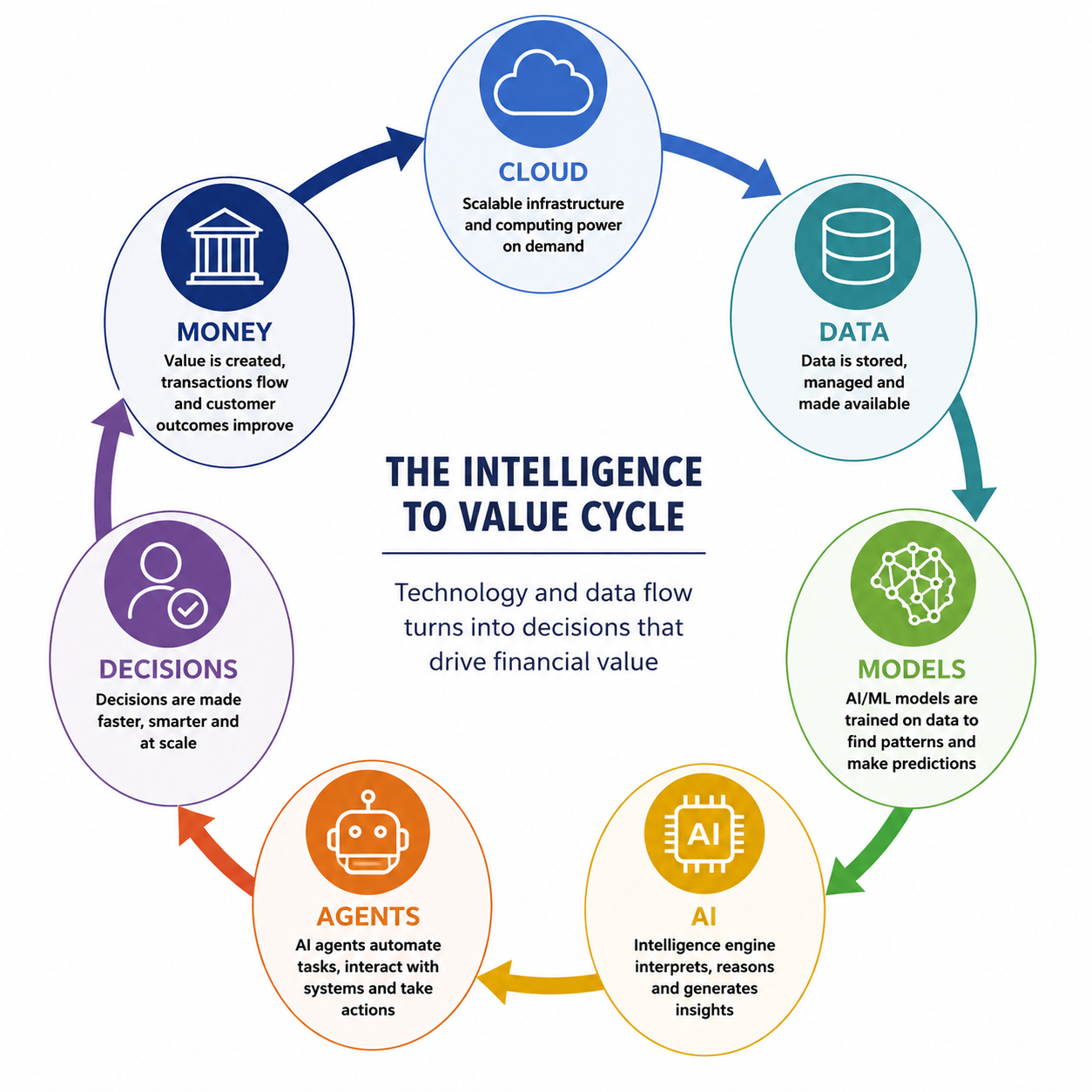
A bank might use Microsoft Azure or Amazon Web Services for infrastructure, an external foundation model for intelligence and third-party AI agents for processes ranging from software development to fraud detection, customer service, compliance, lending and investment management.
Each individual decision may make perfect economic sense.
Collectively, they could create an extraordinary concentration of technological power.
That is where the Moody’s warning becomes much more interesting. We are not simply discussing banks becoming dependent upon AI companies. We are discussing layers of dependency being built on top of each other.
The cloud provider sits underneath the bank. The AI model may sit on top of the cloud. The AI agent sits on top of the model. The banking process sits on top of the agent. And the customer sits at the end of the chain assuming their bank is in control. But how much of that chain does the bank really control?
That is the question regulators are beginning to confront.
For decades, banking regulation has been based upon the idea that banks should understand and control their risks. Capital risk. Credit risk. Liquidity risk. Market risk. Operational risk.
Technology dependency is becoming something different because the risk can sit outside the regulated institution.
If a major bank's internal system fails, regulators deal with the bank. If a cloud platform supporting hundreds of financial institutions fails, regulators suddenly have a completely different problem. If an AI model used across those same institutions, then produces erroneous decisions, suffers a security compromise or becomes unavailable, the problem becomes even larger. This is no longer merely third-party risk. It is nth-party systemic risk.
A bank may know its supplier, but does it know its supplier's supplier? Does it know which cloud infrastructure supports its AI provider, which models support its agents, which datasets influence those models, and which other financial institutions depend upon exactly the same stack?
Probably not.
And that creates an interesting inversion of the technology debate.
Twenty years ago, banks worried that Amazon, Microsoft and Google might enter banking. Today, regulators are worrying that banking may not function properly without Amazon, Microsoft and Google.
AI could take us another step as, tomorrow, the question may not be whether Silicon Valley wants to become a bank. It may be whether banks can operate without Silicon Valley.
That is a far more interesting systemic risk.
Who controls the price of intelligence?
There is another dimension to Moody's warning that deserves attention: pricing power.
Banks might currently view AI as a fantastic mechanism for reducing costs. Automate thousands of processes, improve productivity and reduce expensive human labour.
Wonderful.
But what happens when those processes become mission-critical? Once your organisation has redesigned itself around artificial intelligence, switching provider may become extremely difficult. Thousands of workflows may depend upon specific models. Agents may have been trained and governed around them. Risk controls may have been built around their behaviour. Employees may have changed how they work. Entire operating models may depend upon those systems.
Suddenly the AI supplier has leverage.
Moody's warns of "vendor dependence risk", where dominant model and infrastructure providers could eventually gain considerable influence over the price of AI services.
That becomes particularly interesting when you consider the economics of the AI industry itself.
Building foundation models and the infrastructure behind them requires extraordinary amounts of capital. Investors funding that expansion will eventually expect returns.
Today the conversation is about the cost savings banks can achieve using AI. Tomorrow the conversation might be about how much AI companies can charge banks that can no longer operate effectively without them.
There is an old rule in technology.
If you cannot easily leave your supplier, your supplier owns the relationship.
Then there is the herd
There is another risk that Moody's warning makes me think about, and it may ultimately be even more important: What happens if everyone starts thinking the same way?
Banks have historically built different credit models, trading strategies, risk systems and investment processes. They may reach similar conclusions, but there is diversity within the system.
AI could reduce that diversity.
If many banks use similar foundation models trained on similar information and asked similar questions, there is a danger that they begin producing similar answers.
Similar risk assessments, credit decisions, trading signals, fraud alerts, portfolio recommendations, reactions to market events.
That creates the possibility of algorithmic herding.
Research into AI and systemic financial risk is beginning to examine precisely this issue: widespread adoption of correlated AI systems could amplify shocks because institutions respond to events in increasingly similar ways.
Imagine a market shock where AI systems across hundreds of institutions simultaneously conclude that the appropriate response is to sell.
That is not artificial intelligence.
That is an artificial stampede.
AI could also accelerate the bank run
There is another interesting risk buried within this discussion: speed. Bank runs used to involve people standing outside branches. Then internet banking removed the queue. Mobile banking removed the computer. AI could remove the decision.
Imagine an intelligent financial agent continuously monitoring your money across multiple institutions.
- Bank A pays 2%.
- Bank B pays 3%.
- Move the money.
- Bank C suddenly appears financially weaker.
- Move the money.
- Social media sentiment turns negative towards Bank D.
- Move the money.
The customer doesn't need to read the news, open an app, log in and initiate a payment. Their financial agent could potentially do it for them.
Moody's has highlighted the possibility that AI could contribute to faster "deposit flight", as technology makes it easier to move funds towards better returns or away from perceived risks.
We learned from Silicon Valley Bank that digital banking dramatically increased the velocity of a bank run.
AI could increase it again.
The bank run of the future may not involve frightened customers moving their money.
It could involve thousands of AI agents deciding within seconds that their customers' money would be safer somewhere else.
The human risk
There is also the obvious question of employment.
Moody's forecast that by 2030 AI could potentially replace around 20% of tasks performed by mid-level employees, while major banks are linking technology investment with substantial efficiency programmes.
I suspect the important word here is tasks, rather than jobs.
AI does not need to replace an entire employee to transform banking employment. If it removes 30%, 40% or 50% of the work performed by millions of people, banks will redesign organisations around that new reality.
Fewer people may supervise far more automated activity.
That raises another risk.
What happens when the people supervising the machines no longer understand how the underlying work was performed?
We have spent years discussing technical debt: old systems that nobody wants to replace because they are complicated, expensive and poorly understood.
We may now create something else.
Cognitive debt.
People become increasingly dependent upon machines to analyse, decide, write, code and recommend until eventually the organisation loses some of its own capacity to perform those functions independently.
The machine becomes indispensable not because it cannot be replaced, but because the humans have forgotten how to work without it.
So, should banks stop using AI?
Of course not.
That would be ridiculous.
Artificial intelligence is probably one of the most important technologies banking has encountered since the internet. It can reduce fraud, improve service, automate administration, accelerate lending, personalise financial advice and dramatically increase productivity.
The issue is not whether banks should use AI.
The issue is how dependent they should become upon it, and upon whom.
Banks need multiple models, multiple providers and credible exit strategies. They need open-source alternatives where appropriate. They need proprietary data and institutional knowledge that remain under their control. They need humans capable of challenging machine decisions. They need to understand exactly which AI systems are becoming critical infrastructure.
Most importantly, regulators need to stop thinking about AI purely at the level of the individual bank.
The important question is not simply:
Is Bank X using AI safely?
It is:
What happens when Bank X, Bank Y, Bank Z and half the global financial system depend upon the same models, infrastructure and providers?
That is where Moody's warning becomes interesting.
The biggest risk from artificial intelligence in banking may not be that the machines become too intelligent. It is that everyone becomes dependent upon the same machines.
We spent the last twenty years worrying that technology companies might become banks. Maybe we should have been worrying that banks would become customers of technology companies instead … and very dependent customers at that.
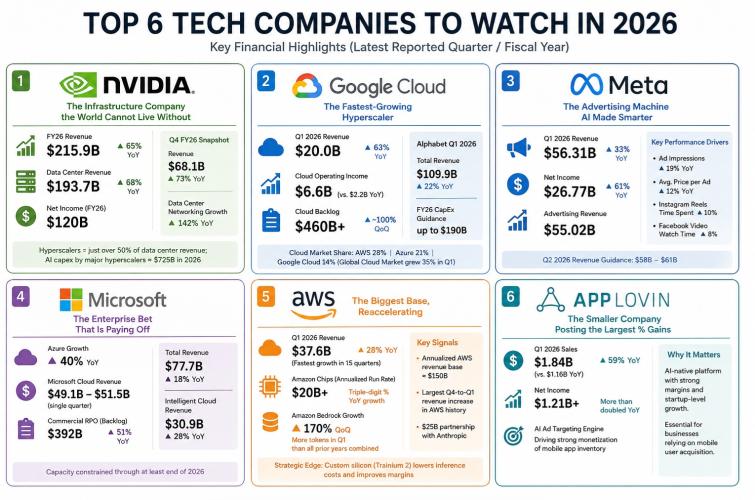
Source: Tech Business News Australia

Chris M Skinner
Chris Skinner is best known as an independent commentator on the financial markets through his blog, TheFinanser.com, as author of the bestselling book Digital Bank, and Chair of the European networking forum the Financial Services Club. He has been voted one of the most influential people in banking by The Financial Brand (as well as one of the best blogs), a FinTech Titan (Next Bank), one of the Fintech Leaders you need to follow (City AM, Deluxe and Jax Finance), as well as one of the Top 40 most influential people in financial technology by the Wall Street Journal's Financial News. To learn more click here...