Crypto

The strange story of marmots and crypto

Ten years ago on twitter, I kept getting messages from a guy called Preston Byrne about marmots. Marmots are basically the biggest squirrel in the world. Americans also call them woodchucks, although a woodchuck is a specific type of marmot, meaning all woodchucks are marmots, but not all marmots are woodchucks. They are most populous…

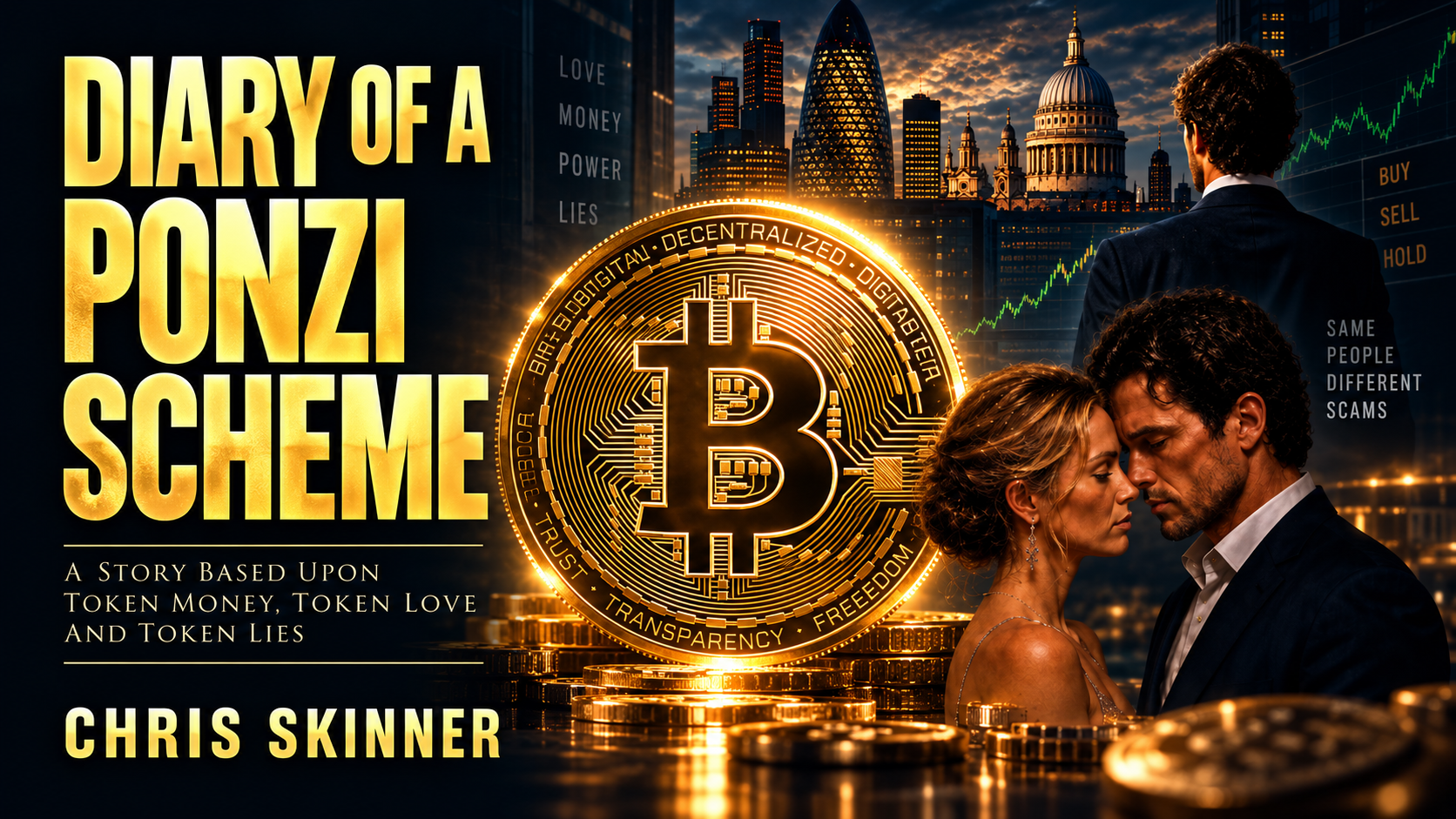
Fiction in real life: the diary of a Ponzi scheme

Crypto has turbo-charged the Ponzi scheme There is something wonderfully predictable about a Ponzi scheme. It invariably begins with an extraordinary opportunity, usually involving a market, technology or investment strategy that is sufficiently complicated to discourage too many questions. It offers returns that make conventional investing look painfully dull, attracts a charismatic promoter who explains…

Crypto: from speculative asset to a new financial system

Something quite important is happening in cryptocurrency, and it is easy to miss if you spend too much time watching the price of bitcoin. For most of crypto’s relatively short history, the discussion has been dominated by price. Bitcoin goes up. Bitcoin crashes. Ethereum rallies. Ethereum collapses. Somebody launches another token. Somebody loses a fortune….

The Finanser’s Week: August 10th – 16th August 2026

This week’s main blog discussions include … Crypto wanted to get rid of banks. Now they are banks. When Bitcoin launched in 2008, the whole idea was to get rid of banks and intermediaries. In 2026, they’ve learned the lesson I learnt years ago. That’s how the world works. You need intermediaries. The whole idea…

Crypto wanted to get rid of banks. Now they are banks.

When Bitcoin launched in 2008, the whole idea was to get rid of banks and intermediaries. In 2026, they’ve learned the lesson I learnt years ago. That’s how the world works. You need intermediaries. The whole idea of bitcoin is that money can move from person to person, ownership could be established cryptographically and the…

The new global money stack

For decades, the architecture of money was reasonably easy to understand. Banks held the money, central banks sat at the heart of national monetary systems, card networks connected merchants and consumers, and SWIFT connected banks across borders. It was complicated behind the scenes, but the basic structure had been remarkably stable for years. Then the…

How cryptocurrency is developing into trust infrastructure

You’ve been thinking about cryptocurrencies all wrong. Every few months someone declares that cryptocurrency is dead. In fact, there’s a website dedicated to recording every one of those predictions. The latest panic is bitcoin’s price falling below $65,000 and Coinbase reporting weaker revenues. A few months earlier everyone was predicting Bitcoin would hit $200,000. Before…

The Business of Power, Politics and Money

Power used to be easy to understand. Kings inherited it; governments exercised it; central banks controlled money; banks allocated capital; corporations built wealth. The lines between politics, finance and business were reasonably clear. Each institution had its own role; each exercised power in different ways. Those lines have blurred almost beyond recognition. Today, political influence…

Crypto and Politico: One Step Beyond

For years I thought cryptocurrency was a fascinating financial experiment. It challenged banks, questioned governments and forced regulators to think differently about money. What I hadn’t fully appreciated was that it wasn’t just disrupting finance. It was quietly becoming a force in politics and government, as I blogged the other day, and it’s now gone…

How Farage is using crypto to do Brexit with a blockchain

I find it fascinating that one of the most interesting debates about the future of money in Britain is no longer being driven by the Bank of England, the Treasury or economists. Instead, it has become a political issue, largely thanks to Nigel Farage (the man who received £5 million from a crypto donor). What…