I spent the morning thinking about the bank of the future. It’s something I do every day.
You could be simple and say that it’s embedded, invisible, everywhere, all the time. And that is true. But that is today’s bank, not tomorrows.
I then have this debate about currencies. What currency do we believe in? What is real value? Is it backed by governments, networks or both?
This is probably the biggest debate for me today: what is the currency of the future? It’s not the ban – who cares about banking – it is about money, value, trade and exchange.
When we look at currencies, there are four main kinds emerging and they are all digital. We have Central Bank Digital Currencies, Stablecoins, Tokenized Deposits and Crypto. The real answer to these methods of exchange is who we want to trade with and what do they accept?
Some people still want to use cash, although that is getting rarer. Most people are happy to use digital wallets these days, but not everyone. Some people like crypto, but not the general person on the street in a store. And many of us may feel that everything digital is great, but only if your tech works. What do you do when the tech breaks? When your mobile has no juice? When WiFi is down?
The fact is that we have the fragmentation of cash.
As a boomer, I grew up with notes and coins. Today, they are disappearing (much to my disappointment). We now have the growth of digital wallets and currencies that are all over the place and they all come down to one thing: which one(s) do you trust?
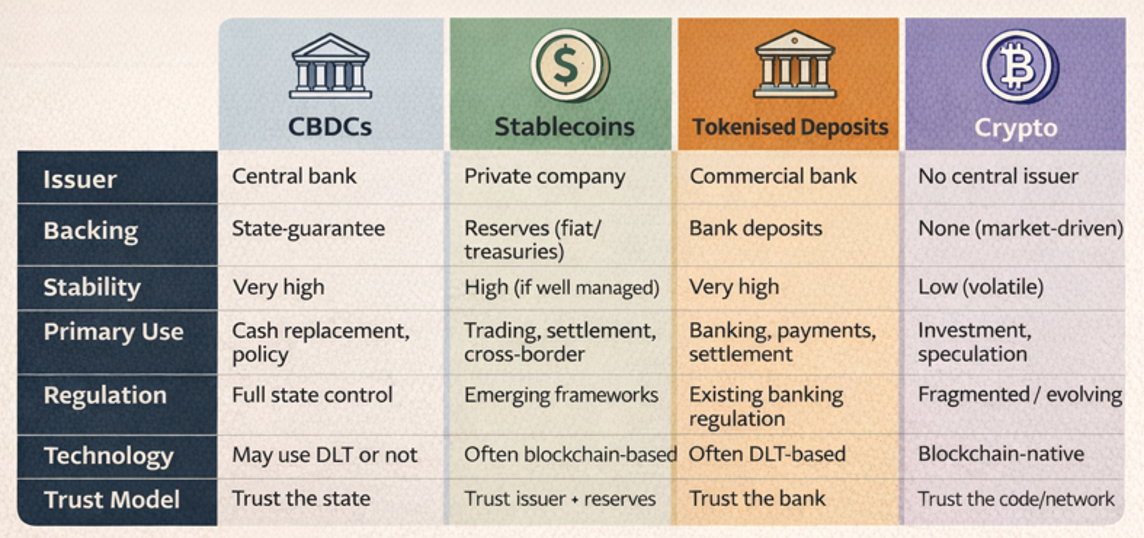
So you can have currencies backed by a government, a bank, a company or a network. Great!
Then you have currencies that can be transferred in a paper or digital form, person-to-person and company-to-company. You decide.
But, years from now, will we really need any of this? Will we really need to transact and pay? Will we really need to exchange value?
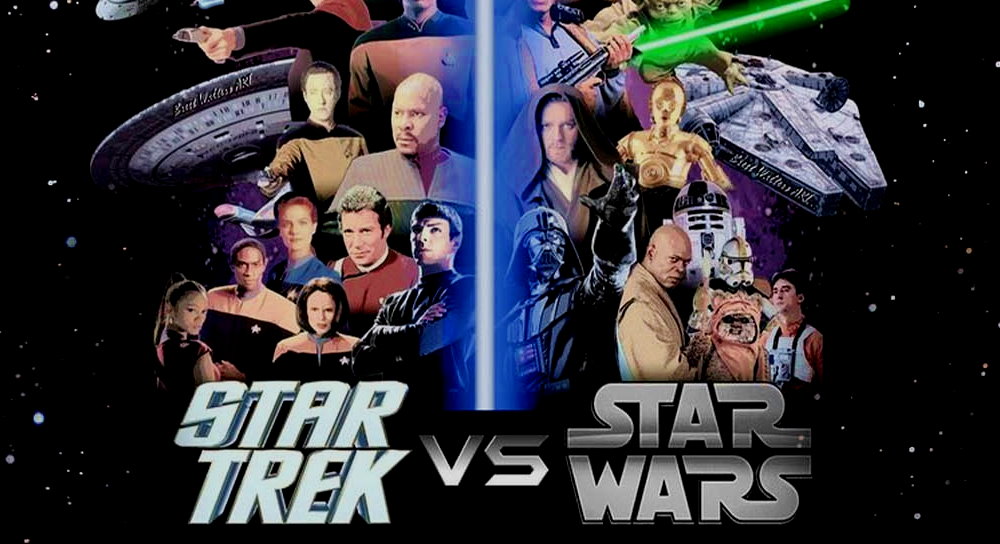
It depends upon your view and, as usual, I will take two views: utopian and dystopian. It all comes back to Star Trek versus Star Wars.
In Star Trek, the future of money is no longer needed as we live in a world of abundance. The result is that humanity moves beyond the idea of accumulating wealth for survival. As Jean-Luc Picard, the Captain of the Starship Enterprise, says:
“The acquisition of wealth is no longer the driving force in our lives. We work to better ourselves and the rest of humanity.”
In the world of the United Federation of Planets, scarcity has disappeared on Earth. Replicator technology can create food, clothing and material goods instantly. Energy is abundant. Medicine is advanced. Basic needs are guaranteed. As a result, humans are no longer trapped in an economic system built around survival, wages and accumulation.
In other words, Star Trek imagines a post-scarcity economy. On the other hand, we then have Star Wars, a dystopian future.
In Star Wars, money still matters a lot. Unlike the optimistic post-scarcity vision of Star Trek, Star Wars is a gritty trading economy full of debt, smuggling, bounty hunters, corruption and unequal wealth.
The galaxy runs on credits, trade routes and commerce. Characters are constantly negotiating payments, rewards and survival. Han Solo owes money to gangsters, bounty hunters chase rewards, and entire planets are controlled through economic power.
There is also huge inequality. The wealthy core worlds live very differently from poorer outer-rim planets like Tatooine, where slavery, barter and criminal economies exist.
So, whilst Star Trek imagines technology liberating humanity from scarcity, Star Wars imagines that even with the most advanced technologies, politics, greed, power and inequality still dominate our universe.
What’s your view?
Chris M Skinner
Chris Skinner is best known as an independent commentator on the financial markets through his blog, TheFinanser.com, as author of the bestselling book Digital Bank, and Chair of the European networking forum the Financial Services Club. He has been voted one of the most influential people in banking by The Financial Brand (as well as one of the best blogs), a FinTech Titan (Next Bank), one of the Fintech Leaders you need to follow (City AM, Deluxe and Jax Finance), as well as one of the Top 40 most influential people in financial technology by the Wall Street Journal's Financial News. To learn more click here...