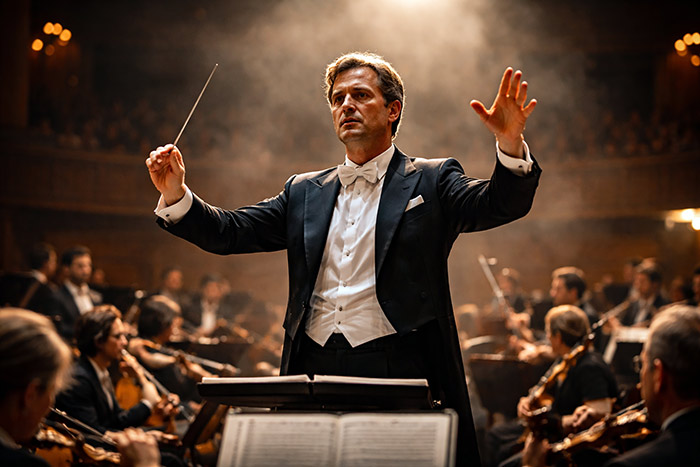
Ten years ago, I said that the CIO would become the CCO. Chief Conduct Officer. The person who would deal with the orchestration of technologies but not the maintenance.
Ten years later, it’s finally coming true as I was reading an interesting article arguing that we're witnessing the death of the IT department as we know it. It's a provocative headline, but the underlying argument is familiar. As cloud computing, SaaS, low-code platforms and generative AI have matured, the traditional role of IT has steadily diminished. Few organisations build their own email systems, HR platforms or CRM applications anymore. Instead, they subscribe to Microsoft, Salesforce, Workday, ServiceNow or one of thousands of specialist providers. Technology has become something you consume rather than something you create.
I think that's true, but it also misses the bigger story.
The job of IT was never really about technology. We just thought it was because, for the past forty years, technology was difficult. Building systems required specialist knowledge, expensive infrastructure and teams of highly skilled engineers. If you wanted a new application, you asked IT. If you wanted a server, you asked IT. If something stopped working, you asked IT. The department became synonymous with the machines because the machines were the scarce resource.
Today, the scarce resource isn't technology. It's coherence.
Most large organisations already have more technology than they know what to do with. Hundreds of applications, thousands of APIs, data scattered across multiple clouds, legacy systems that refuse to disappear, AI tools emerging almost weekly and business teams buying their own software without telling anyone. The problem isn't finding another technology platform. The problem is making everything work together in a way that feels seamless to customers and employees alike.
That changes the role of IT completely.
Increasingly, the department's value lies not in building systems but in integrating them. The winners over the next decade won't be the companies with the most software or even the most advanced AI. They'll be the organisations that can connect their technologies into something that behaves like a single, intelligent enterprise. Integration sounds mundane, but it has become one of the most strategically important capabilities in business. Every customer journey crosses multiple systems. Every employee workflow touches applications from different vendors. Every AI agent depends upon access to reliable data spread across dozens of platforms. None of that works unless someone is thinking about the architecture as a whole.
At the same time, AI is exposing another uncomfortable truth. Most organisations don't have a technology problem. They have a process problem. For years we've assumed that digitising a bad process somehow improves it. AI demonstrates exactly the opposite. Automating bureaucracy merely creates faster bureaucracy. If a customer journey involves fifteen unnecessary approvals, an AI agent may reduce the waiting time, but it doesn't remove the underlying complexity. Before asking how AI can automate a process, perhaps the better question is why the process exists at all.
That means the role of IT shifts again. It isn't just integrating technology; it's helping redesign the way the organisation operates. Optimisation becomes just as important as implementation. Technology decisions become operating model decisions.
The final shift, however, is the one I find most fascinating. Organisations are no longer collections of software applications. They are becoming collections of intelligence. Some of that intelligence belongs to people. Some belongs to AI agents. Some resides within SaaS platforms. Some comes from external partners through APIs. Some sits inside large language models that nobody actually owns. Running a modern enterprise increasingly resembles conducting an orchestra rather than managing a factory. The challenge isn't writing every note yourself. It's ensuring that hundreds of independent performers remain in harmony.
That's why I increasingly think the future of work is not people doing jobs. It is people orchestrating intelligence. The same applies to IT. Its future is no longer about managing technology. It is about orchestrating capabilities. Someone has to decide which AI agent performs which task, where human judgement is still essential, how data moves securely between systems, which identities can be trusted, which decisions require governance and how the whole enterprise remains compliant while continuing to innovate. None of those questions are primarily technical. They are questions of architecture, policy and orchestration.
Perhaps this also means we've been using the wrong title for years. The Chief Information Officer once managed computers and information systems. Increasingly, the role looks more like that of a Chief Integration Officer or even a Chief Orchestration Officer, responsible for ensuring that people, software, AI, data and external partners operate as one coherent whole. Technology becomes less about ownership and more about composition.
There's an interesting irony here. AI is often presented as the great differentiator, yet it may end up commoditising technology even further. If every organisation has access to the same foundation models, the same cloud platforms and many of the same software services, then technology itself ceases to be the competitive advantage. The advantage lies in how effectively those components are assembled into a distinctive operating model. Just as every orchestra can buy the same instruments, no two orchestras sound alike. The conductor still matters.
So I don't believe we're watching the death of the IT department. We're watching its liberation from technology. The future of IT is less about keeping the servers running and more about ensuring that an increasingly complex ecosystem of humans, AI, software and data behaves as a single, intelligent enterprise. That's a far bigger challenge than installing the next application, and it may turn out to be the most important leadership role in the organisation over the next decade.
Chris M Skinner
Chris Skinner is best known as an independent commentator on the financial markets through his blog, TheFinanser.com, as author of the bestselling book Digital Bank, and Chair of the European networking forum the Financial Services Club. He has been voted one of the most influential people in banking by The Financial Brand (as well as one of the best blogs), a FinTech Titan (Next Bank), one of the Fintech Leaders you need to follow (City AM, Deluxe and Jax Finance), as well as one of the Top 40 most influential people in financial technology by the Wall Street Journal's Financial News. To learn more click here...