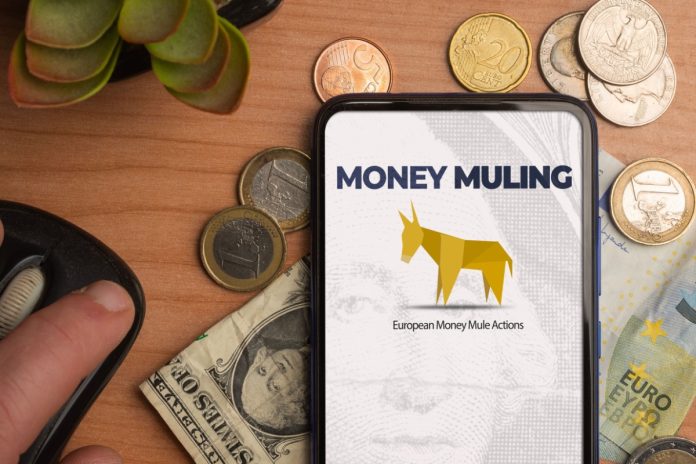
The BBC has run many reports about how people accidentally become money mules through their ignorance:
- It's not easy money. This scam wrecks your credit
- I got quick cash in my account but it was too good to be true
- I became a money mule by mistake
A key point here is that, in statistics from the Financial Conduct Authority, there were at least 207,889 cases of “money muling” in 2024. This is a major rise on the numbers from 2023, when it was just 170,338.
The Finanser readers are probably fully aware of how it works. You get a text saying would you like £1,000? How about getting £10,000 a month working an hour a day? You get the idea. And most of those who get caught up in this mess are under thirty years old as, of course, younger folks sign up for the deal, thinking it is too good to be true. The thing is that anything that sounds too good to be true probably is.
In the case of money muling, what is actually happening is that criminals who are trying to move funds generating by anything from drug dealing to human trafficking are passing money through your account to clean it, and move it on. You get £1,000 and that moves to another account giving you a £10 commission. Sounds good? It’s not. You’re now involved in a fraud and the banking regulators have cracked down on this space heavily, as evidenced by my AMEX experience which, as a small business and seasoned financial specialist, was insufferable.
The thing is that, in the banking system, it seems that you are guilty until proven innocent. In the legal system, you are innocent until proven guilty.
That is an issue.
Banks and financial institutions start with the premise that you are not trustworthy. Therefore, you have to prove your innocence to be trusted.
It is the reason why there are many Facebook groups of angry customers who have been kicked out of the system for, as they see it, no reason at all.
Obviously, banks do not want to be fined by regulators for supporting money launderers; but treating customers fairly, even when they have been suckered into a money laundering scheme, should be an equal priority.
Why punish the teenager who signs up for free money, when the target should be the people who signed them up to do this?
As written regularly, money laundering globally is rife and in the wild. It accounts for anything from two to five percent of global GDP according to many studies or, in dollars, that amounts to between $2 trillion to $10 trillion.
It is substantial and then it makes you ask: is kicking out a student who took a deal to get £1,000 a month for a £10 commission, and ruining their credit record, the solution?
Surely the focus should be on the wagon owners, rather than the mules?
In this case, it is clear that banks are cracking down on the small person because of regulatory rules, whilst the regulators are missing massive holes in the system that allow the wagon owners to slip through their cracks. We need a better system.

Chris M Skinner
Chris Skinner is best known as an independent commentator on the financial markets through his blog, TheFinanser.com, as author of the bestselling book Digital Bank, and Chair of the European networking forum the Financial Services Club. He has been voted one of the most influential people in banking by The Financial Brand (as well as one of the best blogs), a FinTech Titan (Next Bank), one of the Fintech Leaders you need to follow (City AM, Deluxe and Jax Finance), as well as one of the Top 40 most influential people in financial technology by the Wall Street Journal's Financial News. To learn more click here...