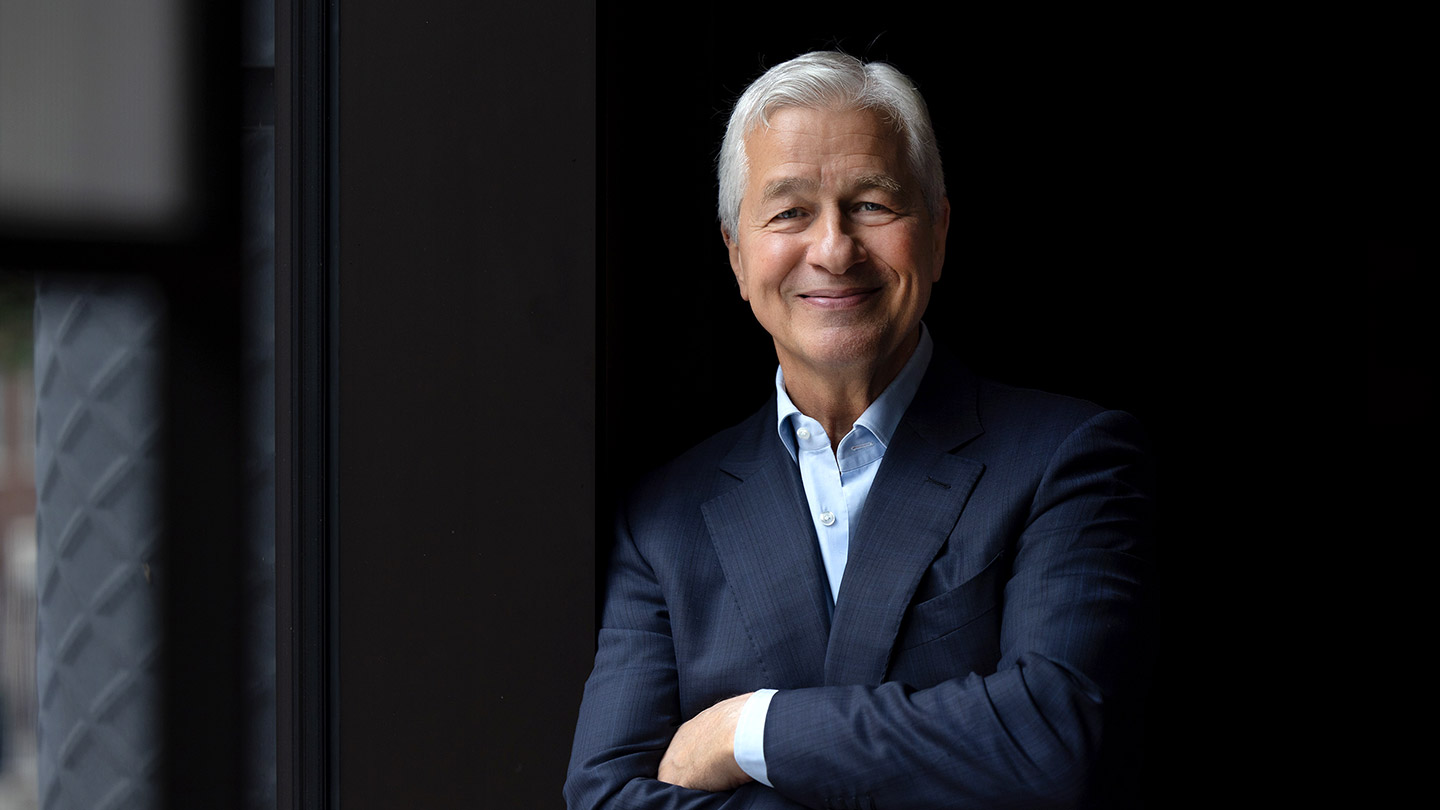
I read Jamie Dimon’s latest annual letter released yesterday. It has become, for many, one of the best benchmark letters to read about the state of banking each year and, as always, it’s less a report card on JPMorgan Chase and more a reflection on the state of the world.
What struck me most is the tone. On the surface, everything looks fine. The U.S. economy is holding up, consumers are still spending, markets are functioning. But Dimon keeps coming back to a quiet warning: this stability may not last. There’s a sense that we’re living in a moment that feels calm, but is actually sitting on top of a lot of unresolved tension. No suprises there with wars in Iran and the continuing tensions in Europe, Ukraine and Russia.
Dimon makes it clear that you can no longer separate economics from global politics. Conflicts, trade fragmentation, shifting alliances ... these are no longer background noise. They are shaping inflation, supply chains, and ultimately the cost of money. In his view, the biggest risks to the economy are no longer purely financial; they’re political and structural.
That feeds directly into his concern about inflation and interest rates. There’s a growing assumption in markets that things will settle down and rates will fall back to where they used to be. Dimon isn’t convinced. He suggests we may be entering a period where inflation is more stubborn and rates stay higher for longer, especially if geopolitical shocks keep hitting energy, trade, and supply chains. In other words, the era of cheap money may not be coming back anytime soon.
At the same time, he acknowledges that a lot of the current economic strength is being supported by government spending. That’s fine in the short term, but it raises longer-term questions about debt and sustainability. It’s almost as if we’re propping up growth today while quietly accumulating risk for tomorrow.
He then touches on fintech, and his stance is interestingly balanced. There’s none of the old narrative of banks versus fintech startups. Instead, he recognises that fintech has been a powerful force for innovation, pushing the industry to become faster, more user-centric, and more digitally integrated. At the same time, he draws a line around regulation and resilience. Banks like JPMorgan operate under intense scrutiny, capital requirements, and risk controls, while many fintechs have grown in lighter regulatory environments.
His underlying point is that innovation is welcome, but the rules shouldn’t be uneven, something banks have argued for years. In the long run, the winners won’t be defined by whether they are a bank or a fintech, but by who can combine innovation with trust, scale, and compliance.
There is a lot more on this in Ron Shevlin's latest LinkedIn post, who notes that “Dimon lists Block, Citadel Securities, Revolut, and Stripe as the most successful nontraditional competitors. No surprise there. But he then cites the ‘blockchain-based wave’ as a distinct, new threat category. Translation: the fintech disruption of the 2010s was wave one. Tokenization is wave two. And JPMorgan is treating them as separate battles.”
Then there’s AI and this is where the tone shifts from cautious to almost optimistic. Dimon is genuinely bullish.
He talks about artificial intelligence as something that could be as transformative as any major technological shift we’ve seen, possibly even more so. Not just in banking, but across society from productivity to healthcare. You can see that he believes this is not just another wave of digitisation, but something deeper. This is the move from systems that process information to systems that actually make decisions.
Inside the organisation, that translates into a very practical message. Big companies, he says, shouldn’t behave like big companies. They need to act more like networks of small, highly effective teams — what he describes as “Navy SEAL” units — empowered to move fast and get things done. It’s a recognition that in a world defined by speed and complexity, bureaucracy is a liability.
He also touches on areas like private credit and the growth of non-bank finance. He’s not sounding the alarm, but he is flagging that parts of the system are becoming less transparent and potentially more fragile. It’s a familiar pattern: innovation creates opportunity, but also new blind spots.
Step back, and the letter reads less like a forecast and more like a transition note. We’re moving from a world that was relatively predictable shaped by central banks, interest rates and globalisation, into one that is far more fragmented, more political, and more technologically driven.
And that’s really the takeaway.
The future of banking, and probably the future of everything, won’t be defined by efficiency alone. It will be defined by how well we navigate uncertainty, how intelligently we use data, and how resilient we are when the shocks inevitably come. It’s not a message of doom. But it is a reminder that the system is changing, and we’re only just beginning to see what that means.
Chris M Skinner
Chris Skinner is best known as an independent commentator on the financial markets through his blog, TheFinanser.com, as author of the bestselling book Digital Bank, and Chair of the European networking forum the Financial Services Club. He has been voted one of the most influential people in banking by The Financial Brand (as well as one of the best blogs), a FinTech Titan (Next Bank), one of the Fintech Leaders you need to follow (City AM, Deluxe and Jax Finance), as well as one of the Top 40 most influential people in financial technology by the Wall Street Journal's Financial News. To learn more click here...