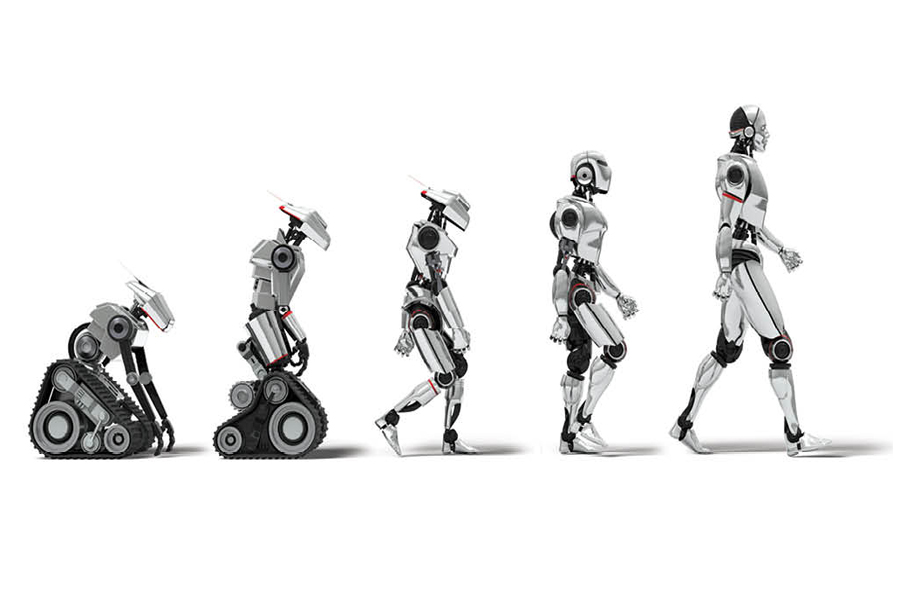
 I always love looking back to the past for predictions of the future. From The Jetsons flying car to the communicator in Star Trek, there are so many examples of science fiction, much of which has become science fact. Just look at SpaceX’s reusable rockets or the Artemis II crew flying around the moon, and you get the idea.
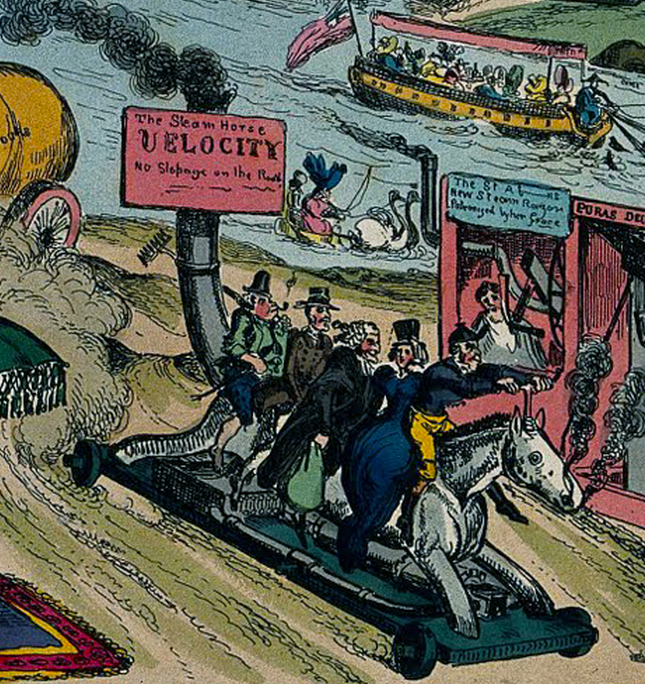
But, when I go back in time two hundred years, what were people thinking? Well, the vision in 1830 was of steam-powered horses to replace real ones.
Real horses had messed up the cities by leaving shit everywhere, so the vision in the time of William IV was to replace them with robot horses powered by steam. Now, today, we have robot dogs that are a dream or nightmare, dependent on your view.
It’s no wonder Henry Ford made that famous quote: “If I had asked people what they wanted, they would have said faster horses”.
But then, for those who read this blog regularly, you will know that I love the film Metropolis by Fritz Lang. Made in the 1920s, it has three big attractions: the art deco look and feel; the robot who runs the world below ground; and the political story of the ultrawealthy controlling everyone and everything.
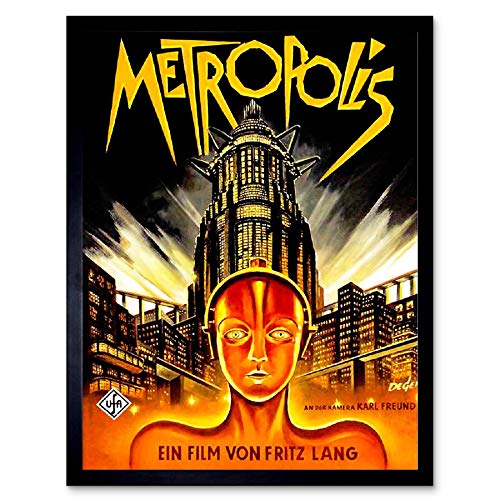
Did I mention a robot?
Humans have had visions of robots for over a century, with the word first coming into general use thanks to a play by Czech writer Karel Čapek in 1920. In his play R.U.R. (Rossum's Universal Robots) the word is derived from the Czech word robota, meaning “forced labour”, “drudgery”, or “servitude”. It refers to the unpaid labour performed by serfs being replaced by artificial biological workers.
By the late 1920s, robots weren’t just appearing in fiction. Westinghouse engineer Roy Wensley was one of the first industrial robots designed to control machinery via telephone. Primarily a “mechanical man” box of switches rather than a human-like automaton, it operated lights and motors using sound-based tones and was launched in 1927.
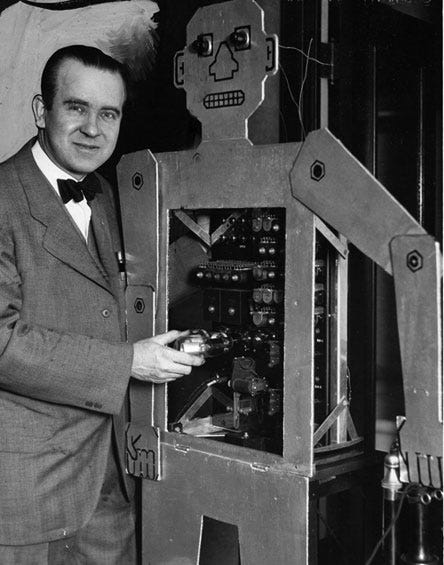
The robot’s name was Herbert Televox and was quickly succeeded by his sister Katrina Von Televox, who only does “what she is told to do”. What a dream!?
Many punters had visions of the future over the last century. My favourite was the inventor of the iPhone. No, not Steve Jobs or Jonathan Ive.
In 1930, the German company Echte Wagner, a company that made margarine, published a whole range of futuristic ideas as cards to promote their brand. Here’s my favourite one:
[caption id="attachment_115998" align="alignnone" width="700"] www.rarehistoricalphotos.com[/caption]
The idea is that people would have a wireless private phone and television. Strange how that happened, isn’t it? There are a lot more futuristic ideas they came up with, which you can see here.
By the 1950s, AT&T actually came up with the idea for a videophone that works. Here’s the launch:
The only thing is that it cost about $5,000 which is around $65,000 today, or one bitcoin.
Interestingly, times moved on and a lot of it focused on tools to alleviate women of home drudgery, such as the vacuum cleaner, dishwasher and other stuff. Here’s Westinghouse’s vision of the kitchen of the future back then: all electric, all simplified and all automatic.
https://youtu.be/odk2MexTxHg?si=Nz4n4azumyiuB1j5
I could go on and on and cover all of my favourite Star Trek stuff and other science fiction that has become science fact.
Today, we are living in a world of mobile televisions and robots. The only thing that hasn’t changed much is the kitchen, but it’s coming.
Just a shame that, today, that futuristic kitchen costs you around $350,000 … but that’s only four bitcoins friends.

Chris M Skinner
Chris Skinner is best known as an independent commentator on the financial markets through his blog, TheFinanser.com, as author of the bestselling book Digital Bank, and Chair of the European networking forum the Financial Services Club. He has been voted one of the most influential people in banking by The Financial Brand (as well as one of the best blogs), a FinTech Titan (Next Bank), one of the Fintech Leaders you need to follow (City AM, Deluxe and Jax Finance), as well as one of the Top 40 most influential people in financial technology by the Wall Street Journal's Financial News. To learn more click here...