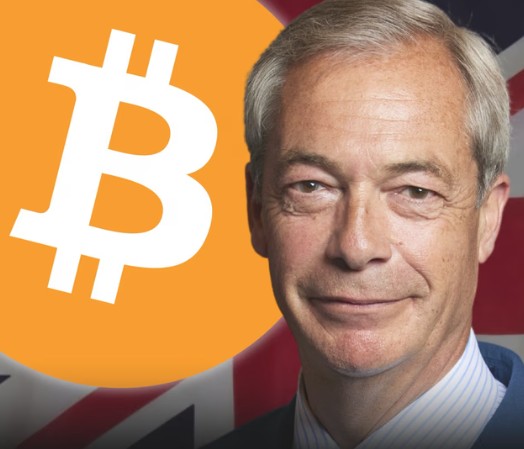
I find it fascinating that one of the most interesting debates about the future of money in Britain is no longer being driven by the Bank of England, the Treasury or economists. Instead, it has become a political issue, largely thanks to Nigel Farage (the man who received £5 million from a crypto donor).
What was once a rather technical discussion around Central Bank Digital Currencies has suddenly become a battle over privacy, freedom and who should control money in the digital age. Funnily enough that’s the core of my story about a Ponzi Scheme.
The irony is that the argument itself has very little to do with whether money becomes digital. That battle has already been fought and decided. Money is already digital. We move numbers around computers every day, whether through cards, apps, online banking or real-time payment systems. The question is not whether money becomes digital. The question is who issues it, who controls it and who ultimately benefits from it.
Nigel Farage – bear in mind this is also the man who made millions through the Brexit vote – has emerged as Britain's most outspoken advocate for cryptocurrencies whilst becoming equally vocal in his opposition to a digital pound, nicknamed Britcoin by the media.
The Bank of England hates the term because, unlike bitcoin, the proposal has nothing to do with crypto. It is simply an attempt to create a digital form of sterling issued by the central bank and distributed through private-sector institutions. Yet once the nickname Britcoin entered the public consciousness, the debate changed. Instead of being about payment architecture and monetary policy, it became a discussion about state power and individual freedom.
Farage has framed the issue in exactly those terms. He argues that a central bank digital currency represents a slippery slope towards surveillance and control, raising fears of programmable money, digital identities and governments gaining unprecedented visibility into how citizens spend their money.
He has gone so far as to declare that he would be prepared to go to prison to prevent the introduction of Britcoin, elevating what might have been a niche discussion among policymakers into a national political campaign.
Money, control, power. This is the name of the game.
Add on to this that Farage is following Trump and you can see why he is now an enthusiastic supporter of cryptocurrency.
Reform UK has talked about making Britain a global crypto hub, creating a strategic bitcoin reserve and encouraging innovation rather than regulating it out of existence. None of this is particularly surprising. What is more interesting is that some of Farage's biggest financial backers come from the crypto world.
Christopher Harborne has donated millions to Reform UK and BitMEX co-founder Ben Delo has also contributed substantial sums. Critics naturally ask whether there is a connection between those donations and Reform's enthusiasm for digital assets and hostility towards a Central Bank Digital Currency. Farage dismisses such suggestions, but the coincidence inevitably attracts attention.
What strikes me most is that both sides are fighting yesterday's battle.
The Bank of England believes that a digital pound is necessary to preserve monetary sovereignty in a world where payments are increasingly digital. Farage and many crypto advocates see private money as a better alternative to state money. Yet neither vision fully reflects the world that is actually emerging.
China already has the digital yuan. Europe is progressing with the digital euro. In the United States, lawmakers appear more interested in regulating stablecoins than creating a Federal Reserve digital currency. Meanwhile, Visa, Mastercard, JPMorgan and numerous fintech firms are tokenising assets and experimenting with programmable money. Stablecoins process trillions of dollars in transactions each year.
Money is becoming software.
This means that the future is unlikely to belong exclusively to governments or exclusively to crypto enthusiasts. It is far more likely that we will inhabit a world of multiple forms of money.
Central bank money, commercial bank deposits, stablecoins, tokenised deposits will coexist. The real battle is not between bitcoin and Britcoin. It is about who owns the rails upon which the next generation of money operates.
Perhaps the most incredible thing is that Nigel Farage and Donald Trump have succeeded in turning what was once a dry, technocratic debate into an ideological argument.
Britcoin has become Brexit with blockchain. The language has shifted from efficiency and resilience to freedom and control, from monetary innovation to personal liberty. Whether one agrees with him or not, Farage has managed to transform a conversation that most people had never heard of into one that touches fundamental questions about the relationship between citizens, markets and the state. Again, something I frequently debate and maybe that is why this debate matters. Not because of Nigel Farage, and not even because of bitcoin, but the fact that it strikes to the heart of societal structures.
It matters because we are witnessing the first arguments over the nature of money since the collapse of the gold standard.
Most people still think this is about technology. It isn't. It is about power, and history tells us that arguments about power are never really arguments about technology at all.
Chris M Skinner
Chris Skinner is best known as an independent commentator on the financial markets through his blog, TheFinanser.com, as author of the bestselling book Digital Bank, and Chair of the European networking forum the Financial Services Club. He has been voted one of the most influential people in banking by The Financial Brand (as well as one of the best blogs), a FinTech Titan (Next Bank), one of the Fintech Leaders you need to follow (City AM, Deluxe and Jax Finance), as well as one of the Top 40 most influential people in financial technology by the Wall Street Journal's Financial News. To learn more click here...