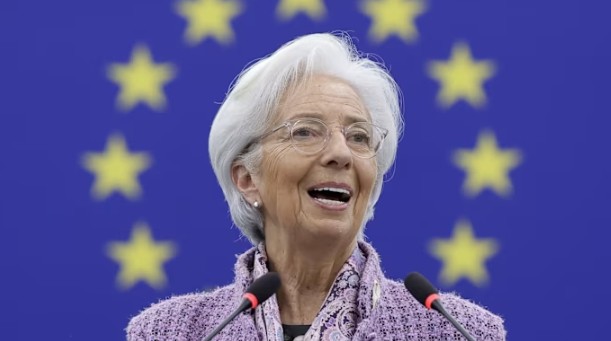
I heard a story the other day that Christine Lagarde, head of the European Central Bank, purposefully raises the heat or lowers it in a room before a meeting. If she knows it’s hot, she dresses lightly; if she knows it’s cold, she wraps up. The thing is that the person she’s meeting doesn’t know whether it will be hot or cold. That’s how she wins deals. The person opposite is either sweating or freezing. She’s cool. It’s a clever strategy. What does this mean in reality?
The thing is that, in diplomacy, you need to know when to smile and when to stare, and few people exemplify that better than Christine Lagarde.
“The supreme art of war is to subdue the enemy without fighting.” Sun Tzu
Whether as French Finance Minister, Managing Director of the IMF or President of the ECB, Lagarde has developed a reputation for understanding something that many leaders never fully grasp: negotiations are rarely won through force. They are won by managing temperature.
Most executives walk into a meeting with one setting. They are either aggressive or collaborative, hardline or conciliatory. Once they've found their style, they stick with it.
Lagarde is different.
She is comfortable moving between both modes. She can turn the heat up when she wants movement and turn it down when she wants agreement.
“Diplomacy is the art of letting someone else have your way.” David Frost
This matters because modern finance is less about issuing orders and more about orchestrating consensus and what many people miss is that negotiations are emotional systems. People make decisions based on pressure, fear, confidence, trust and uncertainty as much as they do on facts. Great negotiators understand this instinctively and actively manage the emotional temperature of the room.
Lagarde does exactly that.
When she wants movement, she raises the temperature. She introduces urgency, highlights risks, emphasises consequences and creates discomfort around maintaining the status quo. During Eurozone crises, IMF negotiations and ECB discussions around inflation, she has frequently used strong language to make clear that inaction is not an option. The objective is not necessarily to shock. It is to make people feel that doing nothing is more painful than reaching an agreement.
A carefully chosen phrase can move bond markets, currencies and expectations within minutes. Central banking is, after all, partly theatre. It is partly psychology. Above all, it is about credibility and credibility often requires demonstrating resolve.
Yet once people start moving, Lagarde adopts the opposite approach. Rather than escalating conflict, she lowers the temperature. She becomes reassuring, pragmatic and collaborative. She listens, reframes issues and creates room for compromise. The discussion shifts from crisis to solution. People who felt threatened moments earlier begin to feel heard. Parties who were previously entrenched start searching for common ground.
That is when deals become possible.
The pattern is remarkably common amongst successful leaders, and you can think of it as a thermostat rather than a switch. Poor negotiators have only one setting. They are either permanently confrontational or endlessly accommodating. Good negotiators continuously adjust the temperature.
The global financial system today is navigating inflation, geopolitical tensions, digital currencies, artificial intelligence, climate transition and changing trade relationships. None of these challenges can be solved through confrontation or through endless consensus-building. Progress comes from creating just enough discomfort to encourage movement and just enough reassurance to make agreement possible.
What makes Lagarde particularly interesting is that she does not fit the stereotype of the central banker.
She is not an economist by training. She is a lawyer, politician and negotiator. As a result, she approaches problems through the lens of people, institutions and incentives rather than pure economic theory, which is why she is so comfortable managing the emotional climate of negotiations and leadership.
We often assume that leadership is about having the strongest argument, the biggest balance sheet or the smartest analysis. It is more about reading the room. The most effective leaders don't just manage agendas, but they manage emotions. They know when people need to feel uncomfortable and when people need to feel safe. They know when to challenge assumptions and when to help participants save face.
You can’t replace that with AI or tech. In a world obsessed with technology, algorithms and data, that remains a profoundly human skill.
Chris M Skinner
Chris Skinner is best known as an independent commentator on the financial markets through his blog, TheFinanser.com, as author of the bestselling book Digital Bank, and Chair of the European networking forum the Financial Services Club. He has been voted one of the most influential people in banking by The Financial Brand (as well as one of the best blogs), a FinTech Titan (Next Bank), one of the Fintech Leaders you need to follow (City AM, Deluxe and Jax Finance), as well as one of the Top 40 most influential people in financial technology by the Wall Street Journal's Financial News. To learn more click here...