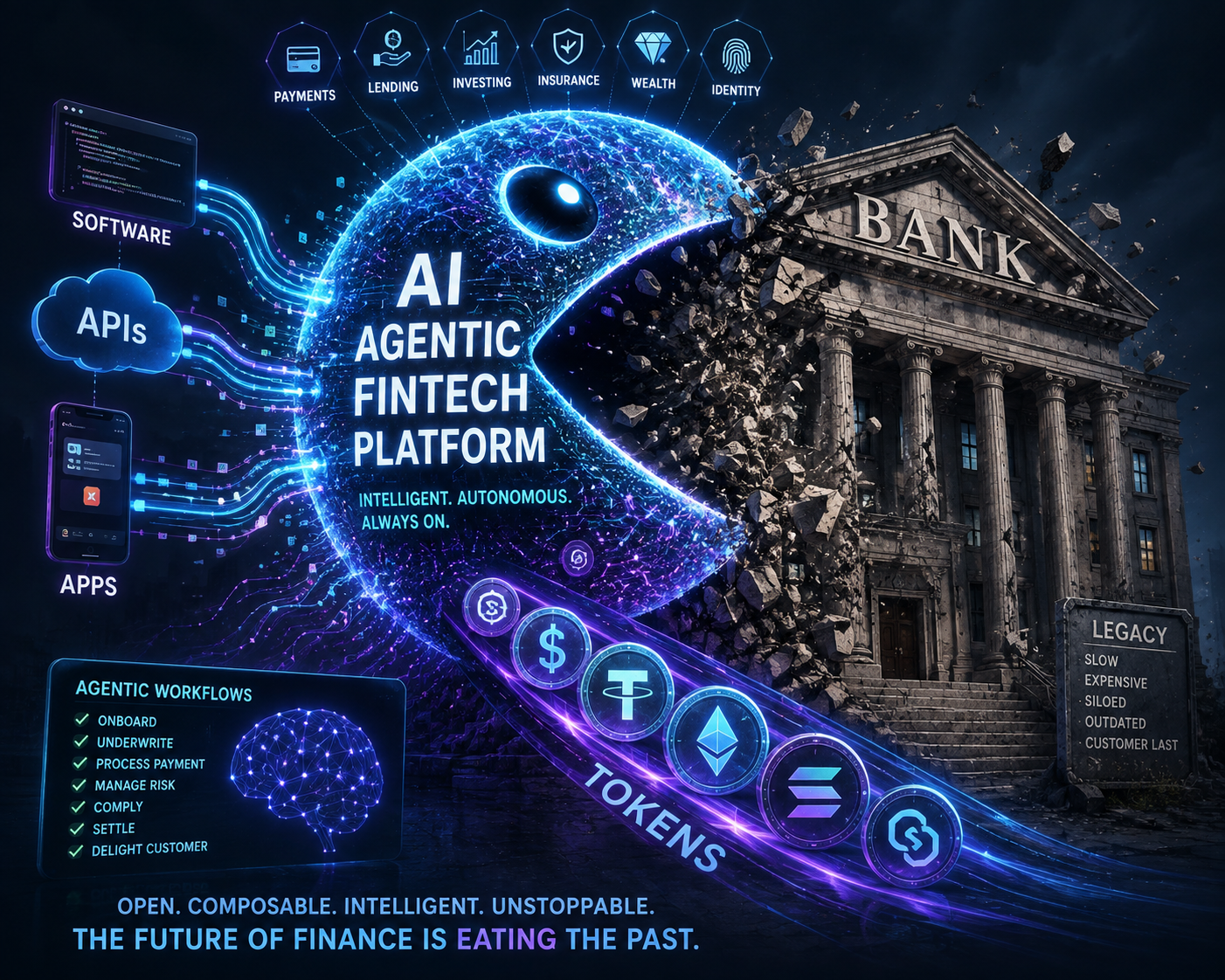
Something interesting is happening in fintech, and I think we may need to stop talking about fintech as though it is an industry sitting somewhere alongside banking.
For most of the past twenty years, that distinction made sense because there were banks and there were fintech companies trying to disrupt particular parts of what banks did. Today, those boundaries are becoming increasingly difficult to see as banks, fintechs, technology companies, marketplaces, investment platforms and digital asset firms expand into each other's territory, while artificial intelligence and embedded finance begin to change the structure of financial services themselves.
Just look at the news this week.
European fintech companies are increasingly targeting the United States; Revolut has secured a French banking licence as part of its continuing European expansion; Robinhood is bringing zero-fee digital asset trading to Britain; and the FCA is actively helping ClearScore, Modulr and Zilch scale.
- European Fintechs Enter US Banking Market
- Revolut secures French bank licence in Europe expansion
- Robinhood brings zero-fee digital asset trading to UK
- FCA Scale-up Unit Welcomes ClearScore, Modulr, and Zilch to Boost UK Fintech Growth
At the same time, investors are pouring money into a new generation of AI-native fintech companies and embedded finance is pushing more financial products into platforms that most customers would never think of as banks.
Individually, these are interesting developments, but collectively they tell us something far more important about where finance is heading. Fintech is no longer just nibbling away at pieces of the banking value chain because some of the companies that began by solving a single problem are becoming substantial financial institutions and global platforms in their own right.
The payment company becomes a financial platform; the trading application adds crypto and payments; the fintech obtains a banking licence; the bank distributes its capabilities through APIs; the retailer embeds credit and the software platform integrates payments, lending, insurance and treasury services directly into the workflows of its customers.
That represents quite a change from the fintech world we were talking about ten or fifteen years ago.
Back then, the story was largely about unbundling banking, as startups identified expensive, inefficient or badly designed banking products and created something better.
Wise attacked international transfers, Klarna transformed the experience of consumer credit, Stripe simplified merchant payments, Robinhood changed retail investing and Revolut began with foreign exchange and a card before steadily expanding its ambitions. The assumption was that banks owned the financial relationship and fintech companies would take profitable pieces of that relationship away from them.
What we are seeing now looks more like rebundling, except the bundle is being assembled by a very different collection of companies.
Revolut wants to become a global bank; Robinhood increasingly resembles a financial supermarket; Stripe has moved far beyond simply processing card payments and platforms across retail, travel, commerce and business software are integrating financial capabilities directly into their services. Rather than customers assembling their financial lives by choosing products from individual institutions, those products increasingly come together inside the platforms where customers are doing something else.
This is where embedded finance becomes particularly important because it changes where finance happens.
You do not need to visit a bank to borrow if credit appears naturally when you buy something, you do not need to visit a payments company if payment is simply part of the transaction, and you do not necessarily need a separate insurance relationship if protection is incorporated into whatever you are purchasing.
The financial service is still there, and somewhere underneath the experience there will usually be a regulated institution providing the account, balance sheet, payment rails, credit or insurance capacity, but that institution may be largely invisible to the customer.
Artificial intelligence takes this transition considerably further because embedded finance changes where financial services are delivered, while AI changes who, or increasingly what, makes the financial decision.
Until now, digital banking has mainly given humans better tools with which to manage money. We open an app, look at information, make a decision and tell the system what we want it to do.
Agentic AI begins to change that relationship because the technology can increasingly understand what we are trying to achieve, examine the available choices, recommend an action and, where we give it sufficient authority, execute that action on our behalf.
Put embedded finance and artificial intelligence together and something fundamental begins to happen.
Finance stops being somewhere you go and increasingly becomes something happening intelligently in the background. Your financial agent may decide how much cash should remain in your current account, where excess liquidity should be placed, which payment method should be used, whether a subscription should be renewed, which foreign exchange route offers the best value or whether a purchase fits within the financial parameters you have established. The interesting part is that the customer may neither know nor care which institution ultimately provides each component, because the agent is choosing the financial capability rather than the customer choosing the financial institution.
That is why I keep returning to the changing architecture of digital finance.
Years ago, I described the transformation of banking as moving away from products, processes and people towards apps, APIs and AI. Even that model is moving on rapidly because the emerging architecture increasingly revolves around agents, tokens and data.
Apps gave us the interface, APIs connected the services and AI began making those services intelligent, but agents can now act, tokens can make assets and money programmable, and data provides the raw material from which the whole intelligent financial system operates.
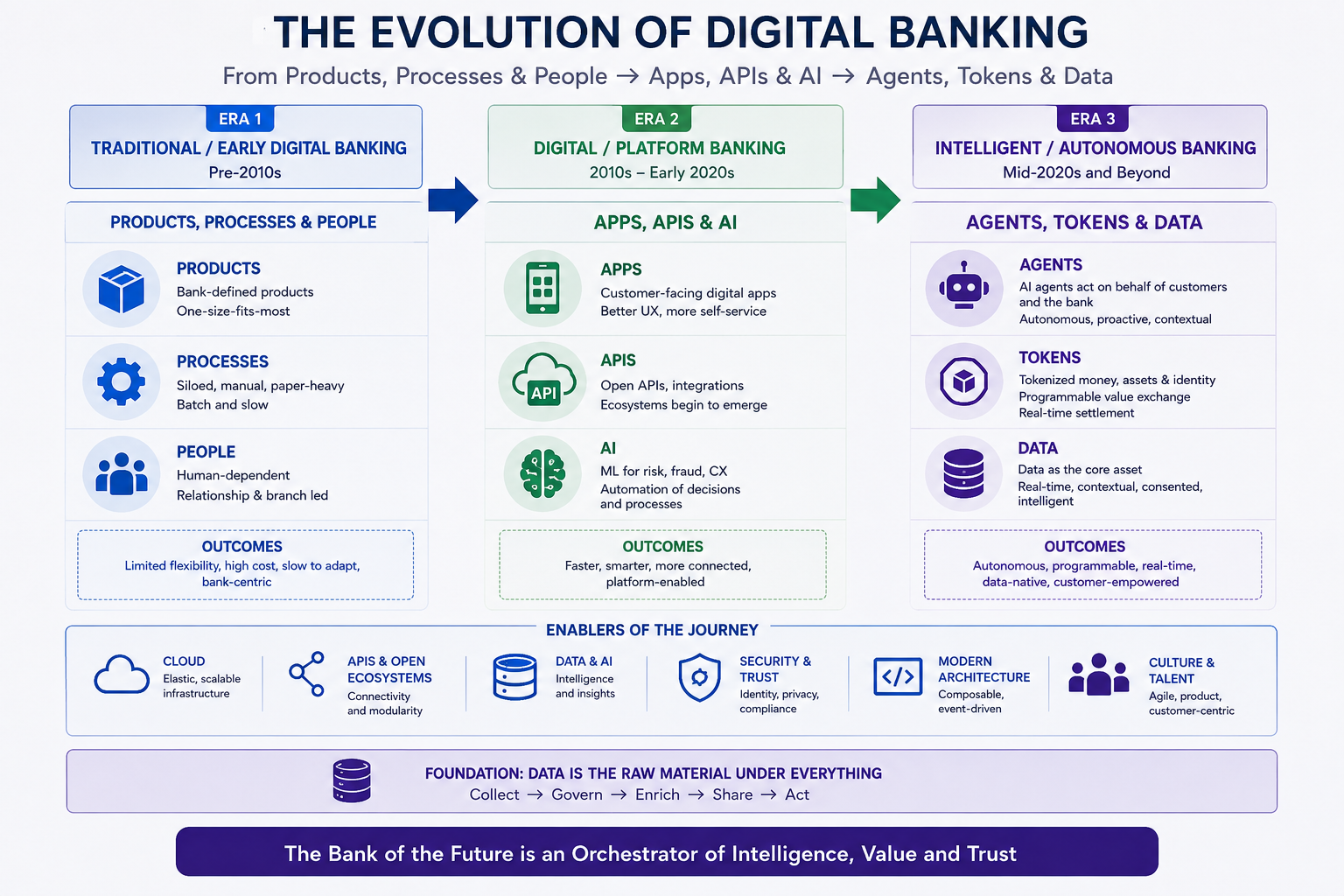
Seen through that lens, the world of fintech and banking becomes far more interesting.

Chris M Skinner
Chris Skinner is best known as an independent commentator on the financial markets through his blog, TheFinanser.com, as author of the bestselling book Digital Bank, and Chair of the European networking forum the Financial Services Club. He has been voted one of the most influential people in banking by The Financial Brand (as well as one of the best blogs), a FinTech Titan (Next Bank), one of the Fintech Leaders you need to follow (City AM, Deluxe and Jax Finance), as well as one of the Top 40 most influential people in financial technology by the Wall Street Journal's Financial News. To learn more click here...