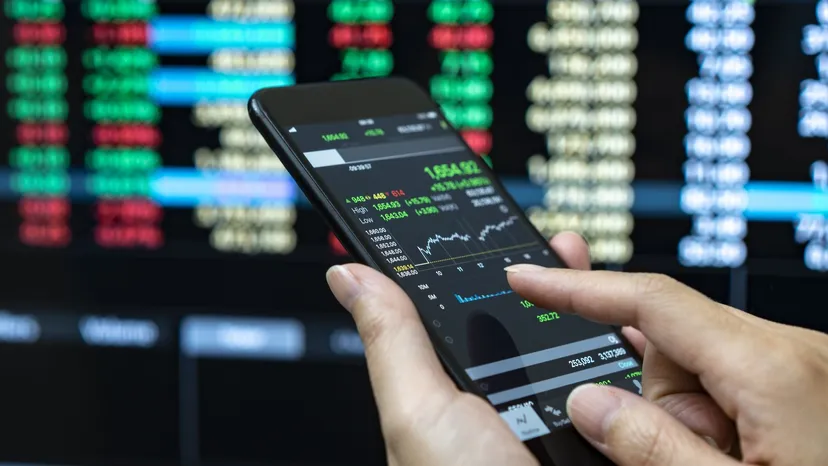
For most of us, the cost of a trade is whatever the screen says. You click buy, you click sell, and somewhere in the middle a small amount of money quietly leaves. Nobody sends you an invoice. Nobody itemises it.
And that is precisely the interesting bit, because how that cost is structured tells you almost everything about how the business behind your platform makes its money.
There are broadly two ways it works. In one, the fee is folded invisibly into the price you're shown. In the other, it's pulled out and displayed as a separate charge. The second is what a raw spread forex broker offers: you get something close to the underlying market price, and you pay a stated commission on top: same cost, different plumbing, very different psychology.
Neither model is dishonest. But they suit different people, and if you're trading often, choosing the wrong one drains money from you all day long without ever announcing itself.
Think of it like changing currency at an airport. The kiosk with the big sign saying no commission is telling the truth. It just isn't telling you the whole story, because the fee is built into the exchange rate. The bank down the road charges you three pounds and shows it to you, which feels worse and is often cheaper. The difference isn't honesty. It's where the cost is hiding.
The same trick runs through trading accounts. A standard account widens the price slightly before it reaches you and keeps the difference. A raw account gives you the market price and bills you separately. One feels simple. The other is measurable.
Measurable matters more than people expect.
If you place one trade a month and hold it for six weeks, this whole debate is noise. You'll never notice. No one gives a medal for optimising a cost you pay four times a year.
But if you're in and out of the market a dozen times before lunch, you're paying that cost a dozen times before lunch. Small numbers, repeated relentlessly, stop being small numbers. And if you're chasing tiny moves, the fee can swallow a serious chunk of what you were hoping to make in the first place.
This is where the technology angle sneaks in, because trading stopped being a human activity a while ago.
An enormous share of currency volume now comes from software. Someone writes a strategy, tests it against years of historical prices, and lets it run. That process only works if the costs are knowable. A fixed commission is a number you can put in a spreadsheet. A markup that quietly widens when markets get busy is not. Plenty of strategies look profitable until you subtract realistic costs, and then they don't.
So the argument for transparent pricing isn't really about being cheaper. It's about being calculable.
Which brings us to the part nobody puts on a pricing page.
Every advertised price is a fair-weather number. It's measured when markets are calm, liquidity is deep, and nothing much is happening. What matters is what your order costs at half past two in the afternoon when a central bank says something unexpected.
And that has almost nothing to do with pricing policy. It has to do with infrastructure.
When you press the button, software has to find someone willing to take the other side, confirm a price and get it back to you, ideally in a few thousandths of a second. If that pipeline is slow, or the pool of counterparties behind it is thin, you get filled somewhere worse than you asked for. That gap can comfortably exceed whatever you saved by picking the cheaper-looking account.
Advertised pricing is a promise about calm weather. Execution is what you actually get in a storm.
There's another structural question worth asking. Some arrangements pass your order out to external liquidity providers. Others involve the firm itself taking the opposite side. The second isn't automatically sinister, and it's how a lot of the industry has always worked. But it creates tension the first one doesn't, because your loss becomes someone else's gain rather than a routing fee. It's a reasonable thing to understand before you fund anything.
So which structure should you use?
Honestly, it depends on how often you trade, and very little else. Hold positions for weeks and place them rarely, and all-in pricing is simpler, and the difference won't change your year. Trade actively, or run something automated that fires while you're asleep, and transparent pricing usually earns its keep, provided the technology underneath is genuinely good.
That last clause is not a footnote. Cheap pricing sitting on top of unreliable execution is just an expensive trade wearing a discount label.
The useful habit is to stop staring at the headline number and start asking what it's made of. What's added to the price? What's charged separately? How fast do orders actually fill? And what happens to all three when the market gets loud?
Answer those four honestly, and the choice tends to make itself.

Chris M Skinner
Chris Skinner is best known as an independent commentator on the financial markets through his blog, TheFinanser.com, as author of the bestselling book Digital Bank, and Chair of the European networking forum the Financial Services Club. He has been voted one of the most influential people in banking by The Financial Brand (as well as one of the best blogs), a FinTech Titan (Next Bank), one of the Fintech Leaders you need to follow (City AM, Deluxe and Jax Finance), as well as one of the Top 40 most influential people in financial technology by the Wall Street Journal's Financial News. To learn more click here...