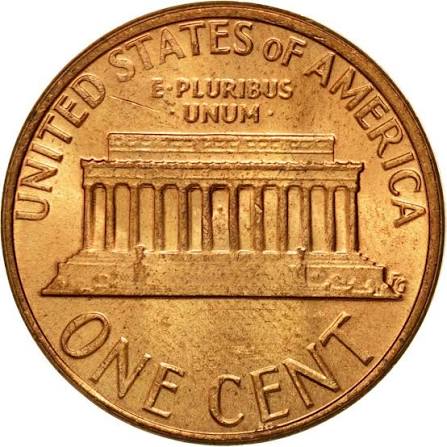
I found myself wondering the other day why almost everything seems to end in .99.
Books cost 9.99. Electrical goods are 99.99. Cars are advertised at 19,999. Even software subscriptions seem incapable of charging a clean 10 or 100. One penny appears to have become one of the most valuable numbers in commerce.
Most people assume it is simply clever marketing. It is, but that’s only half the story. The origins of .99 pricing lie in one of retail’s oldest problems: trust.
Y’see, if you charge 1 or 10 or 100, the dishonest employee can pocket the cash. By charging 0.99, 9.99 or 99.99, the employee has to record the transaction in a till to give change. Hence, the reason for the .99 system.
The whole point is to record transactions.
In the late nineteenth century, cash was king, and so was theft. Shop owners had little way of knowing whether every sale had actually been recorded. A dishonest cashier could easily take a dollar from a customer and quietly slip it into their own pocket without anyone noticing.
One man became particularly frustrated by this problem. James Ritty.
James Ritty owned the Pony House saloon in Dayton, Ohio, and became convinced that his bartenders were helping themselves to his profits. Returning from a trip to Europe in 1879, he noticed a mechanical counter recording the revolutions of a ship’s propeller. It struck him that the same mechanism could count sales instead of propeller turns.
On return, and working with his brother John, Ritty built what became the world’s first commercially successful cash register. He patented it later that year and gave it a wonderfully Victorian name: Ritty’s Incorruptible Cashier.
The word incorruptible was the whole point. The machine wasn’t designed to speed up shopping or improve customer experience. It was designed to remove temptation. Instead of trusting employees, merchants could trust a machine that faithfully recorded every transaction.
Although Ritty struggled to commercialise his invention, the patents were eventually bought by John Henry Patterson, who founded the National Cash Register Company – today, known as NCR – in Dayton in 1884. Patterson transformed the cash register into one of the great American business successes and established Dayton as a centre of industrial innovation.
This is where .99 pricing enters the story.
If an item cost exactly one dollar, a dishonest cashier could simply pocket the money without opening the till. But if it cost 99 cents, the cashier had to open the register to give change. Opening the till created a mechanical record of the sale, making theft far more difficult.
Whether this was the original reason every retailer adopted .99 pricing remains debated by historians, but it undoubtedly accelerated its adoption. One penny became an anti-fraud technology.
Over time, however, something even more interesting happened. Retailers discovered that customers actually preferred prices ending in nine.
Behavioural economists call this left-digit bias. Our brains read numbers from left to right and unconsciously place disproportionate emphasis on the first digit. £9.99 feels much closer to £9 than £10, despite the difference being only a penny. Consumers mentally classify it as being “under ten pounds” rather than “around ten pounds”. The arithmetic hasn’t changed, but the perception has.
The effect goes beyond simple maths.
Prices ending in .99 have become synonymous with value. They suggest a retailer has squeezed every last penny out of the price in the customer’s favour. Rounded prices, on the other hand, communicate something different. They signal confidence, simplicity and premium quality. A luxury watch is unlikely to cost 9,999.99. It is far more likely to cost 10,000 because the round number reinforces exclusivity rather than thrift.
Even today, when digital payments have largely eliminated the operational need for cash registers and change, the convention remains remarkably resilient.
Supermarkets and discount retailers continue to rely heavily on prices ending in nine because decades of behavioural research show they still increase sales. Premium brands often move in the opposite direction. Apple, for example, frequently favours rounded pricing because it supports a premium positioning rather than a bargain-hunting mindset.
There is also a broader lesson here.
Every generation believes its technologies are revolutionary, yet many solve remarkably familiar problems. The cash register was invented to create trust between merchants and employees.
Today we look to artificial intelligence, blockchain, digital identity and programmable money to create trust between institutions, businesses and consumers. The technologies could hardly be more different, but the objective is exactly the same: replacing trust in people with trust in systems.
Perhaps that is why a single penny has endured for almost 150 years. It reminds us that some of the biggest innovations in finance are not about moving money more quickly. They are about making people trust that the money has been counted correctly in the first place.
So, the next time you buy something for .99, think about that penny and why it’s there.
Postnote: why does the cash register ring?
James Ritty also added the ker-ching as that would allow any store owner to know when someone opened the till.

Chris M Skinner
Chris Skinner is best known as an independent commentator on the financial markets through his blog, TheFinanser.com, as author of the bestselling book Digital Bank, and Chair of the European networking forum the Financial Services Club. He has been voted one of the most influential people in banking by The Financial Brand (as well as one of the best blogs), a FinTech Titan (Next Bank), one of the Fintech Leaders you need to follow (City AM, Deluxe and Jax Finance), as well as one of the Top 40 most influential people in financial technology by the Wall Street Journal's Financial News. To learn more click here...