I've often wondered whether banks spend billions on compliance to prevent financial crime or to demonstrate that they have spent billions on compliance. There is a significant difference between the two, and the latest revelations about Deutsche Bank suggest that the difference is worth exploring.
An extraordinary investigation published today, Inside Deutsche Bank, is based on 15.6 million confidential documents examined by more than 230 journalists from over 50 media organisations. It represents the largest known leak of internal banking records and provides a remarkable insight into the tension between making money and doing the right thing.
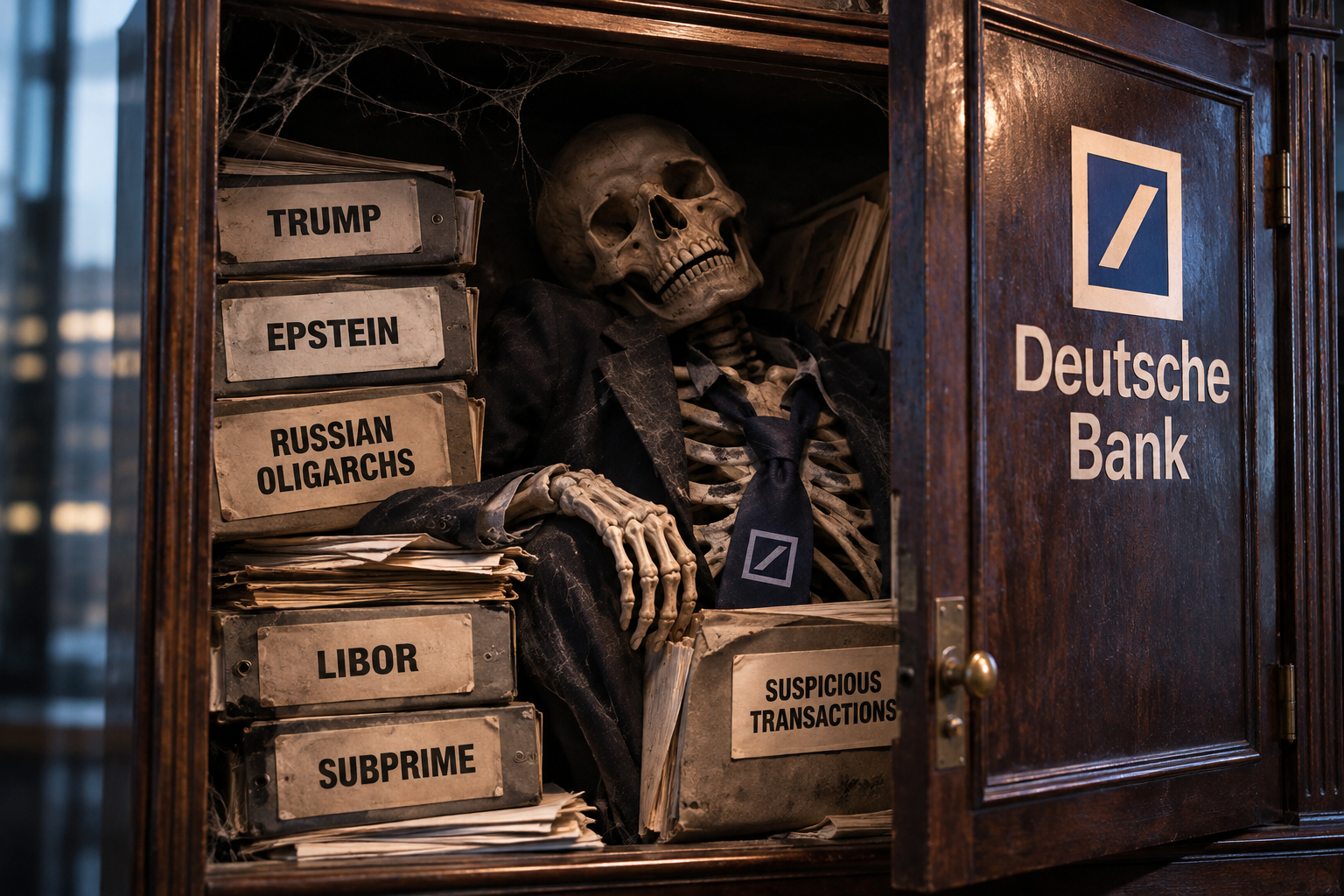
The names involved are familiar: Donald Trump, Jeffrey Epstein, Russian oligarchs and some of the world's wealthiest individuals. The more interesting aspect of the investigation, however, is not who Deutsche Bank was banking, but how the bank allegedly dealt with its own employees who raised concerns about banking them.
According to Le Monde, some employees had developed an alternative interpretation of KYC. Rather than Know Your Customer, it became Kill Your Career.
Just consider the implications of that.
Imagine you work in the anti-money laundering department of a major bank and discover suspicious transactions involving one of its wealthiest customers. Do you get promoted for protecting the bank or sidelined for damaging a profitable customer relationship? More importantly, who makes that decision? The person responsible for protecting the bank or the person responsible for making money for the bank?
According to Follow the Money, Deutsche Bank identified suspicious payments involving companies belonging to Donald Trump in 2014, 2017 and 2019. The investigation alleges that reports submitted to US authorities concerning some of those transactions omitted the connection to Trump. Interestingly, after his election in 2016, the bank created a special internal project to manage its relationship with him, codenamed Novus Ordo – New Order.
None of this establishes that Trump was involved in money laundering, but it raises serious questions about whether the level of scrutiny applied to a customer is inversely proportional to their wealth and political influence.
The irony is that the wealthier and more politically connected a customer is, the greater the scrutiny should be. That's the whole point of enhanced due diligence and the rules surrounding politically exposed persons (PEPs). Yet these are precisely the customers that banks compete hardest to attract and retain. When the commercial value of a customer relationship conflicts with the regulatory obligations of the bank, which takes precedence?
Trump is not the only example that raises this question. The Financial Times reports that Deutsche Bank identified almost $600 million in suspicious payments linked to Jeffrey Epstein. Add to this the bank's historical dealings with Russian oligarchs, the Libor scandal, the subprime mortgage scandal and numerous other controversies, and you begin to wonder where the distinction lies between an occasional regulatory failure and a systemic cultural problem.
Since 2012, Deutsche Bank has paid €18.6 billion to settle litigation and alleged violations. That's an extraordinary amount of money, but does it change behaviour?
This is one of my biggest issues with the way we regulate banks. We fine the institution rather than the individuals responsible for its decisions. The shareholders pay the penalties whilst the executives who generated the revenues can walk away with their bonuses. If the financial rewards of breaking the rules outweigh the financial penalties, then the fines become a cost of doing business.
To be fair, Deutsche Bank has issued a robust response, arguing that many of these incidents are historical and that it is a fundamentally different institution today. The bank points to €7 billion invested in its control environment between 2019 and 2025, improved credit ratings and a return to record profitability.
I hope they're right, but spending €7 billion on controls is not the same as changing a culture. You can invest billions in RegTech, Artificial Intelligence, transaction monitoring and financial crime prevention, but none of those investments will address the problem if the people running the business can override the controls when a customer is sufficiently profitable.
In fact, the Deutsche Bank revelations raise a much bigger question for the banking industry. We are increasingly using artificial intelligence to identify suspicious transactions, monitor customer behaviour and detect financial crime, but will those intelligent systems be empowered to stop transactions involving the bank's most profitable customers? Who overrules the algorithm and, when they do, who holds them accountable?
The real test of a bank's commitment to preventing financial crime is not how much money it spends on compliance, but how much money it is prepared to walk away from.
Perhaps regulators should introduce a new metric alongside return on equity: revenues rejected on ethical grounds.
I'd love to see that figure in every bank's annual report.
For more:
'Inside Deutsche Bank': Banking giant's secrets revealed by 15 million confidential documents

Chris M Skinner
Chris Skinner is best known as an independent commentator on the financial markets through his blog, TheFinanser.com, as author of the bestselling book Digital Bank, and Chair of the European networking forum the Financial Services Club. He has been voted one of the most influential people in banking by The Financial Brand (as well as one of the best blogs), a FinTech Titan (Next Bank), one of the Fintech Leaders you need to follow (City AM, Deluxe and Jax Finance), as well as one of the Top 40 most influential people in financial technology by the Wall Street Journal's Financial News. To learn more click here...