I used to predict the future year, but now I predict the future years. The reason I’ve given up my yearly crystal ball is because so many other people have them, so I don’t need to bother. Therefore, as we start 2026, here are key predictions for the what will happen with technology in 2026.
My favourite report on this came from a firm called Pluralsight, a company that provides online courses and research to develop tech skills. The reason I liked their report is that it covers everything to do with tech developments in 2026 (you can download it here). The major headlines are that:
- The “AI bubble” will deflate, but not burst
- Cybersecurity will become an issue too big to ignore
- Successful companies will move from “AI as a product” to “AI as a solution”
Specifically on AI, they reckon that:
- Business will focus on interoperable, agent-driven architectures
- Expect more features from GenAI companies (but not much progress in the LLMs behind them)
- Responsible, secure AI adoption will be a major business challenge (and experts will be needed)
- Domain-specific local models will become more commonplace
- AI SMEs will need to function as builders, translators, and truth detectors
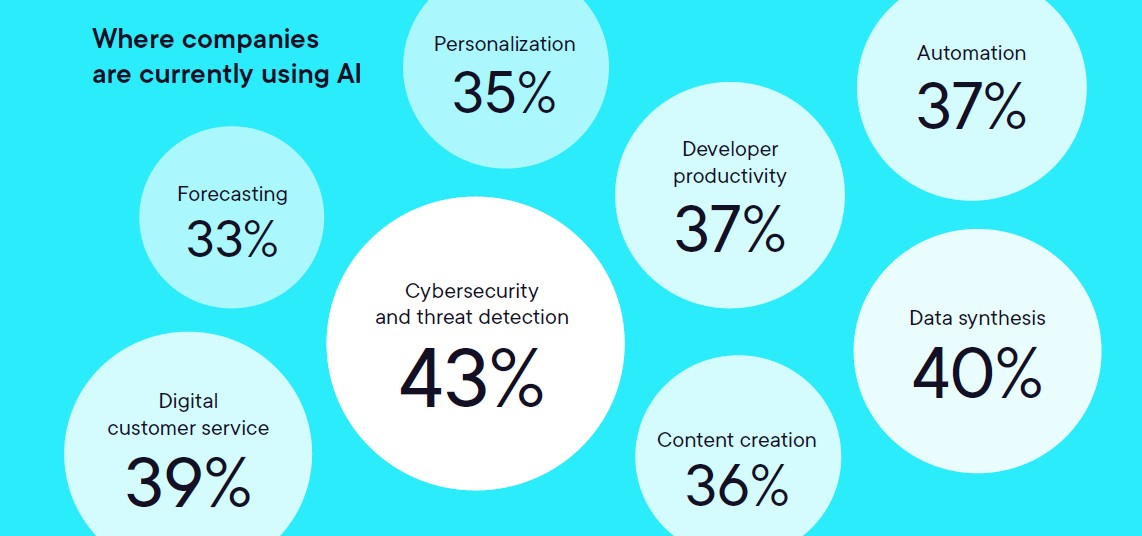
Then they move on to cybersecurity:
- Threat actors will use AI to supercharge and automate social engineering attacks
- Post-quantum cryptography will be adopted . . . slowly
- Cyber supply chain risk management will become critical
In terms of software development:
- Everything will be AI-driven development, vibe coding, and debugging
- Cybersecurity, software development, and QA will overlap due to AI
- As AI writes the code, developers will be split between the unsatisfied and the thriving
In regard to cloud computing developments, they reckon that:
- Organisations will return to cloud computing projects and skills
- Cloud computing—along with security and data management—will still be connected with delivering AI at scale
In terms of data management:
- Temporal data will be the new normal
- Data science will evolve into system science to deliver production-ready models
- SQL will still be an essential skill in 2026
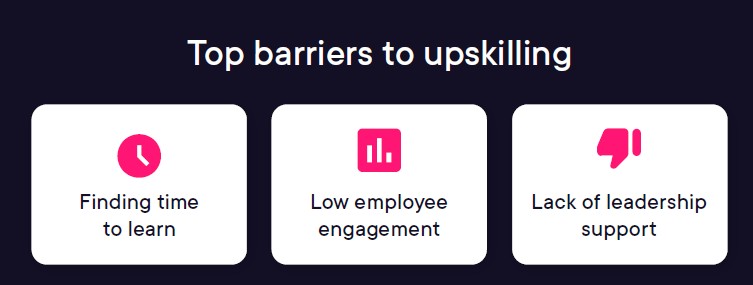
From an internal management perspective of people, they also list xxx areas that will require attention:
- 2026 will bring an even sharper decline in entry-level tech roles
- Due to rising costs, companies will focus on internal hiring, upskilling, and retention
- Seasoned developers will struggle to educate leadership about GenAI’s actual abilities
- Professionals overusing AI will need to combat skills atrophy
- Pressure will mount on HR and L&D (Learning and Development) teams
- Tech practitioners will be at greater risk of burnout from upskilling and work demands
Finally, in terms of IT leadership:
- Tech leaders should keep a keen eye on autonomous AI
- In 2026, every company will be a technology company and have a need for IT upskilling
- Successful leaders will create a culture of upskilling, from protecting time to celebrating wins
- Investing in today’s talent will mitigate future problems
And just to finish off, in case you cannot be bothered with the download, I’ve place their report on slideshare so you can see it yourselves right now!
Another nice report came from Infotech, who identify eight big trends this year:
Trend #1
Resilient Supply Chain Sourcing – Low-friction global sourcing shifts to an adaptable, diversified, and reliable supply chain for materials and technology.
Trend #2
Integrated Organizational Resilience – IT risk management moves to an integrated enterprise approach that proactively responds to risk.
Trend #3
Multi-Agent Orchestration – Individual task-based agents evolve to coordinated ecosystems of agents in pursuit of a shared goal.
Trend #4
Smart Sensing Networks – IoT becomes more sophisticated with the convergence of advanced sensors and edge AI, enabling real-time autonomy.
Trend #5
AI as Adversary and Ally– As AI escalates the cyber arms race between criminals and organizations, augmenting both offense and defence, organizations must keep the existential threat of AI in their sights.
From back-office operator to exponential IT
Trend #6
Federated Data Governance – Data issues are resolved with a domain-based decentralized ownership architecture that can be automated.
Trend #7
Purpose-Built Platforms – Modern infrastructure is explicitly tailored for specific goals, rather than relying on commodity solutions.
Trend #8
Service as Software – Instead of paying for access to cloud-delivered software, enterprises pay for software that delivers outcomes through AI automation and integration.
There is also a very good analysis from Andreessen Horowitz:
Big Ideas 2026: Part 1 - by a16z New Media - a16z
Big Ideas 2026: Part 2 - by a16z New Media - a16z
Big Ideas 2026: Part 3 - by a16z New Media - a16z
Meantime, Gartner have ten tech predictions for 2026:
These 10 trends reflect how leading organizations are responding to complexity and opportunity in an AI-powered, hyperconnected world:
- AI-Native Development Platforms
- AI Supercomputing Platforms
- Confidential Computing
- Multiagent Systems
- Domain-Specific Language Models
- Physical AI
- Preemptive Cybersecurity
- Digital Provenance
- AI Security Platforms
- Geopatriation

Chris M Skinner
Chris Skinner is best known as an independent commentator on the financial markets through his blog, TheFinanser.com, as author of the bestselling book Digital Bank, and Chair of the European networking forum the Financial Services Club. He has been voted one of the most influential people in banking by The Financial Brand (as well as one of the best blogs), a FinTech Titan (Next Bank), one of the Fintech Leaders you need to follow (City AM, Deluxe and Jax Finance), as well as one of the Top 40 most influential people in financial technology by the Wall Street Journal's Financial News. To learn more click here...