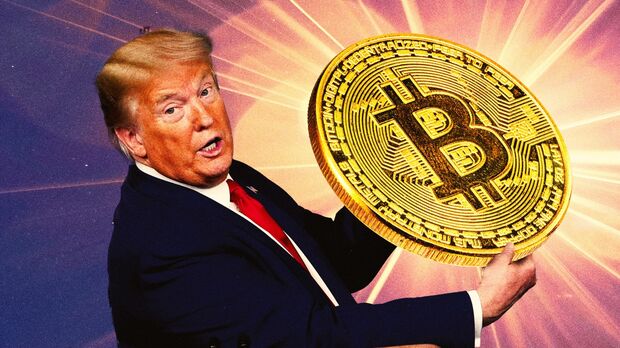
I’ve written a lot about the Crypto President and the friction between the Trump administration’s legislation ranging from the GENIUS Act to GRANITE to CLARITY and you really could not make this stuff up.
Will Donald Trump be the Crypto President?
America is creating a war with Europe over digital money
Donald Trump, the President who has done more than any of his predecessors to embrace cryptocurrency, whose family has built an extraordinary crypto empire while he has been in the White House and whose personal financial disclosures revealed more than $1.4 billion of crypto-related income during 2025, has now agreed to provisions that could require him to sell substantial crypto holdings or place them into a blind trust to get the CLARITY Act through the Senate.
That is quite a turnaround, particularly when you look at how deeply the Trump family has become embedded in crypto. Reuters estimated earlier this year that the family's crypto ventures had added at least $2.3 billion to its wealth, an extraordinary sum generated through projects ranging from World Liberty Financial and its associated tokens to the $TRUMP memecoin and other digital asset interests. Reuters also calculated that investors in Trump-linked crypto ventures had collectively lost around $2 billion, creating the rather remarkable situation in which the President of the United States has presided over an administration transforming America's approach to cryptocurrency while his own family has been one of the largest financial beneficiaries of the crypto boom.
This has always been the uncomfortable elephant sitting in the crypto room. Trump arrived in his second presidency promising to make America the crypto capital of the world, appointed regulators far more sympathetic to digital assets, championed Bitcoin, backed stablecoins and supported legislation designed to give the industry the regulatory certainty it had demanded for years. At the same time, the Trump family was making an enormous amount of money from the very industry whose regulatory environment his administration was reshaping.
Now that collision between politics, policy and personal wealth has become impossible to ignore because the CLARITY Act needs Democratic support in the Senate, and ethics restrictions surrounding presidential crypto interests have become part of the price of getting it passed. According to reports, Trump has accepted most of a bipartisan ethics package being negotiated by Republican Senator Thom Tillis and Democrat Ruben Gallego, including provisions addressing substantial crypto holdings and restrictions on elected officials issuing digital assets.
In other words, Trump appears willing to sacrifice at least some control over the crypto fortune his family has accumulated in order to secure the legislation that could transform the American crypto industry.
There is another delicious irony here because CLARITY is not arriving in isolation. It follows the GENIUS Act, which created America's federal regulatory framework for payment stablecoins and effectively gave regulated digital dollars a route into the mainstream financial system. CLARITY takes the argument further by establishing how the broader digital asset market should be regulated and, critically, where responsibilities sit between agencies such as the SEC and CFTC.
This is where the banks enter the story because one of the fiercest arguments surrounding CLARITY concerns stablecoin rewards and the possibility that trillions of dollars could eventually migrate from conventional bank deposits into digital dollars. If consumers can hold regulated stablecoins, earn rewards on them and move them instantly through digital networks, the stablecoin stops looking like an obscure cryptocurrency product and starts looking suspiciously like a bank account. The banking industry's concern is therefore understandable: this legislation could help create a regulated competitor to one of the foundations of their business model.
Then we have GRANITE, which adds another layer to the argument by challenging the extraterritorial reach of foreign digital regulation over American companies and citizens. As I have written before, put GENIUS, CLARITY and GRANITE alongside each other and an interesting picture emerges in which America is defining the rules for digital money, defining the rules for digital markets and increasingly asserting that American digital technology should operate according to American rather than European rules.
Yet that is the background to today's story rather than the headline, because the headline remains Donald Trump and the extraordinary amount of money his family has made from crypto.
Crypto began as a rebellion against governments, central banks, Wall Street and the concentration of financial power. Bitcoin emerged from the wreckage of the financial crisis with an explicit challenge to a system in which governments controlled currencies and banks controlled money, yet less than two decades later the President of the United States has become closely associated with a family crypto empire worth billions while simultaneously overseeing the creation of the regulatory framework that will determine how the industry develops.
There are legitimate arguments that Trump's personal investments and government policy should be considered separately, and supporters will point out that placing assets into a blind trust or divesting them is precisely how conflicts of interest are addressed. Even so, the scale of the money involved makes this different from a politician owning a few technology shares while legislating about Silicon Valley. We are talking about billions of dollars of wealth associated with an industry whose future is being shaped by the administration headed by the same man.
And now Trump faces a fascinating choice. Having made crypto central to his political and economic agenda while his family made an extraordinary fortune from it, he appears prepared to accept restrictions on those interests because getting CLARITY passed matters more.
Maybe that tells us something about where this is heading.
Trump has already made his billions from crypto. GENIUS has established the foundations for regulated digital dollars, CLARITY could establish the architecture for regulated digital markets and GRANITE forms part of a wider battle over who gets to write the rules of the digital economy. If that architecture succeeds, the financial prize for America will dwarf anything one family has made from tokens and memecoins because the real prize is maintaining the dollar's dominance as money itself becomes digital.
Which leaves us with one wonderfully ironic possibility: Donald Trump made billions embracing the crypto revolution, may now have to give up control of much of his personal stake in that revolution, and could ultimately be remembered for something far bigger than either.
He may have helped turn the revolution against the dollar into the next generation of the dollar itself.

Chris M Skinner
Chris Skinner is best known as an independent commentator on the financial markets through his blog, TheFinanser.com, as author of the bestselling book Digital Bank, and Chair of the European networking forum the Financial Services Club. He has been voted one of the most influential people in banking by The Financial Brand (as well as one of the best blogs), a FinTech Titan (Next Bank), one of the Fintech Leaders you need to follow (City AM, Deluxe and Jax Finance), as well as one of the Top 40 most influential people in financial technology by the Wall Street Journal's Financial News. To learn more click here...