I came across another interesting piece of proposed American legislation this week: the GRANITE Act. On the surface, it has nothing specifically to do with banking, stablecoins or cryptocurrencies, but put it alongside the GENIUS Act and CLARITY Act and something much bigger starts to emerge.
America is building a digital financial fortress.
The GENIUS Act, signed into US law in July 2025, creates America’s first federal framework for payment stablecoins, requiring approved issuers to maintain 1:1 backing with highly liquid reserves such as dollars and short-term Treasuries, alongside regular reserve disclosures, regulatory supervision and anti-money laundering controls.
In practical terms, GENIUS creates the regulated infrastructure for putting the dollar onto the internet at scale, turning dollar stablecoins from a crypto experiment into an increasingly important mechanism for distributing digital dollars around the world.
The CLARITY Act tackles the wider digital asset market by establishing the regulatory architecture for crypto assets and determining which activities and participants fall within the responsibilities of the SEC, CFTC and other American regulators.
Where GENIUS establishes the rules for digital money, CLARITY establishes the rules for the markets through which digital assets are issued, traded and exchanged.
Then comes GRANITE, and this is where things get particularly interesting.
The GRANITE Act - the Guaranteeing Rights Against Novel International Tyranny and Extortion Act - is designed to prevent foreign governments and regulators from enforcing censorship demands against American citizens and companies where those demands conflict with US First Amendment protections. The immediate background is the extraordinary confrontation between the British regulator Ofcom and the American website 4chan under Britain’s Online Safety Act.
Preston Byrne, who represents 4chan and has written extensively about the proposed legislation, argues that Britain is attempting to project British regulation into America by imposing fines and demands upon American businesses for conduct taking place in the United States.
GRANITE’s response is straightforward: foreign governments are free to regulate activity within their own jurisdictions, but they cannot simply export those regulations into America when they conflict with American constitutional rights.
At first sight, this is an argument about free speech and the internet, but its implications stretch far beyond either because the same jurisdictional questions apply to software development, AI models, web hosting and non-custodial decentralised finance. GRANITE therefore starts defining something much larger: the boundary between American technology and foreign regulatory power.
This is where the three pieces of legislation begin to fit together.
GENIUS says our digital money operates under American rules. CLARITY says our digital markets operate under American rules. GRANITE says our digital companies and citizens will not automatically operate under your rules.
That is a powerful combination because, for years, Europe has been remarkably successful at exporting regulation. GDPR demonstrated what became known as the Brussels Effect: if global companies wanted access to European consumers, they had to follow European rules and, in many cases, it was easier to apply those standards globally than maintain different systems for every jurisdiction. That philosophy continued through the Digital Services Act and AI Act, while Britain has pursued its own version through the Online Safety Act.
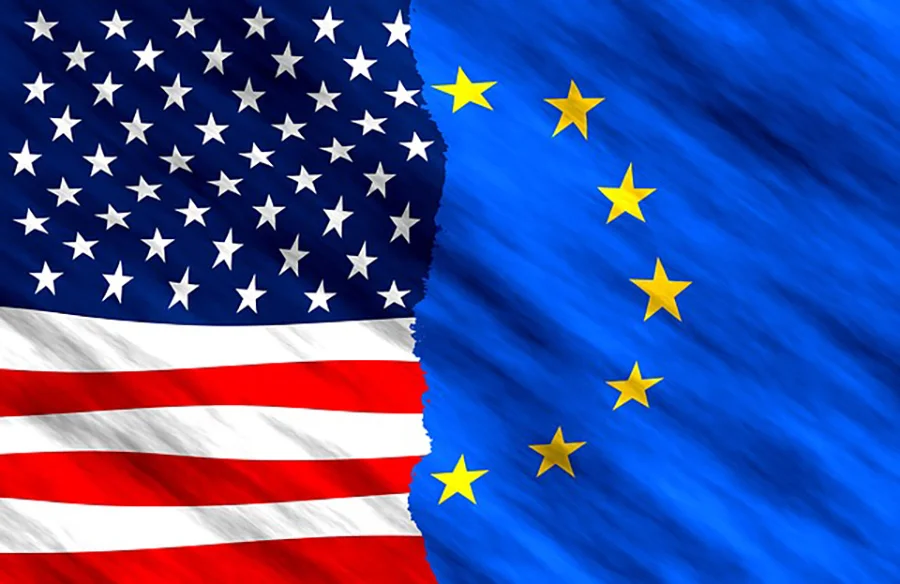
America is now constructing the opposite philosophy. Europe says that, if you want access to our citizens, you follow our rules, while America increasingly says that, if you want jurisdiction over our companies and citizens, your rules must survive American constitutional standards.
That collision will become far more important as AI, crypto, tokenisation and autonomous commerce converge because these technologies do not recognise national borders in the way twentieth-century regulation assumes they should.
Imagine an American AI agent conducting autonomous commerce using dollar stablecoins issued under GENIUS, accessing tokenised assets through markets regulated under CLARITY and operating through software protected by American constitutional law.
Britain or the European Union then attempts to impose restrictions upon that software, agent, platform or its transactions because European citizens are interacting with it.
Whose rules apply?
That question sits at the heart of the much bigger battle beginning to emerge because the next financial system will not divide neatly between banking, technology, communications and media.
Money will be software, software will contain intelligence, intelligence will transact autonomously and those transactions will move globally in milliseconds. Regulation designed around national institutions and national borders is heading directly towards technology designed around neither.
This is why GENIUS, CLARITY and GRANITE are far more interesting when viewed together than separately. They appear to be different pieces of legislation addressing stablecoins, digital assets and freedom of expression, but collectively they point towards an emerging American doctrine of digital sovereignty.
Our money. Our markets. Our technology. Our constitutional rules.
America is not simply regulating crypto or protecting Silicon Valley from foreign governments. It is laying the foundations for an American-centred digital economy in which the dollar provides the money, American markets provide the liquidity, American technology provides the infrastructure, and American law defines the boundaries.
That puts Britain and Europe on a collision course with the United States because Europe has spent the last decade trying to make European regulation the global standard, while America is now constructing the legal architecture to ensure that it is not.
The battle over the future of digital finance therefore goes far beyond banks versus fintechs, stablecoins versus deposits or AI versus humans because, underneath all of those debates, a far more fundamental contest is taking shape over who writes the rules for the digital world.
Thanks to Preston Byrne for the nudge on this one.
Chris M Skinner
Chris Skinner is best known as an independent commentator on the financial markets through his blog, TheFinanser.com, as author of the bestselling book Digital Bank, and Chair of the European networking forum the Financial Services Club. He has been voted one of the most influential people in banking by The Financial Brand (as well as one of the best blogs), a FinTech Titan (Next Bank), one of the Fintech Leaders you need to follow (City AM, Deluxe and Jax Finance), as well as one of the Top 40 most influential people in financial technology by the Wall Street Journal's Financial News. To learn more click here...