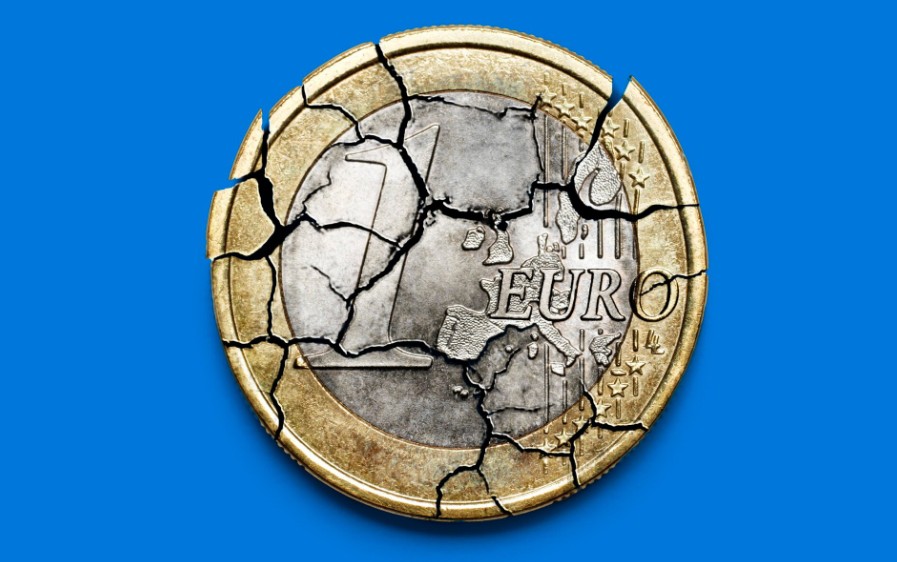
Being raised on an independent island, I learned lots about British history. For my GCSE’s, it was all about learning Henry VIII’s story of leaving the Holy Empire of Rome to marry Anne Boleyn and the story of the first and second World Wars. We knew nothing about Europe, let alone the rest of the world. Maybe this is why Brexit signalled the first cracks in the EU empire.
Having said that I did do Greek Civilisation at school, and learned a lot about Gladiators thanks to buying a series of books entitled: The History of the Decline and Fall of the Roman Empire.
Many decades later, having travelled the world, I now know a lot more. Specifically, the interdependencies of our countries and global movements. One thing I didn’t know, for example, is that there used to a be a European Union. It was called Poland.
Well, in fact, to be accurate, it was the Polish-Lithuanian Commonwealth.
The Polish-Lithuanian Commonwealth was a vast, powerful European Union that started in 1569, thanks to the Union of Lublin.
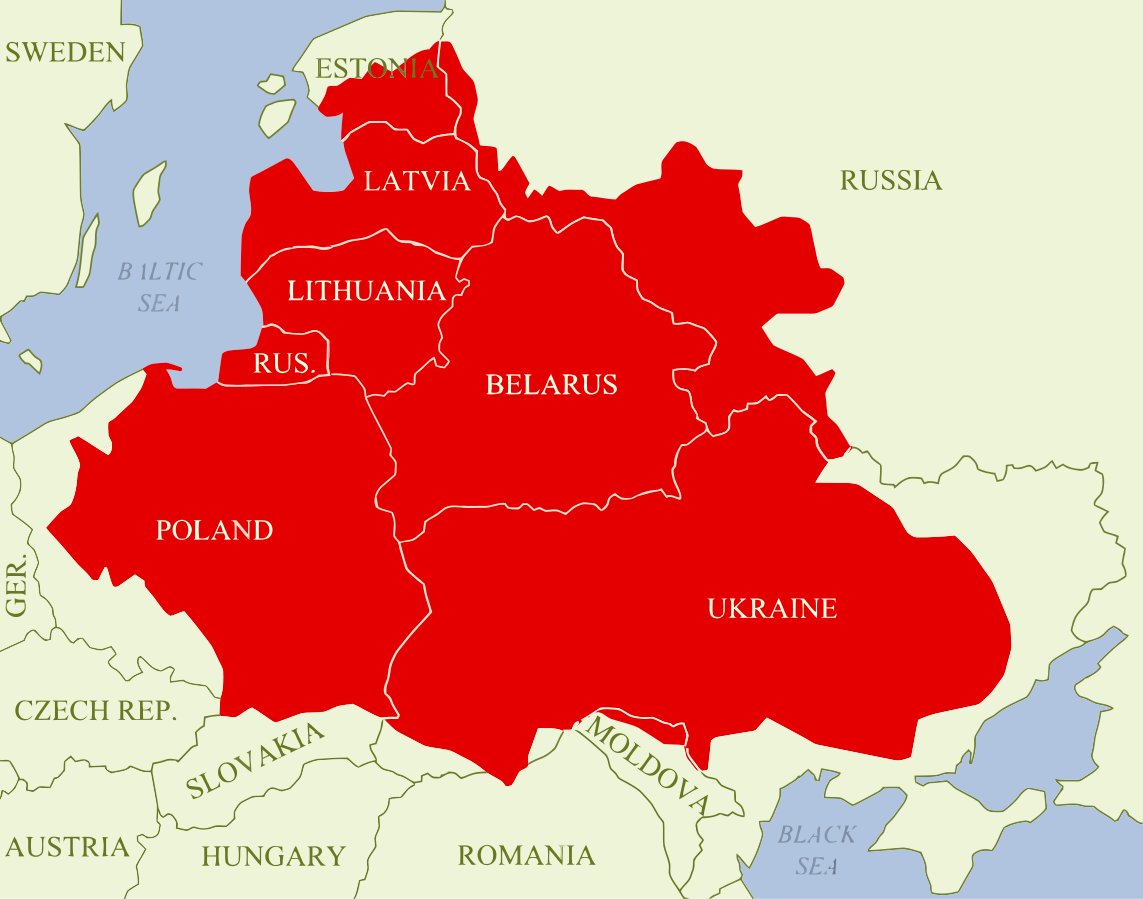
As an example of its extent you may wonder where Germany is in this picture. It was part of Poland effectively as the leaders of Prussia became a fief (feudal dependency) of the Polish Crown, meaning its rulers swore loyalty to Polish kings. There were similar alliances with many neighbouring countries, like Austria and Hungary. This was all because of the worries of invasions from the Ottoman Empire, where Europe was at war between Christian and Islamic beliefs (Ed: ring any bells?).
The Polish-Lithuanian Commonwealth lasted almost 250 years, but fell apart after a series of wars with Sweden in the 1600s which severely weakened the union’s armies. This was then followed by invasions from the East (Russia) and South (the Ottoman Empire), and the union eventually fell apart in 1795.
Why the history lesson?
Well, I wonder if we might be going through all of this all over again as Europe is attacked from the East (Russia) and West (America).
Over the weekend, there were three particularly striking headlines. The first is a rallying call by both Donald Trump and Elon Musk to break Europe apart. The second stating that Vladimir Putin, whose allies include India (Modi) and China (Xi), believes Europe and NATO is doomed.
Let’s take these step-by-step.
First Donald Trump’s administration published a strategy document stating that Europe will be “unrecognisable in 20 years or less” if present trends continue, with several nations largely non-European.
Trump: Europe faces ‘civilisational erasure’ from migration
The document argues that Europe’s migration policies are “creating strife, censorship of free speech and suppression of political opposition”. Combine that with “cratering birthrates” and it means that many of the member states are losing their “national identities and self-confidence”.
In summary:
“Continental Europe has been losing share of global GDP—down from 25 percent in 1990 to 14 percent today—partly owing to national and transnational regulations that undermine creativity and industriousness.
“But this economic decline is eclipsed by the real and more stark prospect of civilizational erasure. The larger issues facing Europe include activities of the European Union and other transnational bodies that undermine political liberty and sovereignty, migration policies that are transforming the continent and creating strife, censorship of free speech and suppression of political opposition, cratering birthrates, and loss of national identities and self-confidence.
“Should present trends continue, the continent will be unrecognizable in 20 years or less. As such, it is far from obvious whether certain European countries will have economies and militaries strong enough to remain reliable allies. Many of these nations are currently doubling down on their present path. We want Europe to remain European, to regain its civilizational self-confidence, and to abandon its failed focus on regulatory suffocation.”
Source: National Security Strategy of the United States of America
That’s pretty extreme, but some aspects may resonate, such as the fear of mass migration and Islamic fundamentalism. However, it’s a bit far right … which leads to Elon Musk, a man who believes in wiping out the weak and subscribes to transhumanism and eugenics.
Over the last week, Musk came out with a statement that Europe should be abolished.
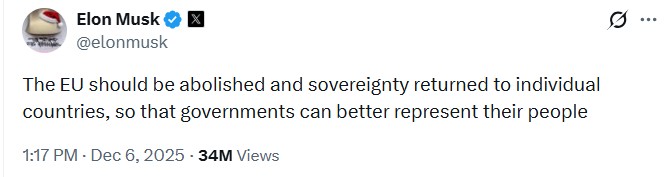
It could be because he just got fined millions for the blue ticks on X.
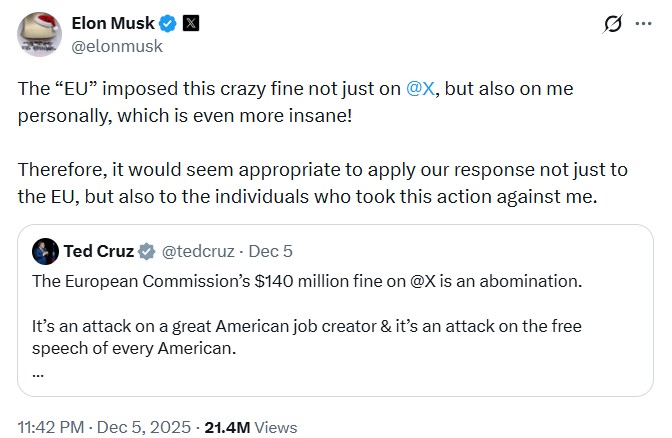
In particular, Musk hates the European centralisation of power and lobbies to create a libertarian world where the rich get richer and the poor get poorer.
Then, add to this, Putin’s hate of Europe.
In an article in the last few days, The Guardian debates whether the latest peace plan proposals should have been accepted by him. After all, the plan would have given Russia many of the things it wants by gifting a large part of Eastern Ukraine (Donetsk and Kharkiv) to their aggressor but, more than this, it would have fractured Europe. The plan would not only have split the US and Europe but, likely, ruptured Nato, reprieved Russia’s pariah economy and probably toppled Volodymyr Zelenskyy’s government.
So, why didn’t Putin accept the plan?
Because he sees Europe as the aggressors. Long story, but the gist is that when the Berlin Wall fell, there was a promise to the Soviet Union – another Union! – that former states would not join NATO. Then they all did. Very annoying to those in the East.
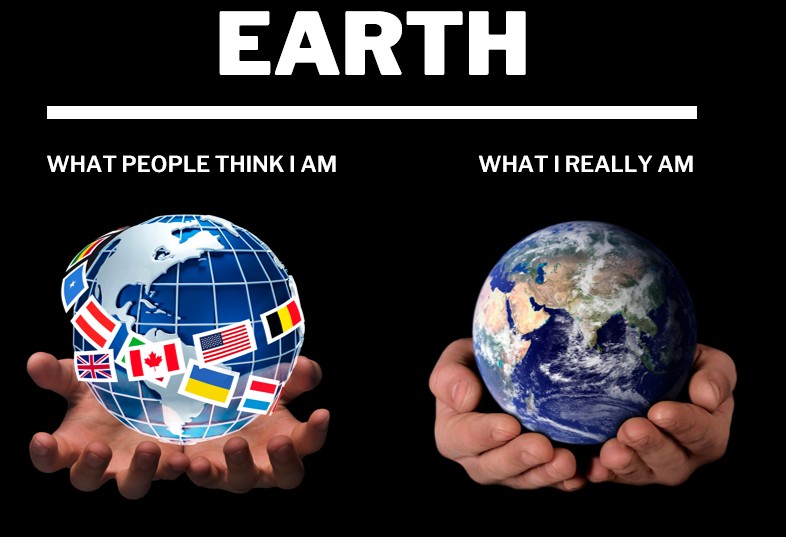
So, it just shows that Empires through the centuries have been built and destroyed on regular occasion but, you have to remember, the world is not what you think it is.
You think you are a national of England, Poland, Europe, the World, when actually there are no borders or countries. They are just built by governments to control. That’s what Musk and Thiel hate which, with the rise of the World Wide Web, they hope will decentralise all and get rid of the centralist Statists.
Fascinating times.
Chris M Skinner
Chris Skinner is best known as an independent commentator on the financial markets through his blog, TheFinanser.com, as author of the bestselling book Digital Bank, and Chair of the European networking forum the Financial Services Club. He has been voted one of the most influential people in banking by The Financial Brand (as well as one of the best blogs), a FinTech Titan (Next Bank), one of the Fintech Leaders you need to follow (City AM, Deluxe and Jax Finance), as well as one of the Top 40 most influential people in financial technology by the Wall Street Journal's Financial News. To learn more click here...