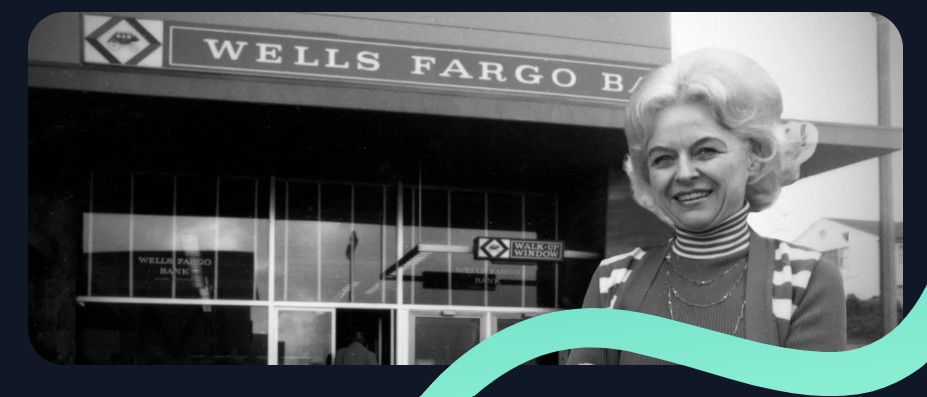
You may know Wells Fargo, one of the largest American banks. I know them well, having worked with some of their key people over the years. Their brand is all based around the old Pony Express …
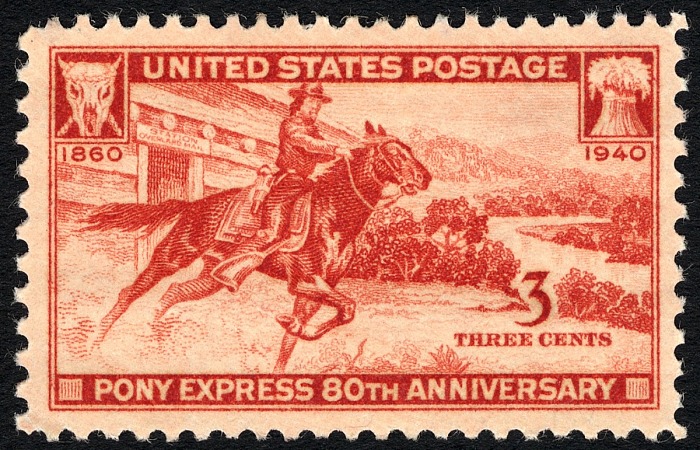
Note: stamp is dated 1940
… but you may not know their real history, so here we go.
Wells Fargo was founded in 1852 by Henry Wells and William Fargo to provide express and banking services during the California Gold Rush. Henry Wells and William Fargo had co-founded American Express before this in 1850. Back then American Express was a fast freight forwarding and mail service company based in Buffalo, New York State (not the city).
A fact I didn’t know: Wells Fargo and American Express were founded by the same people.
Then Mr. Wells and Mr. Fargo spotted the Gold Rush in California and decided to create a bank for the Western USA in late 1851. This created and issue as the directors of American Express opposed the idea – they could not see why California should be the focus – and so the two parted ways in 1852 when Wells Fargo Bank was launched.
The bank’s focus was on the secure movement of gold as well as lending and, in 1861, acquired the Overland Mail Company, otherwise known as the Pony Express.
A fact many don’t know: the Pony Express only existed for eighteen months when it was replaced by a technology called the telegraph.
I won’t go through the whole history of Wells Fargo but a final fact I didn’t know: Henry Wells championed the emancipation of women.
Wells made sure that women were employed by the bank from day one and, over the years, had a large female workforce providing everything from telephone services to teller services.
Wells Fargo Historian Alyssa Bentz* makes this clear in her article: a pioneer for female leaders. She notes that, from the 1870s to the 1910s, Wells Fargo hired more than 350 women to manage its express offices in towns across America from California to New York. This was unusual as women had few rights in the 1800s (Ed: maybe still true Chris).
Henry Wells, the co-founder of American Express and Wells Fargo, was a strong supporter of women's higher education because he believed in women's capabilities and felt it was his life's dream to provide them with the opportunity for a formal education.
Women who were married could not own property, control their wages, vote, or enter most professions. Meanwhile, their husbands had control over their children and property. Women could not vote in parliamentary elections and most professions were closed to them. They were not allowed to enter fields like medicine or law. Colleges and universities generally did not admit women.
Henry Wells felt different. He believed women should have more equality and championed this idea through the bank’s early years. He was a strong supporter of women's higher education because he believed in women's capabilities, and felt it was his life's dream to provide them with the opportunity for a formal education.
Interestingly after retiring in the late 1860s, he founded Wells College) in Aurora, New York, as one of the first colleges in the United States dedicated specifically to women.
A fascinating history lesson for me and hopefully for you.
POSTNOTE #1: Why is this important? Because a founder's beliefs set the culture, and this is demonstrated clearly by Henry Wells. Having said that the controversy over their false account openings did damage their reputation.
POSTNOTE #2: Alyssa’s article focuses upon the story of Shirley Nelson who became the bank’s first female branch manager in 1967, after working in the industry for 17 years. Well worth a read and Shirley is in the picture featured on this blog post.
POSTNOTE #3: Fargo is a great TV series.

Chris M Skinner
Chris Skinner is best known as an independent commentator on the financial markets through his blog, TheFinanser.com, as author of the bestselling book Digital Bank, and Chair of the European networking forum the Financial Services Club. He has been voted one of the most influential people in banking by The Financial Brand (as well as one of the best blogs), a FinTech Titan (Next Bank), one of the Fintech Leaders you need to follow (City AM, Deluxe and Jax Finance), as well as one of the Top 40 most influential people in financial technology by the Wall Street Journal's Financial News. To learn more click here...