This question popped into my head as I’ve asked it before. You need to stand for something or you fall down, But what is your point? Do you ever wonder what your purpose is?
I was intrigued by Billie Eilish and Lewis Hamilton presenting at a recent awards ceremony and making comments:
“Love you all, but there’s a few people in here that have a lot more money than me. If you’re a billionaire, why are you a billionaire? No hate, but yeah, give your money away, shorties.” Billie Eilish
“In a world that’s bleeding, hoarding wealth isn’t success … it is humanity’s failure.” Lewis Hamilton
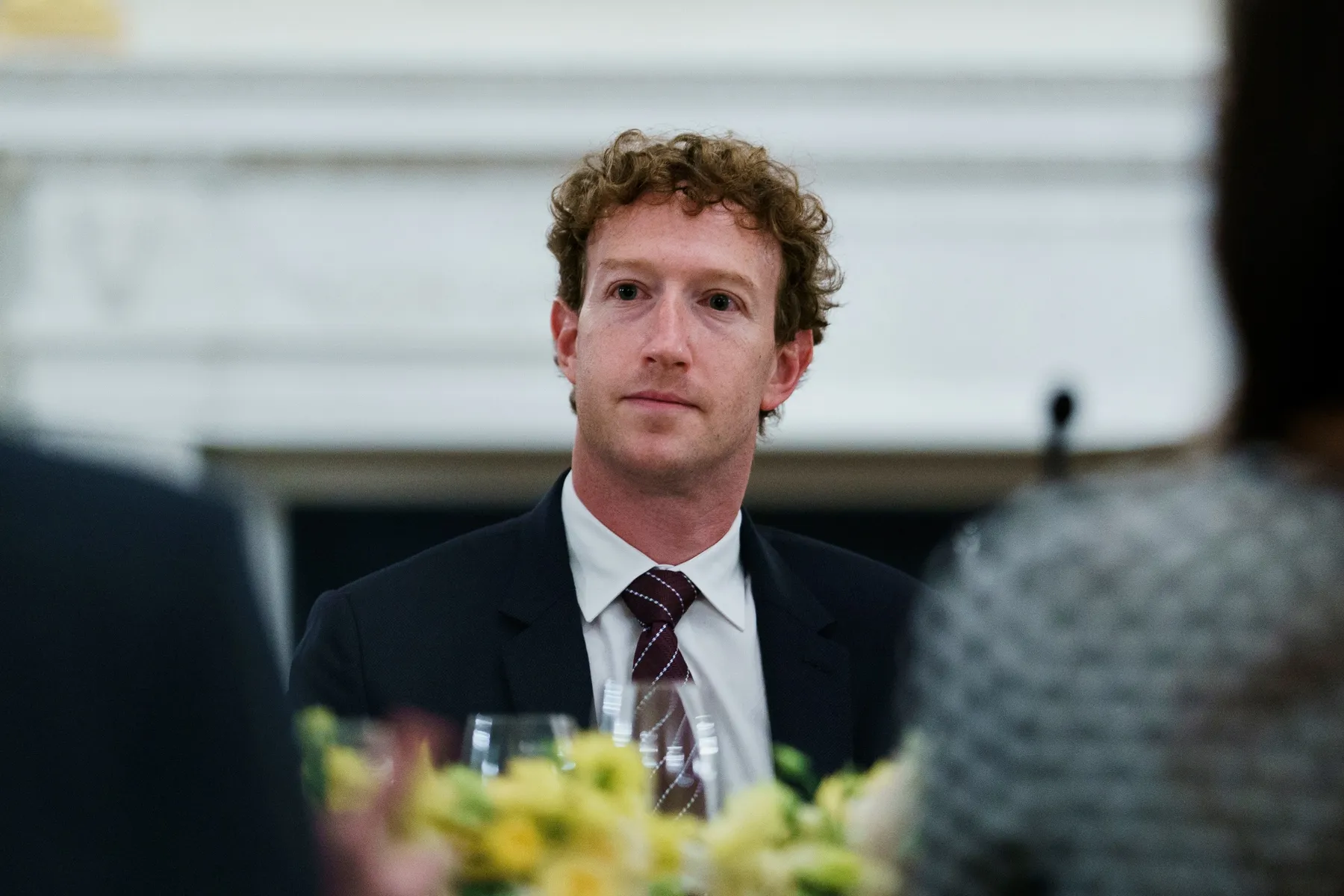
Their point is that people with billions of dollars should be more human … but Mark Zuckerberg was not amused. He didn’t applaud. He basically blanked it.
Unfortunately, these comments came on the back of watching a BBC Panorama programme about the Tech Titans and Donald Trump. If you have an hour free, you should watch it.
The thing is, what got me about this, is that I am on the side of Billie and Lewis, and find it quite incredible to see people like Elon Musk and Peter Thiel create a world that no longer cares about their fellow humans.
I blogged about this recently, but there are billionaires who honestly feel empathy for those less wealthy. Bill Gates name comes to mind. And then there are others who don’t. Elon Musk’s name comes to mind.
Mr. Musk would probably point to his Musk Foundation who received billions of dollars in charitable donations but, as Alan Cantor notes, since 2020 Musk has donated around $7 billion of stock to the Musk Foundation, in the process saving himself some $2 billion in tax payments. Two billion dollars is a lot of money not going to the common good through taxation.
So, let’s come back to: what’s your point?
Are you just on Earth to make money, fill your pockets, gain wealth and be a big deal? Or are you here to make sure that your fellow kind can become the best that they can be?
It honestly surprises me that someone like Mark Zuckerberg can blank the call to give more … what is his point?
Well, his point is that he does give.
The media around last week’s event focused on the fact that he didn’t clap, support or show any emotion as Eilish and Hamilton made these comments but, in the meantime, they did not note that Zuckerberg’s wife, Priscilla Chan, has long held the reins of a foundation that supports those who need a life.
The Chan Zuckerberg Initiative (CZI) was founded in 2015 by Priscilla Chan and Mark Zuckerberg to help solve some of society’s toughest challenges — from curing or preventing disease to improving education and addressing the needs of our local communities. In 2015, the couple pledged to donate 99% of their Meta (formerly Facebook) shares over their lifetime, a pledge valued at over $45 billion at the time.
So, the fact that some media decided to call out Mark Zuckerberg as a multibillionaire who does not care might be the wrong call. Or maybe it is just redistributing wealth with Zuckerberg stealing from the poor to pay the rich. What?
Well, according to reporting from Reuters, Zuckerberg’s Meta generates billions through fraud. To be exact: $16 billion in 2024. According to Reuters reporting, analysing internal documents from Meta shared with them, some 10% of its 2024 revenue — or $16 billion — comes from advertisers running fraud schemes or promoting scams. Internal Meta estimates reveal that, across its services, Meta is showing its users as many as 15 billion scam ads per day.
The monetary harm to Meta users is likely far higher than the $16 billion in revenue Meta earned from running the ads, as it does not incorporate any downstream actions, like signing up for a phony service, buying a counterfeit product, or being the victim of a job offer, investment scheme, or romance scam, for instance.
In fact, specifically, the problem is far greater than we think. A UK regulator found that, in 2023, Meta products were involved in a jaw-dropping 54% of all payment-related scams, or more than double all other social platforms combined.
Why is fraud so big on Meta?
Well, Meta will only ban advertisers if its automated systems are 95% confident they are committing fraud; otherwise, Meta would merely charge the potential fraudulent advertisers more, in an attempt to dissuade them — while also driving more revenue for Meta itself.
For all the philanthropy, the fraud pays for it.
Postscript: what really gets me is that social media used to be exactly that: social. These days Meta, X, LinkedIn and such like (TikTok, Instagram and so on) are filled with sponsored ads that drown out the updates I actually want to see. Namely, the ones from my friends. The ones who are friends. It is no longer social media. It is anti-social media. Thanks you corporate focused a-holes.
Chris M Skinner
Chris Skinner is best known as an independent commentator on the financial markets through his blog, TheFinanser.com, as author of the bestselling book Digital Bank, and Chair of the European networking forum the Financial Services Club. He has been voted one of the most influential people in banking by The Financial Brand (as well as one of the best blogs), a FinTech Titan (Next Bank), one of the Fintech Leaders you need to follow (City AM, Deluxe and Jax Finance), as well as one of the Top 40 most influential people in financial technology by the Wall Street Journal's Financial News. To learn more click here...