I was talking with a friend the other day who asked me to explain some basic questions around cryptocurrencies, as he was confused.
It started with why everyone is talking about layers of blockchain?
I explained that there are four layers, starting with level 0 and then 1, 2 and 3, and it is all a bit confusing, but that I would try and clarify. The first thing is what is a blockchain.
A blockchain is a decentralised, distributed, and public digital ledger used to record transactions across many computers, ensuring the data cannot be altered retroactively. It works by grouping data into blocks, which are securely chained together using cryptography. This technology provides high security, transparency, and data integrity without needing a central authority, and was first introduced to the world in a white paper by Satoshi Nakamoto in 2008 when the world learned about a thing called Bitcoin.
As this has developed over decades, there are many companies now involved in blockchain developments, from those who are creating new versions of Bitcoin, like Ethereum and Tempo, to those who are provide blockchain based services, like Binance and Coinbase.
The thing is that all of these are developing in different layers from base networking to systems to applications, and that’s when we get into the layer conversation of which there are four.
Layer 0 is key to allow different blockchains to talk to one another and share information. This layer makes it possible for blockchain ecosystems to work together. A good example is Polkadot's Parachains working with Cosmos's zones. By focusing on the underlying network, hardware, and data transmission, Layer 0 helps to solve the blockchain trilemma—balancing security, speed, and decentralisation.
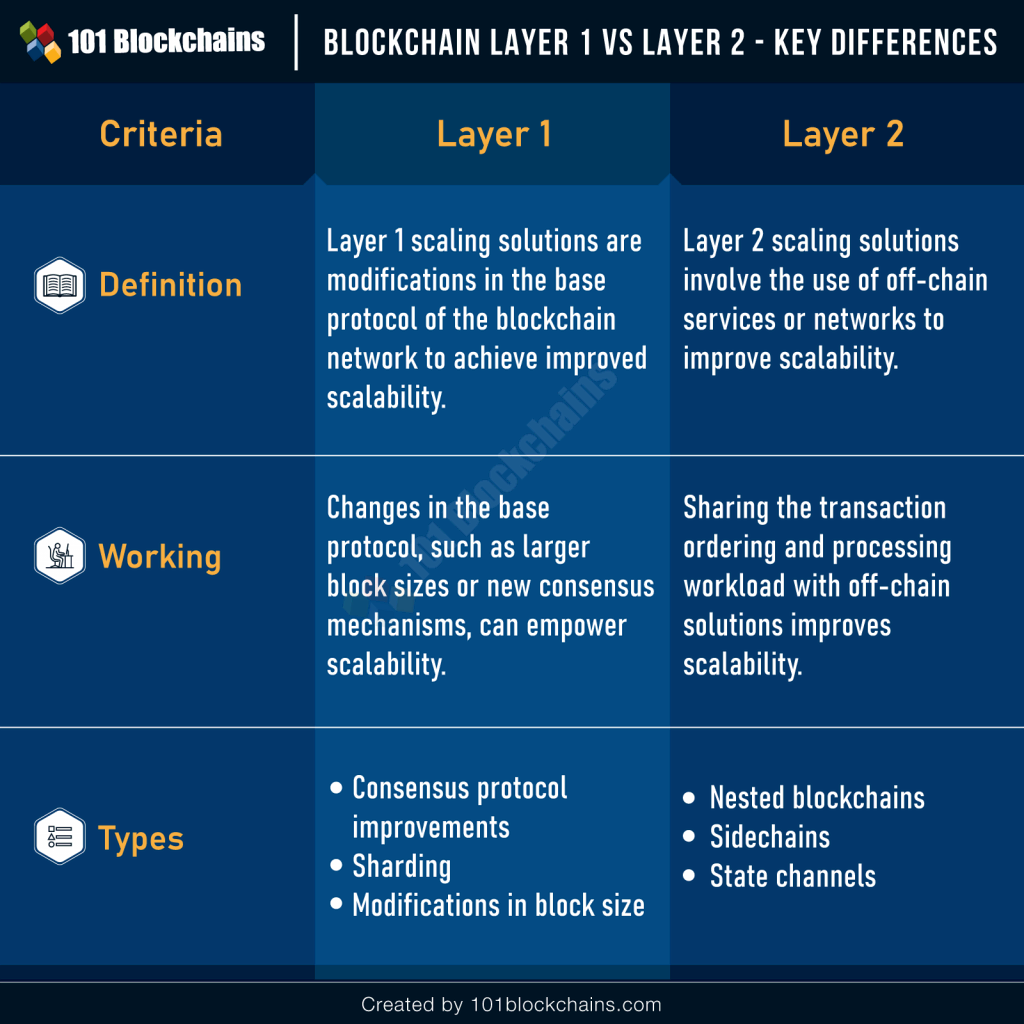
Then there is the Layer 1 blockchain on top of Layer 0. Layer 1 refers to the core structure of a blockchain, meaning this is the foundational layer that maintains the network and handles transactions. Examples of Layer 1 blockchains include bitcoin, Ethereum, and Cardano. These blockchains maintain the distributed ledger, execute consensus mechanisms, and verify transactions on their own.
It’s all a bit complicated, but you probably are aware that cryptocurrencies are all about being decentralised and distributed. Well, that’s Layer 0 and 1. But there’s an issue here as Layer 1 does not scale and can only process a limited number of transactions per second meaning that, as adoption grows, the network will become congested.
This is why we then move to Layer 2.
Layer 1 is necessary for verifying transactions, but it doesn’t scale. Layer 2 is built on top of Layer 1 and provides scale. It improves transaction speed and congestion while maintaining security. It provides the scalability needed for a blockchain to securely process additional transactions.
An easy way to think about Layer 2 is that it is like a motorway (autobahn, interstate) that diverts traffic off the main roads (Layer 1) and then returns it when it’s been processed.
Layer 2 solutions are crucial for the widespread adoption of cryptocurrencies, as they enable the high transaction volumes and reduce processing fees.
So, we have Layer 0, the core networks; Layer 1, the ledgers like Bitcoin and Ethereum; and Layer 2, the scalability. Finally, there is the fourth layer, Layer 3, which is the application layer.
Layer 3 is the layer where most of the action happens for end-users. This layer hosts decentralised applications (dApps) and other services that work on top of the blockchain. Anything from DeFi (decentralised finance) to NFT (non-fungible tokens) marketplaces rely on the blockchain's core features of security, decentralisation and transparency.
This layer is where blockchain interacts with applications in the real world, allowing developers to devise innovative products and services that use blockchain technology.
They then said that it made sense, but what do we mean by on-chain and off-chain.
Well, this relates to transaction processing and whether it on or off the blockchain. On the blockchain can be slower and more costly because each transaction has to be recorded and validated on the blockchain. This provides a greater level of security and transparency.
When a user makes an on-chain transaction, the details are broadcast to the network, where they undergo a process of validation and inclusion in a block using what are called consensus mechanisms, such as Proof of Work (PoW) or Proof of Stake (PoS). PoW is where it is backed by coins mined on the network whereas PoS is where the companies backing the system have proven investment of assets to ensure it is validated. Assets such as US dollars or equivalent.
The aim is to ensure that the transaction is recorded on the blockchain and, once the transaction is validated and added to a block, it becomes a permanent part of the distributed ledger, providing transparency and immutability.
Unlike on-chain transactions, off-chain transactions occur outside the main blockchain network. These transactions are facilitated by Layer-2 solutions or networks that operate independently of the main blockchain.
Off-chain transactions have several characteristics including instant execution, lower transaction fees, and increased privacy. However, they may introduce complexities and potential security vulnerabilities as they rely on secondary layers or networks. This is because they are Layer 2 and rely on Layers 0 and 1 to work.
Despite these challenges, off-chain transactions play a role in addressing the scalability issues faced by on-chain transactions, making them suitable for microtransactions and instant payments with companies like Binance, Coinbase and Kraken leading in this space.
At the end of the conversation my friend thanked me, but looked dazed and confused. So, I wrapped up with a simple conclusion.
There are four layers to cryptocurrencies: the core network, the ledger, the scalability and the apps. Then there are two dimensions: on-chain and off-chain, and the only difference is that on-chain is processed by the core networked ledger, whilst off-chain is typically in the apps.
He thanked me, but still looked dazed and confused. I wonder why.
Source: 101 Blockchains

Chris M Skinner
Chris Skinner is best known as an independent commentator on the financial markets through his blog, TheFinanser.com, as author of the bestselling book Digital Bank, and Chair of the European networking forum the Financial Services Club. He has been voted one of the most influential people in banking by The Financial Brand (as well as one of the best blogs), a FinTech Titan (Next Bank), one of the Fintech Leaders you need to follow (City AM, Deluxe and Jax Finance), as well as one of the Top 40 most influential people in financial technology by the Wall Street Journal's Financial News. To learn more click here...