It’s quite strange when you think about money as a lot of money has disappeared or been recreated over the years. 250 years ago, there was no US dollar as such; the Chinese currency called the renminbi (RMB) was introduced on December 1, 1948, by the newly founded People's Bank of China; and the euro was created in the 1990s to celebrate the creation of a Union.
The euro replaced everything from the German Deutsche mark to the French Franc to the Italian Lira and the Spanish Peseta. Many call for the old currencies to come back but … they’ve gone.
You only believe it is money because you are told it has value by the system behind it, whether that be a government, central bank or the network of the people.
bitcoin has no value, unless you believe it does. If your currency was replaced tomorrow by a CBDC, then all of your bank notes would just be paper.
The British pound originated in Anglo-Saxon England around 775 CE as a unit of account equivalent to one pound weight of silver. It became the official currency under King Athelstan in 928 CE, with the Bank of England issuing the first paper notes in 1694.
Surprisingly, the British Pound is considered to be the world’s oldest currency, and yet the pound has regenerated many times. By way of example, the pound has undergone major, structural changes six times in the last century, shifting from a gold-backed, fixed-rate system to a free-floating currency. Key changes include the abandonment of the gold standard in the 1930s, a 30% devaluation in 1949 after the Second World War, decimalisation in 1971, and the shift to a free-floating rate after that.
But that’s not the oldest currency. The oldest is Chinese or, to qualify this, the oldest currency based on paper exchange rather than gold or silver coins.
Jiaozi was a form of promissory note which appeared around the 11th century in the Sichuan capital of Chengdu, China. Numismatists regard it as the first paper money in history, and Jiaozi notes did not have standard denominations but were denominated according to the needs of the purchaser and ranged from 500 wén to 5 guàn.
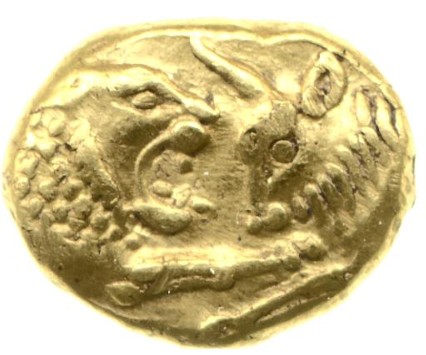
Before this, of course, were coins backed by real gold and silver. These date back to ancient Rome but, before that, Lydian Lion coins were being minted around 610–600 BCE in the ancient kingdom of Lydia (modern-day Turkey).
Made from electrum, a natural alloy of gold and silver, these coins were stamped with a lion's head, serving as an official symbol of value, and are considered the first true currency used for trade.
Why did these ancestors invent money?
It turns out that it was mainly to stop having to weigh actual silver and gold, but to standardise it. Lydian coins were created in the 7th century BCE in Anatolia, Turkey, to standardise trade. The aim of the coins was to guarantee the value and purity of its precious metals but, more than this and you would suspect, it was to allow tax collection for the state. Made from naturally occurring electrum, which is a gold and silver alloy, these coins solved the inefficiency of weighing metal during transactions.
But why did they want this?
The main reason was for convenience. By having a standard coin to exchange, the Lydian coins replaced the cumbersome, unreliable method of weighing un-coined silver and gold during trade. More than this, the coins had guaranteed purity. The official stamp on the coin served as a guarantee of value and purity by the state, building trust in transactions. That’s important.
The fact that Turkey had these standards in trade also led to economic expansion – as a trade hub, Lydia could now do more trade with neighbouring Greek and Asian civilizations – as well as giving the government a more reliable, portable, and easily countable form of money to collect taxes.
There are only two certainties in life: death and taxes.

Chris M Skinner
Chris Skinner is best known as an independent commentator on the financial markets through his blog, TheFinanser.com, as author of the bestselling book Digital Bank, and Chair of the European networking forum the Financial Services Club. He has been voted one of the most influential people in banking by The Financial Brand (as well as one of the best blogs), a FinTech Titan (Next Bank), one of the Fintech Leaders you need to follow (City AM, Deluxe and Jax Finance), as well as one of the Top 40 most influential people in financial technology by the Wall Street Journal's Financial News. To learn more click here...