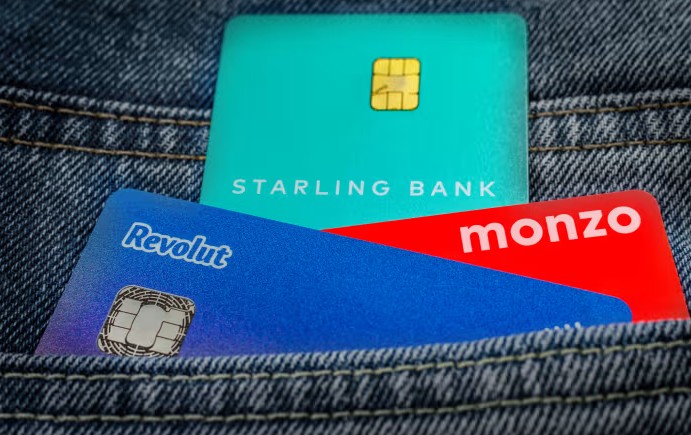
For years, the conversation around digital banks focused on whether they could survive. Today, the question is very different: what are they becoming?
The latest results from Monzo, Revolut and Starling reveal something remarkable. These institutions are no longer niche challengers. They are profitable, growing rapidly, attracting millions of customers and, perhaps most importantly, becoming primary banking relationships rather than secondary spending accounts.
The numbers tell part of the story.
Fintech firms grew four times faster than traditional banks in 2025
Monzo added millions of customers in a single year, captured a record share of UK current account switching and now sees almost half of its customers using it as their primary bank account.
Revolut has grown into a global financial powerhouse with more than 70 million customers across dozens of countries and profits measured in billions.
Starling continues to demonstrate that a digital bank can generate strong, sustainable profits whilst simultaneously building a technology platform that other banks can use.
What's becoming clear is that these institutions are no longer pursuing the same strategy.
- Revolut is building a global financial super-app.
- Starling is becoming a banking technology provider.
- Monzo is becoming a deeply embedded financial companion.
That divergence is fascinating.
For decades, banks competed largely on balance sheet strength, branch networks and product breadth. The new generation is competing on engagement, ecosystems and customer relationships.
Take Monzo. Its greatest achievement is not customer growth or profitability. Its greatest achievement is trust.
For years, consumers downloaded Monzo as a budgeting app, a travel card or simply out of curiosity. Their salary still went into Barclays, HSBC, Lloyds or NatWest. Their mortgage sat elsewhere. Their savings remained with an incumbent institution. That is changing.
Customers are increasingly moving their primary financial relationship. Salaries arrive in Monzo accounts. Savings are held there. Borrowing is conducted there. Daily financial management happens there. The significance of this shift cannot be overstated.
Banking has historically been one of the stickiest industries in the world. People rarely switch current accounts. Direct debits, salaries and financial habits create enormous inertia. When millions of customers actively move their primary banking relationship, it signals a fundamental change in consumer behaviour.
The reason appears simple: consumers increasingly value convenience, transparency and user experience more than branch networks.
Yet technology alone does not explain the success of Monzo, Revolut or Starling. Technology, features and apps can be copied, but relationships are far harder to replicate.
This is where the leading digital banks have built a meaningful advantage. They engage customers daily. They provide immediate feedback. They help people budget, save and manage money in ways that feel intuitive rather than bureaucratic.
The result is something traditional banks once enjoyed but many have gradually lost: advocacy. They too often look at ROI rather than NPS. Meanwhile, customers actively recommend Monzo, Revolut and Starling to friends and family, and their growth increasingly comes from trust rather than advertising.
At the same time, the economics are fundamentally different. Traditional banks grew through branches, buildings and people. Digital banks grow through software, automation and data.
Every additional customer costs proportionately less to serve. Every interaction creates more data. Every new service increases engagement.
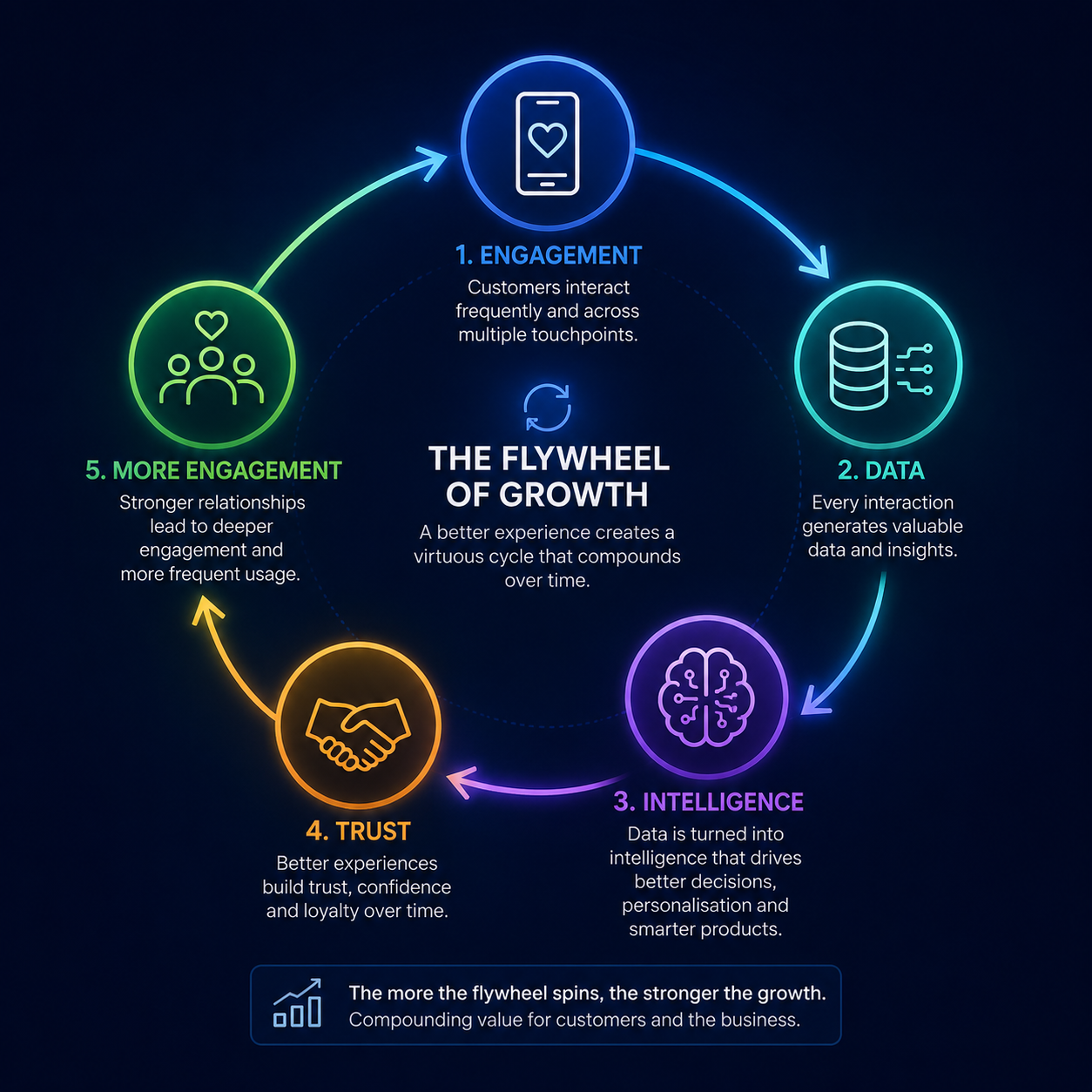
That dynamic is increasingly separating the leaders from everyone else and perhaps the most interesting development is what happens next.
The newest products being launched by digital banks often have little to do with banking itself.
Monzo now offers mobile phone plans. Revolut offers everything from investments and foreign exchange to crypto, travel and lifestyle services. Starling has expanded beyond banking through Engine, selling its banking technology platform to financial institutions around the world.
Viewed individually, these developments can appear unrelated but, when viewed strategically, they make perfect sense as each service deepens the relationship; each service creates another customer touchpoint; each service increases switching costs; and each service generates additional data and revenue.
This is not really about entering new industries. It is about building ecosystems.
The parallels with technology companies are striking.
Apple is not really in the phone business and Amazon is not really in the retail business. They are building platforms. This is what Monzo, Revolut and Starling are doing. They are not simply in the banking business. They are financial platforms.
Revolut's is creating what could become Europe's first true financial super-app. Starling's ambition is infrastructure. Through Engine, it is becoming part of the technology fabric that powers banking. Monzo's ambition is intimacy. It is building the deepest possible relationship with customers and expanding around that trusted foundation.
Three institutions. Three distinct strategies. Three very different visions of the future.
What unites them is that they don’t think like banks.
Traditional banks organise around products: current accounts, savings accounts, loans and mortgages. Digital banks organise around customers: spending, saving, planning, travelling, investing and, most importantly, living.
That shift may sound subtle, but it changes everything.
The future of banking is not defined by who has the largest balance sheet or the biggest branch network. It will be defined by who is the most valuable financial companion in a customer's life.
That is why the latest results matter.
The real story is not account switching or profitability or customer growth. The real story is that Monzo, Revolut and Starling are proving there is more than one way to build a successful bank in the digital age.
In conclusion, we have talked for years about how fintechs were trying to become banks. Now banks are trying to become fintechs.
The next decade will not be a battle between digital banks and traditional banks. It will be a battle between ecosystems. The winners will be those that combine trust, engagement, intelligence and scale into a relationship customers simply do not want to leave.
That is the quiet revolution taking place in British banking today and Monzo, Revolut and Starling are leading it.

Chris M Skinner
Chris Skinner is best known as an independent commentator on the financial markets through his blog, TheFinanser.com, as author of the bestselling book Digital Bank, and Chair of the European networking forum the Financial Services Club. He has been voted one of the most influential people in banking by The Financial Brand (as well as one of the best blogs), a FinTech Titan (Next Bank), one of the Fintech Leaders you need to follow (City AM, Deluxe and Jax Finance), as well as one of the Top 40 most influential people in financial technology by the Wall Street Journal's Financial News. To learn more click here...