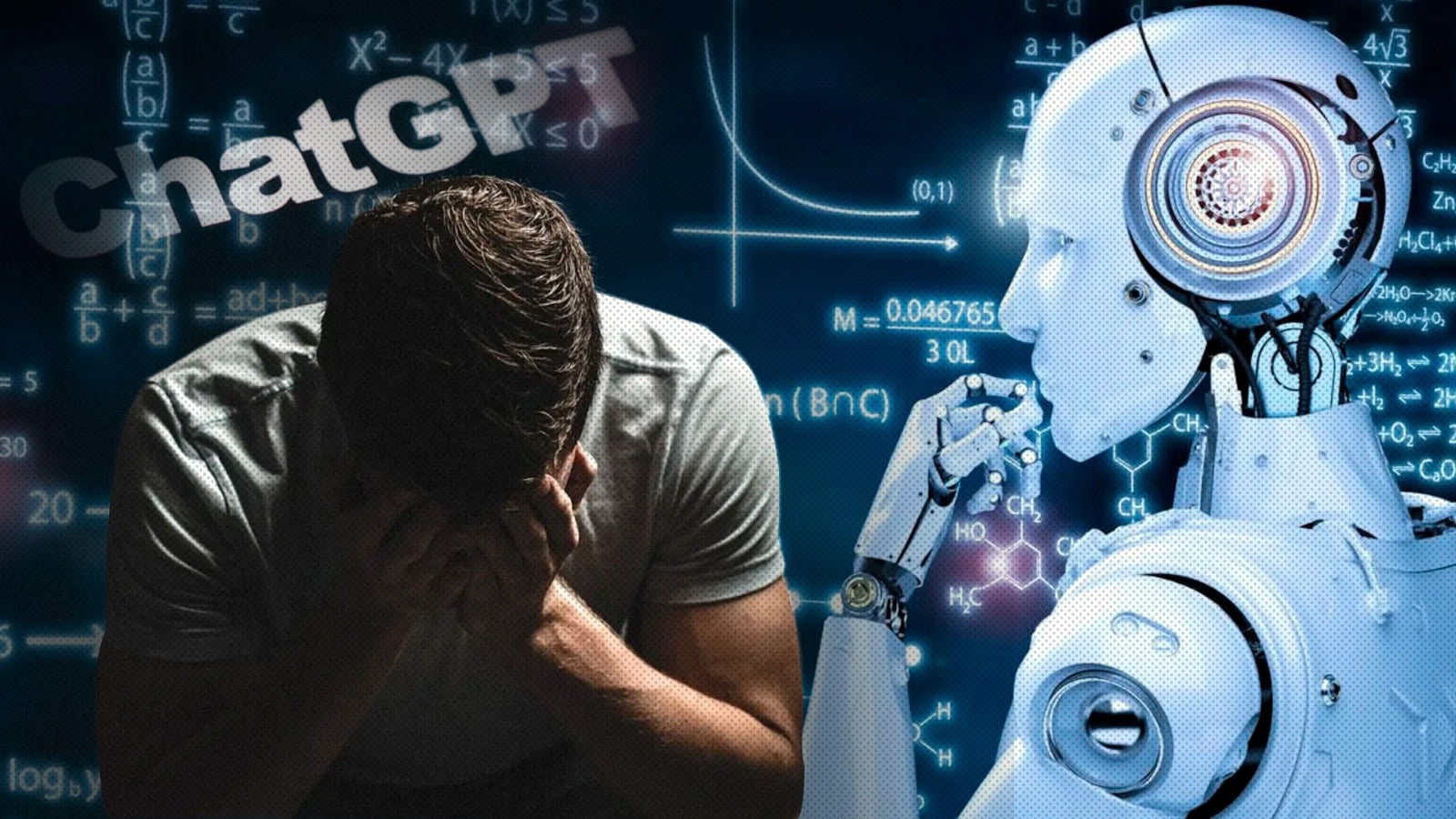
Almost every innovation is met by people who believe it will destroy our ability to earn a living.
The Luddites feared mechanisation. Clerks feared computers. Bank managers feared the internet. Taxi drivers feared ride-sharing apps. Retailers feared ecommerce. And now everyone fears AI.
The latest prediction is that artificial intelligence will eliminate millions of jobs, collapse the middle class and create an economy where a handful of tech billionaires own everything while the rest of us sit at home waiting for universal basic income.
It’s a compelling headline.
It’s also probably wrong.
A recent Andreessen Horowitz article describes the AI job apocalypse as a fantasy.
Whilst Silicon Valley is not always the most objective observer of its own inventions, they have a point. The assumption behind most AI doom scenarios is that there is a fixed amount of work in the world. If machines do more, humans must do less, and yet history suggests precisely the opposite.
The steam engine didn’t create unemployment. Electricity didn’t create unemployment. The computer didn’t create unemployment. The internet didn’t create unemployment. Every major technological revolution destroyed some jobs whilst creating entirely new industries, professions and opportunities that nobody could foresee at the outset.
The reason is simple.
Technology does not eliminate human demand … it expands it.
When something becomes cheaper, faster and easier, we consume more of it. When communication became free, we didn’t communicate less. We communicate all day, every day. When computing became cheap, we didn’t stop computing. We embedded computers into everything. The same thing is happening with intelligence. For the first time in history, intelligence itself is becoming abundant.
That sentence should make every banker, consultant, lawyer, accountant and knowledge worker sit up and pay attention. For centuries, expertise was scarce. If you wanted financial advice, legal guidance or specialist knowledge, you had to pay for access to people who possessed it. AI changes that equation fundamentally. Intelligence is moving from being scarce and expensive to abundant and almost free.
That is enormously disruptive.
The thing is that you have to train AI to do these things. As I’ve continually said, humans will be trainers, maintainers and explainers of AI, and disruption is not the same thing as destruction.
The real threat is not that AI takes your job or that someone using AI takes your job. This is why so many conversations about AI miss the point. The debate is framed as humans versus machines. It isn’t about that.
The debate should be about humans with AI versus humans without AI.
That’s a very different conversation.
In banking, I hear endless discussions about cost reduction. How many operations staff can be removed? How many call centre agents can be replaced? How many compliance checks can be automated?
Those are yesterday’s questions.
The far more interesting question is what happens when every customer has an AI agent, every employee has an AI assistant, and every business process has an AI supervisor. As I said the other day, AI is more like a calculator, and the calculator did not destroy maths. It just made it easier for everything to add up. AI is doing the same for communication, work and life. It is not replacing these things. It is just making everything easier.
What happens when the customer no longer calls the bank, but their AI calls the bank’s AI?
What happens when lending decisions, fraud monitoring, treasury management and investment advice are continuously optimised by intelligent systems?
Those are better questions and it just means that the future is not fewer bankers but just different bankers.
Just as the arrival of ATMs didn’t eliminate bank branches and online banking didn’t eliminate financial services, AI will not eliminate the need for human judgement, trust, accountability and relationships. It will simply move those capabilities higher up the value chain.
The irony is that many of the loudest voices predicting an AI jobs apocalypse are underestimating human ingenuity. We have spent thousands of years inventing technologies that remove work. Yet somehow, we always find more things to do. As productivity rises, expectations rise with it.
Nobody in 1990 demanded a mobile app developer, a social media strategist, a cybersecurity analyst, a cloud architect or a prompt engineer. Today they are mainstream careers. Tomorrow’s AI economy will create roles that sound equally strange to us now.
Will some jobs disappear? Absolutely. Will some industries be transformed beyond recognition? Without question. Will AI create social and economic disruption? Of course. But the idea that humanity is about to run out of useful things to do because machines have become intelligent feels less like economics and more like science fiction.
The AI apocalypse makes for great headlines. The AI opportunity is a much more interesting story.
This is why David George’s article is well worth a read.
Chris M Skinner
Chris Skinner is best known as an independent commentator on the financial markets through his blog, TheFinanser.com, as author of the bestselling book Digital Bank, and Chair of the European networking forum the Financial Services Club. He has been voted one of the most influential people in banking by The Financial Brand (as well as one of the best blogs), a FinTech Titan (Next Bank), one of the Fintech Leaders you need to follow (City AM, Deluxe and Jax Finance), as well as one of the Top 40 most influential people in financial technology by the Wall Street Journal's Financial News. To learn more click here...