Back in 2021, PayPal was worth around $360 billion. Today it is worth closer to $50 billion. That's one of the biggest destructions of market value we've seen in fintech, and yet it isn't because the company stopped growing. Quite the opposite. PayPal still moves almost $2 trillion every year, serves around 440 million active accounts and continues to grow transaction volumes. Venmo is thriving. Braintree is expanding. Buy Now Pay Later continues to grow.
So, what went wrong?
A fascinating article by payments strategist Dwayne Gefferie argues that PayPal didn't lose its business. It lost its position. I think that's exactly the right question to ask.
It's easy to forget just how revolutionary PayPal once was.
Twenty years ago, entering your card details into an unfamiliar website felt risky. When consumers saw the PayPal button, they trusted it. Merchants paid higher fees because that little yellow button converted hesitant browsers into buyers. PayPal wasn't really selling payments. It was selling that you and the merchant could trust the payment was good.
That trust was incredibly valuable because it sat at exactly the right place in the customer journey: the moment someone decided whether or not to complete a purchase. That was the franchise and everything else was infrastructure.
The problem is that the world has moved on.
Apple introduced Face ID. Suddenly your fingerprint or face became the trusted payment credential. Shopify launched Shop Pay and embedded checkout directly into millions of merchants. Stripe launched Link across its developer ecosystem. Browsers started remembering your payment credentials automatically.
Consumers no longer needed to choose to pay with PayPal.
Meanwhile, e-commerce itself consolidated. More shopping happens inside Amazon, Shopify and Walmart than on the open web. Those companies increasingly own the customer relationship themselves and have little incentive to hand checkout to a third party.
PayPal just became less important.
To respond to these changes, PayPal went shopping and bought Braintree, Venmo, iZettle, Honey, Hyperwallet, Xoom and Paidy. Almost every acquisition made sense individually. Collectively, however, they never quite became a single platform. Instead, they largely remained separate businesses with separate brands, separate products and separate customer experiences.
A portfolio isn't the same thing as a platform.
Ironically, PayPal's biggest success may also explain why investors became less enthusiastic.
Braintree has become one of the largest payment processors in the world. The problem is that payment processing isn't a particularly exciting business. Margins are lower. Competition is fierce. Large merchants negotiate hard.
So, PayPal's payment volumes keep rising whilst margins keep lowering.
Recent results illustrate the challenge perfectly.
Whilst Total Payment Volume (TPV) increased around 10%, transaction margin dollars increased by only 1%. That's not because customers are disappearing. It's because the mix of business has changed.
PayPal is increasingly growing where profits are lower and Venmo might be the most interesting story of all.
PayPal acquired Venmo indirectly through Braintree more than a decade ago. The product became one of the defining consumer payment brands of the smartphone generation. Millions of people used it every day. I’ll Venmo you became a catchphrase amongst GenZ and more. Yet meaningful monetisation came surprisingly late.
Venmo won consumers and the product was hugely successful, but the business model took much longer to catch up.
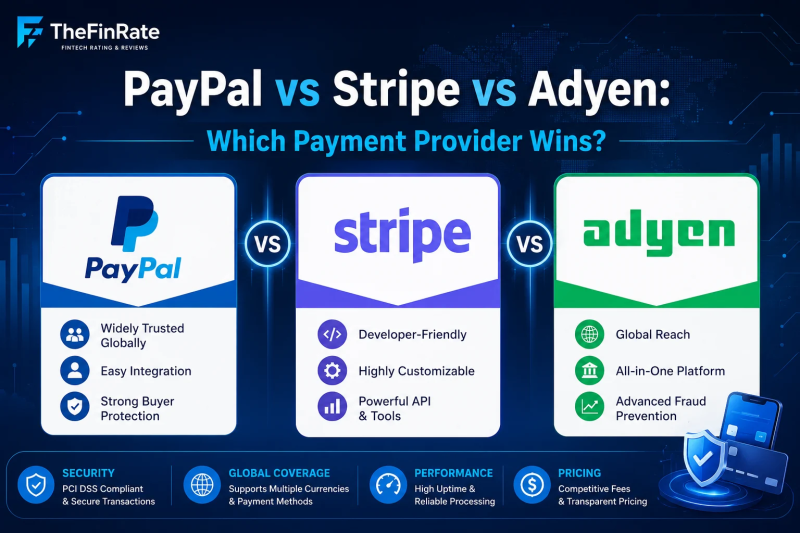
This is where things become really interesting as, if reports are accurate, Stripe and Advent International want to buy PayPal with an offer of more than $53 billion. At first glance that seems odd. Stripe already processes almost as much payment volume as PayPal. Why buy another processor?
Because Stripe doesn't need another processor. Stripe already owns developers. It already owns APIs. It already owns merchant relationships … What Stripe doesn't own is consumers.
Building a trusted consumer wallet with hundreds of millions of users isn't something you can code over a weekend. It takes decades and so, what Stripe want, is Venmo, PayPal Wallet and hundreds of millions of active consumer accounts. Those are incredibly difficult assets to create.
Infrastructure can be built. Consumer trust is much harder, and what PayPal gives Stripe is the cream on the cake as they already own the merchant space. What about the consumer space?
Then there is Adyen.
Adyen has quietly followed a completely different strategy. Unlike either PayPal or Stripe, Adyen has never tried to become a consumer brand. Instead, it became the operating system behind merchants by building one platform, one code base, one acquiring engine, one risk platform and one global architecture. It isn't trying to own consumers. It is trying to make merchants better.
Interestingly, PayPal now distributes Fastlane – its accelerated checkout technology – through companies including Adyen.
Think about what that says.
PayPal is increasingly monetising its checkout technology through businesses that also compete with its own checkout experience.
That's probably smart commercially.
Strategically, though, it tells you how much the industry has changed as, looking at these three companies together, each increasingly represents a different layer of modern commerce.
PayPal owns consumer trust.
Stripe owns developer trust.
Adyen owns merchant trust.
None of them is really competing to move money anymore as money has become the commodity. The competition has moved further up the value chain into digital identity, data, customer relationships, embedded experiences, AI and trust. That's where tomorrow's competitive advantage lies and perhaps that's the biggest lesson from PayPal's story.
For years we've described payments as moving money from A to B. That isn't the business anymore. Payments have become invisible. The real product is deciding who should be trusted before the payment ever happens, which brings us back to where PayPal started. Its original advantage wasn't processing payments faster. It was reducing uncertainty.
Chris M Skinner
Chris Skinner is best known as an independent commentator on the financial markets through his blog, TheFinanser.com, as author of the bestselling book Digital Bank, and Chair of the European networking forum the Financial Services Club. He has been voted one of the most influential people in banking by The Financial Brand (as well as one of the best blogs), a FinTech Titan (Next Bank), one of the Fintech Leaders you need to follow (City AM, Deluxe and Jax Finance), as well as one of the Top 40 most influential people in financial technology by the Wall Street Journal's Financial News. To learn more click here...