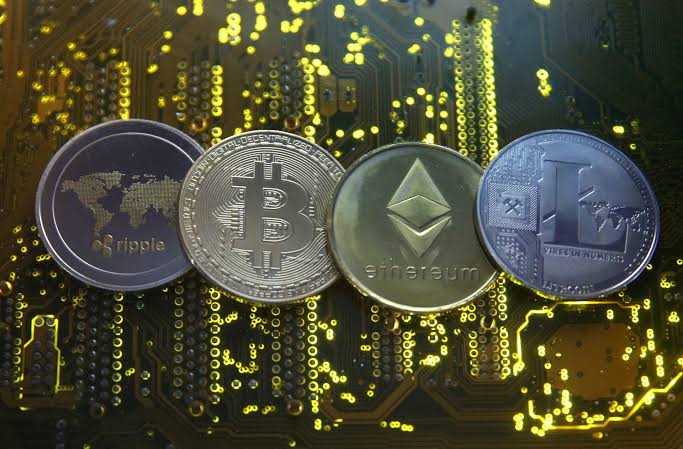
You’ve been thinking about cryptocurrencies all wrong.
Every few months someone declares that cryptocurrency is dead. In fact, there’s a website dedicated to recording every one of those predictions.
The latest panic is bitcoin’s price falling below $65,000 and Coinbase reporting weaker revenues. A few months earlier everyone was predicting Bitcoin would hit $200,000. Before that, people were saying it would replace central banks. Before that, they were declaring it dead again. Crypto seems trapped in a permanent cycle of euphoria and despair, depending upon which way the price chart happens to be pointing.
We've been caught between those two extremes for the best part of twenty years, and I increasingly think both sides are arguing about the wrong thing as neither side seems to notice that the industry itself has quietly changed underneath them.
The problem is that we still use the word "crypto" as though it describes a single industry. It isn't. Somewhere along the way, cryptocurrency stopped being one industry and became several. This explains why people looking at exactly the same headlines often reach completely different conclusions.
On the one hand, crypto has undoubtedly become an asset class. Whether you believe bitcoin is digital gold or not is almost beside the point. BlackRock now offers bitcoin ETFs, pension funds have begun allocating capital to digital assets, sovereign wealth funds are paying attention and most global investment banks now have digital asset teams.
Fifteen years ago institutional investors debated whether crypto was legitimate. Today the discussion is much more mundane: what proportion of a diversified portfolio should be allocated to digital assets?
That is actually an extraordinary achievement because asset classes are remarkably difficult to create. Over the past century we've become familiar with equities, bonds, commodities, property, foreign exchange and, more recently, private equity and venture capital. Digital assets have earned a place in that conversation.
They remain volatile, speculative and immature, but then every emerging asset class begins that way which is why Coinbase's latest earnings, with revenues falling almost twenty per cent as trading activity slowed, tell us less about the failure of crypto than they do about the cyclical nature of exchanges. Stock exchanges, commodity exchanges and foreign exchange markets have always experienced periods of feast and famine. Crypto exchanges are proving to be no different.
Yet that isn't the most interesting story.
Meanwhile, a far more interesting development has been taking place almost unnoticed. While commentators remain obsessed with bitcoin prices, the financial industry quietly stopped debating blockchain and started deploying it.
JPMorgan built its own blockchain settlement network. Visa and Mastercard are integrating stablecoins into existing payment rails. BlackRock is tokenising money market funds. Governments are issuing tokenised bonds. Central banks are experimenting with wholesale digital currencies, whilst regulators increasingly talk about tokenised deposits rather than cryptocurrencies.
That shift matters because infrastructure ultimately becomes far more valuable than individual assets.
Assets derive value because people buy and sell them. Infrastructure derives value because people stop noticing it. Nobody thinks about TCP/IP when sending an email, HTTP when browsing a website or SWIFT when making an international payment. We only notice infrastructure when it fails. That is usually the sign that a technology has matured. It has become so embedded in everyday life that we forget it is there. Blockchain increasingly feels as though it is heading in exactly the same direction, becoming another layer of financial plumbing sitting quietly beneath the services we use every day.
But I don't think even infrastructure is the end of the story, because AI is changing the way trust itself is established.
Over the past few years, however, I've become increasingly interested in agentic AI because I think it changes the conversation about money altogether. We tend to think of financial transactions as something initiated by people. I decide to buy something; I authenticate myself and I approve the payment. Increasingly, that isn't how commerce is going to work. My AI will negotiate with your AI long before a human – you or I – get involved.
Imagine an autonomous procurement agent sourcing components from manufacturers around the world, negotiating prices, arranging insurance, purchasing shipping, managing foreign exchange and paying suppliers. Or imagine an AI travel assistant comparing airlines, hotels, rail operators and insurance providers before assembling the optimal itinerary without requiring me to visit a single website. These examples are becoming increasingly realistic as AI agents evolve from assistants into autonomous economic actors.
At that point the challenge is no longer how an AI makes a payment – payments are actually the easy part – the difficult questions become about trust. How does one AI know another AI is genuine? How does it prove that it has authority to spend money? How does it know it is negotiating with an authorised representative rather than a malicious imitation? How does it establish identity, reputation and accountability? Those are the questions that determine whether autonomous commerce becomes possible.
None of those questions can be solved by faster payments. They require identity, authority and accountability. Before an AI can spend money it has to prove who it represents, what it is allowed to do, what limits have been placed upon it and whether anyone can audit its decisions afterwards. The challenge isn't moving money. It's establishing trust. Seen through that lens, cryptography starts to matter far more than cryptocurrency. Public and private keys, digital signatures, decentralised identifiers, verifiable credentials, programmable money and immutable ledgers together create something much more important than another payment mechanism. They create a programmable trust architecture that allows autonomous systems to identify themselves, establish authority, negotiate agreements and exchange value securely.
That, I suspect, is where the real story is heading.
Looking back, I wonder whether we misunderstood cryptocurrency from the very beginning. We became fascinated by digital money when perhaps the real innovation was always digital trust. Money is information. Payments move that information. Banks exist because trust doesn't naturally scale between strangers. As AI becomes an economic actor, the challenge shifts again. The question is no longer how software moves money, but how software establishes trust before money ever moves.
Perhaps bitcoin wasn't the destination after all.
Perhaps it was the first demonstration that trust itself could become digital, programmable and portable. If that proves to be true, then the greatest legacy of cryptocurrency will not be another investment asset, nor even a better financial infrastructure. It will be that we finally discovered how to make trust scale in a digital world. Everything else – the coins, the exchanges and the speculation – may turn out to have been just the opening chapter.
Chris M Skinner
Chris Skinner is best known as an independent commentator on the financial markets through his blog, TheFinanser.com, as author of the bestselling book Digital Bank, and Chair of the European networking forum the Financial Services Club. He has been voted one of the most influential people in banking by The Financial Brand (as well as one of the best blogs), a FinTech Titan (Next Bank), one of the Fintech Leaders you need to follow (City AM, Deluxe and Jax Finance), as well as one of the Top 40 most influential people in financial technology by the Wall Street Journal's Financial News. To learn more click here...