
Have we all gone completely mad?
Seriously. We live in a world where people struggle to pay their mortgages, governments drown in debt, banks worry about inflation and central bankers agonise over interest rates. Meanwhile, a piece of cardboard featuring a cartoon monster can be worth more than most people earn in their entire lives.
Welcome to the modern financial system, where money is becoming meaningless and Pokémon cards are becoming priceless.
The story that caught my attention this week is extraordinary.
An American called Jonathan Spalletta has been found guilty of stealing around $55 million in cryptocurrency from a decentralised finance platform called Uranium Finance. Rather than simply disappearing into the sunset with his digital fortune, he went shopping. And what a shopping trip it was.
He reportedly spent $750,000 on a collection of first-edition Pokémon cards, $500,000 on a single Magic: The Gathering Black Lotus card and more than $1.5 million on sealed packs of collectible gaming cards. He also bought a rare Roman coin commemorating the assassination of Julius Caesar for over $600,000.
Imagine explaining that to your grandmother.
"Where did all the money go, dear?"
"I bought some Pokémon cards."
"How much did you spend?"
"About a million dollars."
She would probably have you committed.
And yet, in today's economy, this is entirely rational behaviour. Or at least it is rational within a financial system that has lost almost all connection with the meaning of value.
We used to think money represented something. Gold was valuable because it was scarce, beautiful and difficult to extract. Property was valuable because people needed somewhere to live. Companies were valuable because they produced goods and services, employed people and generated profits. Even currencies were valuable because governments backed them and people trusted the institutions that issued them.
Now we have cryptocurrencies worth trillions, meme coins inspired by internet jokes, NFTs representing pictures of bored apes and trading cards selling for the price of luxury apartments.
What the hell happened?
The answer is that we have financialised absolutely everything.
We have turned scarcity into an industry, speculation into entertainment and ownership into a competitive sport. The modern economy no longer needs something to be useful for it to become extraordinarily valuable. It simply needs enough people to believe that someone else will pay more for it tomorrow.
A Pokémon card is not worth $750,000 because of the cardboard, the ink or the cartoon printed on it. It is worth that much because a community of collectors believes that owning it matters. The same logic applies to bitcoin, luxury watches, rare trainers, fine art and countless other objects that have become stores of wealth.
Of course, there is a difference between a Pokémon card and a pound sterling. You cannot buy your groceries with a Charizard, and your electricity company is unlikely to accept a Pikachu in settlement of your monthly bill. Money has the enormous advantage of being widely accepted, liquid and supported by an entire infrastructure of legal and financial obligations.
But here's the uncomfortable truth.
The pound in your pocket is also worth virtually nothing as a physical object.
A banknote is a piece of polymer with some printing on it. The numbers in your bank account are electronic records. Their value comes from the institutions, laws and collective agreements that make them acceptable.
In other words, we have always lived in a world of imaginary value. We have simply become much more imaginative, and that is where this story becomes genuinely disturbing.
Consider what has happened to the relationship between work and wealth.
A nurse can spend forty years caring for patients, a teacher can educate generations of children and a firefighter can risk their life saving strangers. Yet a single rare trading card can command more money than any of them might earn in their decades of work.
How does that make sense?
It makes sense only when you recognise that the financial system does not reward social usefulness. It rewards whatever people with value. That has always been true to some extent, but the internet has turbocharged the phenomenon. It has connected collectors, speculators and investors across the planet, creating global markets for objects that once belonged in children's bedrooms, dusty attics and charity shops. It has also created entirely new forms of scarcity, including digital tokens that can be copied in appearance but whose ownership is recorded on a blockchain.
We have reached a point where scarcity itself has become a product.
And the more absurd the scarcity, the more fascinating the price.
A limited-edition handbag can cost more than a car. A digital image can sell for millions. A pair of trainers can become an investment portfolio. A cartoon dog can inspire a cryptocurrency worth billions. A Pokémon card can become an asset that collectors insure, secure in vaults and trade through specialist marketplaces.
By way of example, would you pay £1 million for this?
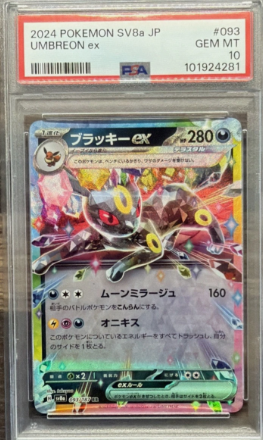
Meanwhile, banks continue to talk about deposits, lending, payments and wealth management as though the world has not fundamentally changed.
Perhaps they should pay attention.
Because the financialisation of everything creates an enormous challenge for the institutions that have traditionally controlled money and wealth. Banks understand mortgages, corporate loans, government bonds and equities. They have systems for valuing them, financing them, securing them and transferring ownership.
But how do you value a Pokémon card? How do you lend against a collection of rare gaming cards? How do you manage the financial risks of a market where prices depend upon fashion, nostalgia, celebrity endorsements and the spending habits of wealthy enthusiasts? How do you record and store and value such assets? And why should the next generation of wealthy customers care about traditional investment portfolios when their personal wealth may be tied up in digital assets, collectibles, gaming economies and objects that bankers barely understand?
This is not an argument that Pokémon cards are better investments than shares or that cryptocurrencies are replacing currencies. Quite the opposite. These markets can be spectacularly illiquid, volatile and vulnerable to manipulation. The price someone pays at auction does not guarantee that another buyer will pay the same amount tomorrow.
The point is that the definition of an asset is escaping the boundaries of traditional finance and the banks are watching from the sidelines.
There is another extraordinary dimension to this particular case.
The stolen cryptocurrency came from a decentralised finance platform whose software was supposed to replace the need for traditional financial intermediaries. The promise of decentralised finance was that code could execute financial transactions without requiring banks, brokers or other trusted institutions.
Yet when the money disappeared, it was not a blockchain that delivered justice. It was investigators, prosecutors, courts and a jury.
The code executed transactions, but the legal system determined whether those transactions were criminal. So much for the idea that code is law. The cryptocurrency may have been digital, the smart contracts automated and the transactions recorded on a blockchain, but the consequences were painfully real. People lost money, a platform collapsed and the proceeds were converted into physical collectibles that could be bought, sold and stored outside the digital financial ecosystem.
Which brings us back to Pokémon.
The strangest aspect of this story is not that a criminal spent millions on trading cards. It is that the trading cards represented a plausible way of storing extraordinary wealth. Think about the historical absurdity of that statement. For thousands of years, human beings have fought wars over land, gold, oil, trade routes and access to resources. Empires have risen and fallen because of their ability to control the things that other people needed. Banks emerged to finance trade, protect deposits and move money between those who had it and those who wanted it ... and now we have arrived at a moment in civilisation where a cartoon character printed on cardboard can represent more wealth than a family home.
This is capitalism on steroids, powered by the internet and fuelled by the human obsession with owning something that other people cannot have.
The truly frightening question is where it ends.
If a Pokémon card can be worth a million dollars, why not ten million? If a meme coin can achieve a multibillion-dollar valuation, why not a hundred billion? If digital scarcity can manufacture extraordinary wealth, what prevents us from creating an infinite number of things that people are encouraged to believe are scarce?
Nothing, except the willingness of someone else to pay and therein lies the madness. We are creating a financial world in which almost anything can be turned into an asset, almost any asset can become a speculative market and almost any speculative market can attract people who believe they are getting rich ... until the music stops, because the one thing that connects Pokémon cards, bitcoin, gold, property and government bonds is that their prices ultimately depend upon buyers.
Some have deeper markets, stronger institutions and more enduring uses than others, but none is immune to the relationship between supply, demand and confidence. The difference is that when a Pokémon card loses half its value, a collector has a bad day. When confidence in a currency collapses, an entire society can suffer. That is why money matters, why banking matters and why we should be careful about confusing a speculative price with enduring economic value.
Nevertheless, the story tells us something profound about the future of finance.
We are moving towards a world where everything can be owned, priced, traded, tokenised, financed and speculated upon. Our identities, our attention, our digital possessions, our personal data and even our relationships are becoming part of an expanding universe of economic value.
The financial system is no longer simply about managing money. It is increasingly about managing ownership of anything that someone else might want and that changes everything.
Perhaps the most revealing thing about this $55 million cryptocurrency theft is that the criminal did not simply want money. He wanted things that money could buy, things that were rare, desirable and potentially valuable to other people, which is what wealth has always been about but if we have reached the point where a Pokémon card can be worth more than a lifetime of honest work, perhaps we need to ask whether our economic system has confused the price of everything with the value of anything.
After all, when a nurse saves your life, that is valuable. When a teacher changes a child's future, that is valuable. When an engineer builds a bridge or a farmer produces food, that is valuable. And yet we have built a financial system in which a cartoon monster on a piece of cardboard can command a greater financial reward than all of them ... and we call that a market.
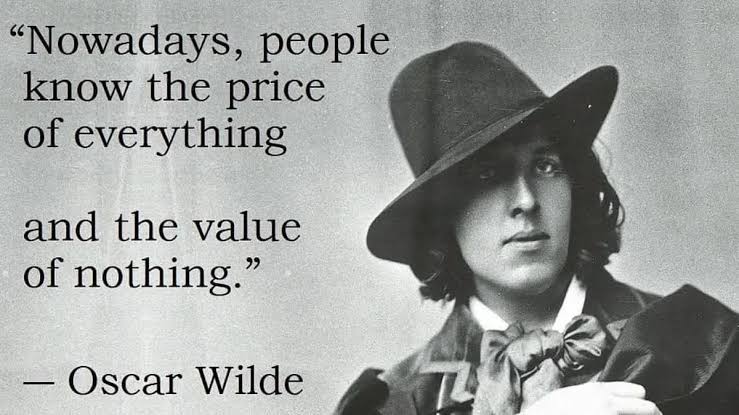
It just illustrates when people know the price of everything but the value of nothing.

Chris M Skinner
Chris Skinner is best known as an independent commentator on the financial markets through his blog, TheFinanser.com, as author of the bestselling book Digital Bank, and Chair of the European networking forum the Financial Services Club. He has been voted one of the most influential people in banking by The Financial Brand (as well as one of the best blogs), a FinTech Titan (Next Bank), one of the Fintech Leaders you need to follow (City AM, Deluxe and Jax Finance), as well as one of the Top 40 most influential people in financial technology by the Wall Street Journal's Financial News. To learn more click here...