Hartmut Neven, Founder and Lead of Google Quantum AI, has recently written a critical perspective on securing the “Quantum Era”, alongside his colleague Kent Walker, President of Global Affairs for Google and Alphabet.
What do these guys know that you don’t?
Perhaps, most critically, the fact that the near-term revolution of computing – quantum – is years away, not decades and, when it lands, it could blow all of our encryption and security to pieces. Notably, they have been working on this for more than ten years ...
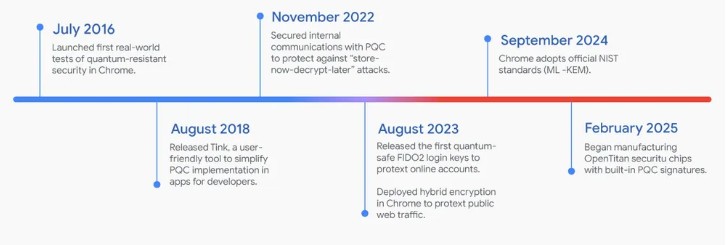
... and note that Quantum computing has a “unique ability to unravel scientific mysteries will also allow them to bypass our current digital locks, like the public-key cryptosystems that protect things like bank transfers, private chats, trade secrets and even classified information.”
Hartmut warns that quantum computing is nearing a practical reality and threatens today’s core cybersecurity systems. Current public-key encryption (like RSA) that protects bank transfers, emails, and private communications could be broken by large-scale quantum machines.
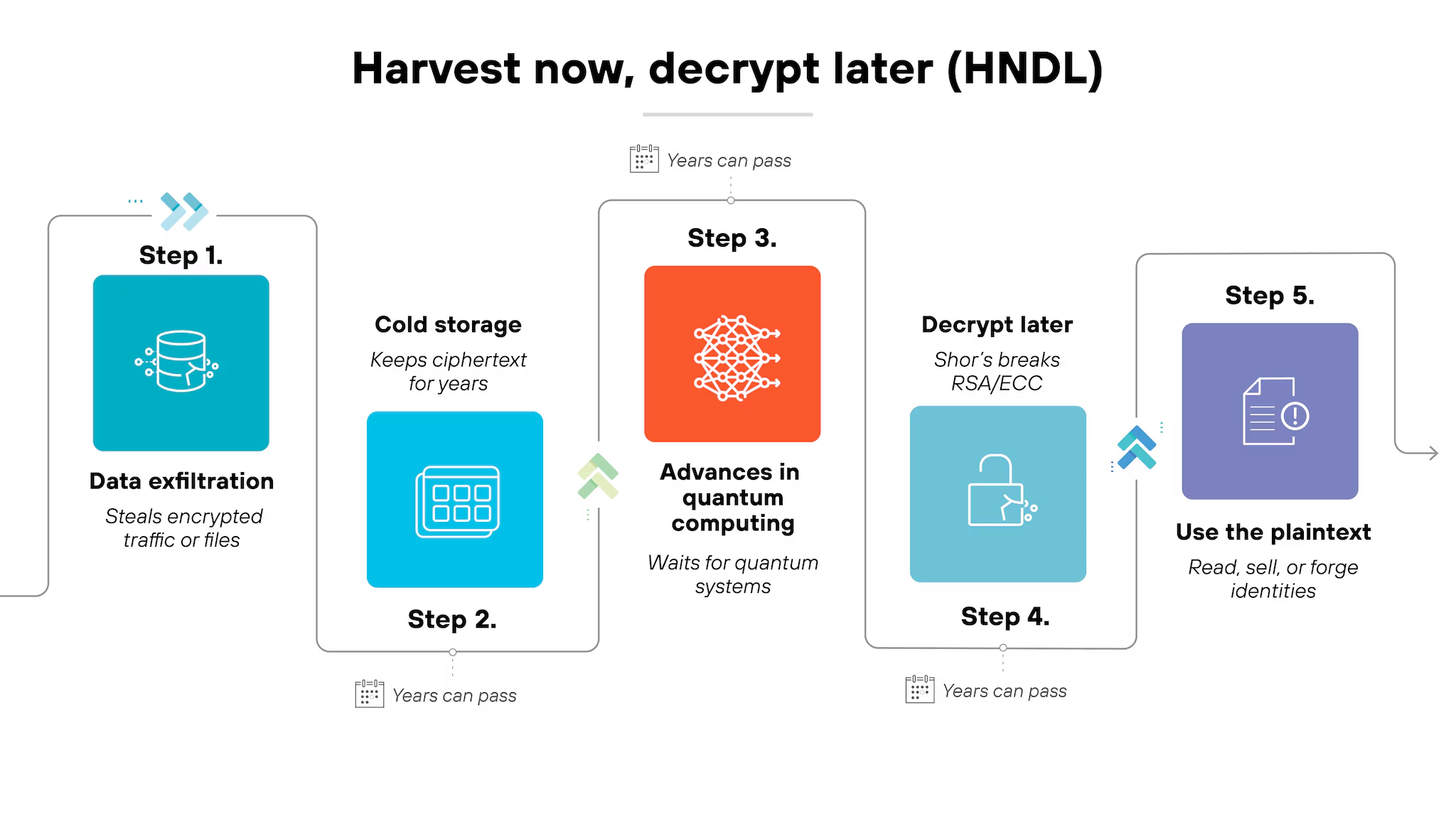
This is quite worrying as hackers have been storing encrypted data for years to decrypt later, once quantum power arrives. It’s a “store now, decrypt later” threat or, as I blogged about the other day, “harvest now, decrypt later” strategy.
Either way, it’s a threat so, what has Google been doing?
Well, Hartmut points to four key developments:
- Preparing for a post-quantum world since 2016 by researching and experimenting with post-quantum cryptography (PQC) — cryptographic algorithms designed to resist quantum attacks.
- Rolling out PQC capabilities in Google products and infrastructure.
- Focusing on crypto-agility — the ability to update cryptographic systems without disrupting services.
- Supporting global standards like those from the U.S. National Institute of Standards & Technology (NIST) for quantum-resistant algorithms.
He then points to five policy priorities for governments and organisations to prepare for the quantum era securely:
- Accelerate adoption of PQC across critical infrastructure sectors.
- Incorporate PQC into AI and other emerging technologies from the ground up.
- Harmonise standards globally to avoid fragmented, insecure approaches.
- Promote cloud-first modernization to simplify migrating legacy systems.
- Engage with experts continuously to avoid being blindsided by rapid advances.
The bottom line is that Quantum computing holds great promise, but securing the digital world for that era requires coordinated research, standards, implementation, and policy work now, not just waiting until threats are right in your face.
Finally, for me, is that we often talk about how the internet was built. It was built for informational exchange. It wasn’t built for commerce. So, we have spent the last thirty years trying to catch up with its development into banking, finance and payments.
Now, we are building the next generation of technologies using AI and quantum computing. Has anyone thought about how to inbuild commerce, trade and finance into that structure?

Chris M Skinner
Chris Skinner is best known as an independent commentator on the financial markets through his blog, TheFinanser.com, as author of the bestselling book Digital Bank, and Chair of the European networking forum the Financial Services Club. He has been voted one of the most influential people in banking by The Financial Brand (as well as one of the best blogs), a FinTech Titan (Next Bank), one of the Fintech Leaders you need to follow (City AM, Deluxe and Jax Finance), as well as one of the Top 40 most influential people in financial technology by the Wall Street Journal's Financial News. To learn more click here...