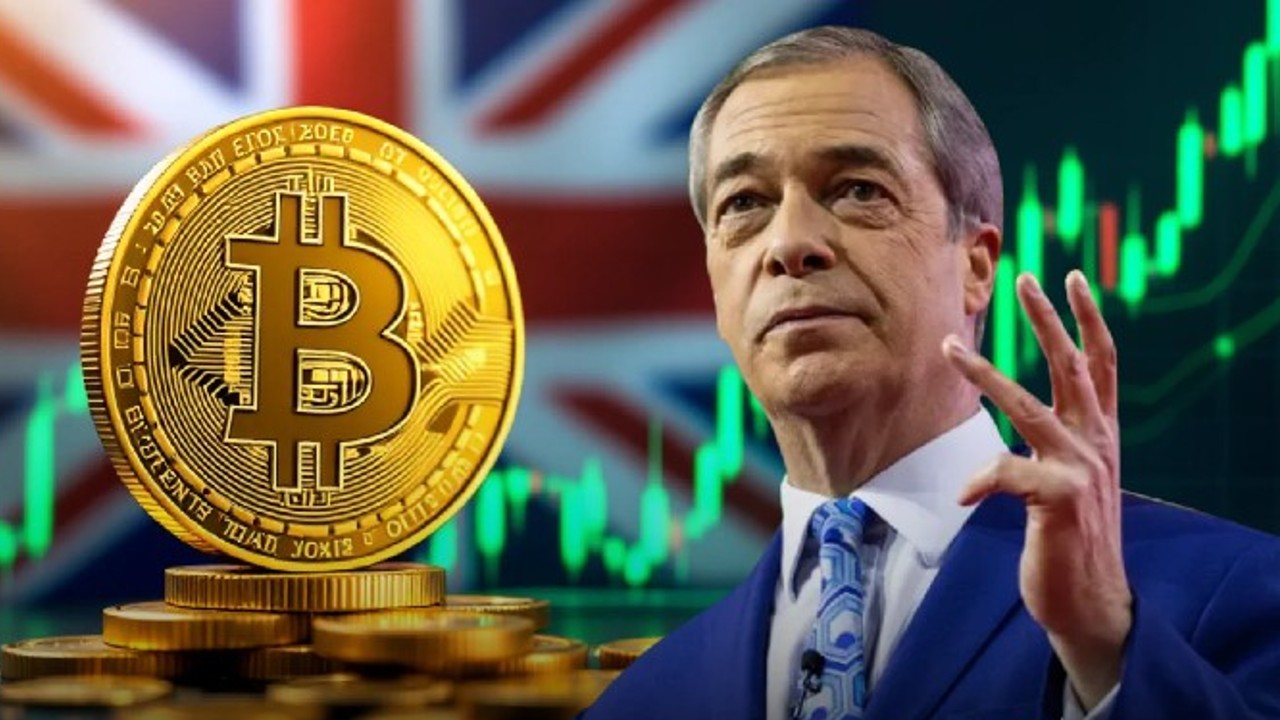
For the last twenty years, I have had many arguments with crypto advocates about Liberterian versus State governance. Now, the crypto guys are the government.
During those years, people worried that politics would be captured by Wall Street, Big Oil or Big Tech, but the emerging power bloc is crypto money and artificial intelligence. These power bases, with trillions of capital, are the major political influence networks today.
This struck me when reading the latest stories from the UK and US. Cryptocurrencies are now running our leaders and influencers. What does not surprise me is that cryptocurrency is becoming political. That happened years ago. What is striking is how openly political cryptocurrency has become.
In Britain, Nigel Farage is positioning himself as the most pro-crypto figure in mainstream politics, openly associating with bitcoin investments and digital asset advocates. Reform UK increasingly looks comfortable attracting support from wealthy crypto entrepreneurs who see the sector not just as a technology movement but as an ideological one: lower taxes, lighter regulation and reduced state control.
Across the Atlantic, the scale is far larger and investments in American politics to lobby and influence the Senate and Congress go far deeper.
Crypto political action committees now hold war chests measured in hundreds of millions of dollars. They are funding candidates, attacking opponents and helping shape legislation. The industry has realised something simple: if regulation determines the future value of digital assets, then influencing regulators is just another investment strategy.
And then there is Donald Trump.
I’ve blogged a couple of times about how Donad Trump is trying to be the Crypto King …
… and that Trump has moved from being openly sceptical of bitcoin to becoming one of the most significant political beneficiaries of the crypto industry. His rhetoric is no longer about caution. It is about making America the “crypto capital of the world”.
Why the transformation?
Elon Musk, Mark Zuckerberg and co, his tech buddies who drove his re-election and became his staple of power. Not anymore but, in building up for his electoral win in 2024, they were his biggest donors.
More importantly, this is no longer just political positioning. Trump and his family are now deeply embedded in the industry itself through ventures such as World Liberty Financial, a crypto platform tied to the Trump family that spans token sales, decentralised finance and stablecoins. Reporting has highlighted how the venture has generated substantial revenues and attracted scrutiny over potential conflicts of interest because political power and commercial crypto interests are becoming increasingly intertwined.
Historically, politicians were funded by industries. Today, politicians are becoming industry participants. That is a very different model. If a president, former president or major political movement has direct exposure to crypto valuations, token ecosystems or digital asset businesses, then crypto policy stops being an abstract regulatory discussion. It becomes economically personal. Meanwhile, AI is following exactly the same path.
According to Axios, AI-linked political groups are now spending extraordinary sums to influence congressional races, backing candidates who support innovation and attacking those who favour tighter controls. Some AI-focused organisations are reportedly preparing nine-figure election spending campaigns. What emerges is a new political-industrial complex.
The twentieth century was shaped by oil, defence and banking. The twenty-first century increasingly looks as if it will be shaped by data, algorithms and digital assets. Crypto wants favourable regulation. AI wants favourable regulation. Governments want economic growth and technological leadership. The incentives are aligning.
This is why the debate is becoming less about technology and more about power. Who controls the infrastructure of intelligence? Who controls digital money? Who owns the data? Who writes the rules?
The deeper issue is that most voters are still arguing about left versus right whilst a new axis of power is emerging underneath them. The real battle is no longer about Republicans versus Democrats, Conservatives versus Labour, or Reform versus the establishment.
It is now networks versus nations; platforms versus governments; algorithms versus institutions; and increasingly, the people funding those battles are the same people building the technologies that will define the next economic era just as Rockefeller, Rothschild and Carnegie did a century ago.
Chris M Skinner
Chris Skinner is best known as an independent commentator on the financial markets through his blog, TheFinanser.com, as author of the bestselling book Digital Bank, and Chair of the European networking forum the Financial Services Club. He has been voted one of the most influential people in banking by The Financial Brand (as well as one of the best blogs), a FinTech Titan (Next Bank), one of the Fintech Leaders you need to follow (City AM, Deluxe and Jax Finance), as well as one of the Top 40 most influential people in financial technology by the Wall Street Journal's Financial News. To learn more click here...